 October 2015 in “Journal of Bioresource Management”
 Growing hair cells in the lab from plucked hairs could lead to a new, less invasive, and cheaper baldness treatment.
October 2022 in “Hair Transplantation” Proper technique in strip hair transplantation minimizes complications.
 8 citations
,
November 2010 in “Facial Plastic Surgery”
8 citations
,
November 2010 in “Facial Plastic Surgery” Fat transfer can be effective for soft tissue trauma if the patient is chosen carefully and the procedure is done correctly.
 26 citations
,
October 2012 in “Dermatologic Clinics”
26 citations
,
October 2012 in “Dermatologic Clinics” The document details hair transplantation techniques and innovations, highlighting Follicular Unit Transplantation as the standard and discussing the effectiveness and challenges of the procedure.
 11 citations
,
June 2005 in “Journal of Cosmetic Dermatology”
11 citations
,
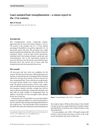
June 2005 in “Journal of Cosmetic Dermatology” Lasers in hair transplantation show promise but are not yet standard, with current methods causing some side effects and needles still being preferred for creating recipient sites.
 5 citations
,
February 2019 in “Oral and Maxillofacial Surgery”
5 citations
,
February 2019 in “Oral and Maxillofacial Surgery” Hair loss can be reversed or even cured using advanced hair restoration techniques, with rare complications like swelling and bleeding.
 August 2014 in “Plastic Surgery”
 Dr. WP Unger suggested that traditional strip harvesting might be better for hair transplants than Follicular Unit Extraction due to higher hair survival rates and less risk of a patchy look at the donor site.
 3 citations
,
October 2021 in “Indian Journal of Plastic Surgery”
3 citations
,
October 2021 in “Indian Journal of Plastic Surgery” Follicular unit extraction is a hair transplant method that can leave small scars and uses various tools for harvesting hair from different body parts.
 9 citations
,
December 1984 in “The Journal of Dermatologic Surgery and Oncology”
9 citations
,
December 1984 in “The Journal of Dermatologic Surgery and Oncology” Layered suture closure for hair transplant donor sites results in smaller scars and easier future harvesting but takes more time and may temporarily increase hair shedding.
January 2020 in “Hair therapy & transplantation” FUE is a modern hair transplant method that avoids large scars and is good for short hair.
 27 citations
,
November 2008 in “Facial Plastic Surgery”
27 citations
,
November 2008 in “Facial Plastic Surgery” Follicular Unit Extraction is a less invasive hair transplant method with potential for natural results but has challenges like longer surgery time and higher cost.
38 citations
,
June 2018 in “International Journal of Oral and Maxillofacial Surgery” Both bone donor sites had low long-term issues and high patient satisfaction.
 8 citations
,
January 1998 in “Journal of Cutaneous Medicine and Surgery”
8 citations
,
January 1998 in “Journal of Cutaneous Medicine and Surgery” Hair transplantation is effective for baldness, with new methods improving results, but staying updated is crucial for patient outcomes.
 6 citations
,
May 2004 in “Facial Plastic Surgery Clinics of North America”
6 citations
,
May 2004 in “Facial Plastic Surgery Clinics of North America” By 2004, Follicular Unit Transplantation (FUT) was the most effective method for surgical hair restoration, while the newer Follicular Unit Extraction (FUE) had more disadvantages and was less recommended.
 December 2023 in “Facial Plastic Surgery”
 Local anesthesia, often with sedation, effectively reduces pain in hair transplant harvesting.
 October 2023 in “Facial Plastic Surgery”
 Local anesthesia with a "ring block" is preferred for pain control during FUE hair transplant procedures.
 March 2021 in “Journal of Maxillofacial and Oral Surgery”
 Beard hair can be used for hair transplants in severe alopecia cases, with minimal complications and good results.
 7 citations
,
March 2002 in “Aesthetic Surgery Journal”
7 citations
,
March 2002 in “Aesthetic Surgery Journal” In 2002, hair restoration improved by using a different area for grafts and absorbable sutures, leading to less discomfort and better results.
 15 citations
,
May 2004 in “Facial Plastic Surgery Clinics of North America”
15 citations
,
May 2004 in “Facial Plastic Surgery Clinics of North America” The document concludes that while "hair follicle cloning" shows promise for unlimited donor hair, it faces challenges with consistency and safety in humans.
 8 citations
,
January 2008 in “Journal of Cosmetic and Laser Therapy”
8 citations
,
January 2008 in “Journal of Cosmetic and Laser Therapy” Hair transplantation for men has improved, offering natural, lasting results, and may be enhanced by certain medications and future technologies.
 1 citations
,
January 2014 in “Archives of Aesthetic Plastic Surgery”
1 citations
,
January 2014 in “Archives of Aesthetic Plastic Surgery” The FUE technique is effective for Asian female hairline restoration with benefits like no scar and short recovery time.
 17 citations
,
January 1996 in “Aesthetic Plastic Surgery”
17 citations
,
January 1996 in “Aesthetic Plastic Surgery” The tumescent technique improves hair micrografting by providing lasting anesthesia, reducing bleeding, and increasing patient comfort.
 32 citations
,
July 2011 in “Facial Plastic Surgery”
32 citations
,
July 2011 in “Facial Plastic Surgery” New hair transplant methods offer more natural results and better graft survival, with ongoing research to increase donor hair options.
 10 citations
,
July 2019 in “Facial Plastic Surgery Clinics of North America”
10 citations
,
July 2019 in “Facial Plastic Surgery Clinics of North America” Facial hair transplantation has improved to give natural-looking beards and eyebrows with proper technique and patient care.
 9 citations
,
February 2013 in “Plastic and Reconstructive Surgery”
9 citations
,
February 2013 in “Plastic and Reconstructive Surgery” The article explains how to rebuild parts of the head and face and how to transplant hair to cover scars, highlighting the need for careful planning and choosing the right method for each patient.
 1 citations
,
November 1992 in “Indian Dermatology Online Journal”
1 citations
,
November 1992 in “Indian Dermatology Online Journal” FUE is a popular hair restoration method that uses body hair and leaves no scars.
 February 2018 in “Dermatologic Surgery”
 Nonshaven follicular unit extraction is a highly satisfactory method for restoring pubic hair.
 7 citations
,
October 2011 in “International Surgery”
7 citations
,
October 2011 in “International Surgery” In 2011, hair restoration was a specialized field in plastic surgery, using techniques like "Ultrarefined follicular unit hair transplantation" to minimize scarring and promote hair growth, with future treatments like stem cell therapy and hair cloning still being tested.
27 citations
,
September 2017 Pubic hair transplantation can improve self-esteem in those with sparse pubic hair.
Hair transplantation can effectively restore hair in stabilized hair loss cases.