1 citations
,
February 2023 in “Plants” BB4CMU rice bran oil may help treat hair loss and gray hair.
1 citations
,
January 2020 in “Bioscience Reports” Long-term use of finasteride in women can cause hormonal changes, DNA damage, and menstrual issues.

Arginine deficiency hinders hair growth in androgenetic alopecia, but restoring it can promote hair regeneration.
 June 2025 in “Naunyn-Schmiedeberg s Archives of Pharmacology”
 Herbal remedies may help with hair loss but need more research.
 June 2025 in “Clinical Cosmetic and Investigational Dermatology”
 Gray hair can potentially be managed or reversed with treatments that boost melanin production and address nutritional deficiencies.
 April 2025 in “Diagnostics”
 Managing inflammation and using vitamins can improve PRP therapy for better hair growth.
 March 2025 in “International Journal of Molecular Sciences”
 Veratric Acid may help promote hair growth and reduce hair loss.
 November 2024 in “Stem Cell Research & Therapy”
 Stem cells from umbilical cords can help regrow hair in mice with hair loss.
 November 2024 in “Medicina”
 Recognizing scalp symptoms in PRP is crucial for proper diagnosis and treatment.
 May 2024 in “The journal of investigative dermatology/Journal of investigative dermatology”
 Applying DMG-Na to the skin increases blood flow and may help with skin conditions.
 November 2023 in “Australasian journal of dermatology”
 Dermatologists are essential in helping transgender and gender diverse patients with skin and hair issues related to gender affirmation and hormone therapy.
A hat with sensors can measure scalp moisture well, helping with hair care.
2 citations
,
December 2025 in “Cosmetics” Proper scalp care can improve hair health and delay ageing signs.
172 citations
,
December 1994 in “The Journal of Dermatologic Surgery and Oncology” This hair transplant method improves cosmetic results for hair loss.
 28 citations
,
July 2011 in “Journal of Plastic Reconstructive and Aesthetic Surgery”
28 citations
,
July 2011 in “Journal of Plastic Reconstructive and Aesthetic Surgery” A patient had skin tissue death at the hair removal site after a hair transplant, which was treated with surgery.
26 citations
,
January 2009 in “Transfusion Medicine and Hemotherapy” Donors on most medications can donate certain blood products without waiting, except for specific drugs that need a waiting period.
 19 citations
,
April 2010 in “Journal of Dermatological Treatment”
19 citations
,
April 2010 in “Journal of Dermatological Treatment” Partial hair follicle extraction can effectively double the number of hair follicles for transplants, with most surviving and growing normally after a year.
 16 citations
,
December 2016 in “Dermatologic Surgery”
16 citations
,
December 2016 in “Dermatologic Surgery” Higher scalp elasticity leads to wider scars after hair transplantation; a new method to measure elasticity may help predict scar size.
 14 citations
,
May 2014 in “Archives of plastic surgery”
14 citations
,
May 2014 in “Archives of plastic surgery” The position of the parietal whorl can predict safe donor areas for hair transplants in Korean men with male pattern baldness.
 13 citations
,
August 2016 in “Journal of Cosmetic Dermatology”
13 citations
,
August 2016 in “Journal of Cosmetic Dermatology” Using normal saline in vertical extraction for hair transplants reduces donor area injury more than acute extraction.
 13 citations
,
January 2013 in “International Journal of Trichology”
13 citations
,
January 2013 in “International Journal of Trichology” Inflammation around hair follicles may worsen hair loss; evaluating and treating it can improve transplant results.
 10 citations
,
July 2017 in “Archives of Plastic Surgery”
10 citations
,
July 2017 in “Archives of Plastic Surgery” Hair thickness decreases from the upper to lower areas of the back of the head, affecting hair transplant results.
 10 citations
,
January 2013 in “Journal of Cutaneous and Aesthetic Surgery”
10 citations
,
January 2013 in “Journal of Cutaneous and Aesthetic Surgery” Narrower donor strips and special closure techniques in hair transplants lead to smaller scars and happier patients.
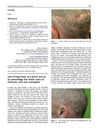 10 citations
,
May 2012 in “Journal of Plastic Reconstructive and Aesthetic Surgery”
10 citations
,
May 2012 in “Journal of Plastic Reconstructive and Aesthetic Surgery” Beard hair can effectively hide hair transplant scars.
 9 citations
,
January 2018 in “Hair transplant forum international”
9 citations
,
January 2018 in “Hair transplant forum international” Researchers concluded that safe hair follicle extraction limits in FUE vary by individual characteristics and proposed a method to calculate these limits to maintain appearance.
 9 citations
,
April 2017 in “International Journal of Dermatology”
9 citations
,
April 2017 in “International Journal of Dermatology” Different areas of the scalp have varying hair thickness, useful for different types of hair transplant needs.
 9 citations
,
December 1984 in “The Journal of Dermatologic Surgery and Oncology”
9 citations
,
December 1984 in “The Journal of Dermatologic Surgery and Oncology” Layered suture closure for hair transplant donor sites results in smaller scars and easier future harvesting but takes more time and may temporarily increase hair shedding.
 8 citations
,
June 2001 in “International Journal of Cosmetic Surgery and Aesthetic Dermatology”
8 citations
,
June 2001 in “International Journal of Cosmetic Surgery and Aesthetic Dermatology” Use shallow cuts, small tissue removal, careful suturing, and keep the area moist to reduce scarring in hair transplants.
 8 citations
,
March 1994 in “The American Journal of Cosmetic Surgery”
8 citations
,
March 1994 in “The American Journal of Cosmetic Surgery” The Total Excision Techniques improve hair transplant results by increasing grafts by at least 50% and reducing scarring.
 8 citations
,
July 1984 in “The Journal of Dermatologic Surgery and Oncology”
8 citations
,
July 1984 in “The Journal of Dermatologic Surgery and Oncology” A new suturing technique for hair transplant donor sites leads to better scarring and allows more grafts to be taken.