 1 citations
,
January 2014 in “Archives of Aesthetic Plastic Surgery”
1 citations
,
January 2014 in “Archives of Aesthetic Plastic Surgery” The FUE technique is effective for Asian female hairline restoration with benefits like no scar and short recovery time.
 11 citations
,
September 2001 in “The Cleft Palate Craniofacial Journal”
11 citations
,
September 2001 in “The Cleft Palate Craniofacial Journal” Hair transplant surgery successfully restored a boy's moustache hair on a cleft lip scar, with natural-looking results and patient satisfaction.
 6 citations
,
September 2001 in “The Cleft Palate Craniofacial Journal”
6 citations
,
September 2001 in “The Cleft Palate Craniofacial Journal” Hair transplant surgery successfully restored a boy's moustache hair on a cleft lip scar, with natural-looking results and patient satisfaction.
 December 2023 in “Facial Plastic Surgery”
 Follicular unit excision (FUE) is a popular hair transplant method that avoids a linear scar but has potential challenges and side effects if not done properly.
 3 citations
,
April 2020 in “Facial Plastic Surgery Clinics of North America”
3 citations
,
April 2020 in “Facial Plastic Surgery Clinics of North America” Beard hair transplantation is generally satisfying, requires 250-800 grafts, uses FUE to avoid scars, needs careful planning, has some risks, and hair regrowth starts after 4-6 months.
 July 1998 in “Dermatologic Surgery”
 Various techniques and tools for hair restoration were presented in 1998, including a mathematical model for donor area, use of lasers in surgery, methods for controlling grafted hair direction, and ways to increase graft yield. Satisfaction rates were around 39%, and studies showed trauma and dehydration can damage hair follicles.
 8 citations
,
June 2001 in “International Journal of Cosmetic Surgery and Aesthetic Dermatology”
8 citations
,
June 2001 in “International Journal of Cosmetic Surgery and Aesthetic Dermatology” Use shallow cuts, small tissue removal, careful suturing, and keep the area moist to reduce scarring in hair transplants.
 8 citations
,
July 1984 in “The Journal of Dermatologic Surgery and Oncology”
8 citations
,
July 1984 in “The Journal of Dermatologic Surgery and Oncology” A new suturing technique for hair transplant donor sites leads to better scarring and allows more grafts to be taken.
41 citations
,
January 2015 in “Burns & Trauma” Tissue engineering improves burn scar reconstruction by using skin substitutes and replacing damaged tissues.
 2 citations
,
September 2019 in “Dermatologic Surgery”
2 citations
,
September 2019 in “Dermatologic Surgery” The two-step procedure of fat grafting followed by hair grafting improves scalp and facial scar correction.
 November 2023 in “Facial Plastic Surgery”
 The document concludes that FUE hair restoration is often misleadingly advertised and raises ethical concerns regarding patient evaluation and business practices.
 August 1998 in “Dermatologic Surgery”
 Use steroid creams without parabens and educate on hair transplant techniques to improve cosmetic surgery outcomes.
38 citations
,
June 2018 in “International Journal of Oral and Maxillofacial Surgery” Both bone donor sites had low long-term issues and high patient satisfaction.
 41 citations
,
August 2013 in “Facial Plastic Surgery Clinics of North America”
41 citations
,
August 2013 in “Facial Plastic Surgery Clinics of North America” FUE provides minimal scarring and quick recovery in hair transplantation, and surgeons not using it may lag in technology.
 September 2018 in “Research in medical & engineering sciences”
 The author was scammed by a marketing company and discussed a man scammed by a clinic that provided poor hair transplants, leading to bad results and scarring.
 15 citations
,
November 2008 in “Facial Plastic Surgery”
15 citations
,
November 2008 in “Facial Plastic Surgery” Hair restoration can sometimes result in unnatural-looking hair, wide scars, and poorly designed hairlines, but these issues can be corrected with careful planning, various techniques, and possibly medical therapy.
 6 citations
,
May 2004 in “Facial Plastic Surgery Clinics of North America”
6 citations
,
May 2004 in “Facial Plastic Surgery Clinics of North America” By 2004, Follicular Unit Transplantation (FUT) was the most effective method for surgical hair restoration, while the newer Follicular Unit Extraction (FUE) had more disadvantages and was less recommended.
Asian hair's unique features make hair loss management and surgery more challenging.
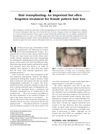 43 citations
,
October 2003 in “Journal of The American Academy of Dermatology”
43 citations
,
October 2003 in “Journal of The American Academy of Dermatology” Hair transplanting is a useful, often overlooked treatment for female pattern hair loss.
 13 citations
,
November 2018 in “Annals of Plastic Surgery”
13 citations
,
November 2018 in “Annals of Plastic Surgery” Nonshaven follicular unit extraction is a good hair transplant option that doesn't require shaving and can transplant up to 3000 grafts daily.
 9 citations
,
June 2014 in “Journal of Craniofacial Surgery”
9 citations
,
June 2014 in “Journal of Craniofacial Surgery” The method for sideburn reconstruction was safe and effective, giving natural-looking hair with minimal scarring.
 4 citations
,
April 2000 in “Plastic and Reconstructive Surgery”
4 citations
,
April 2000 in “Plastic and Reconstructive Surgery” The document suggests fixing common hair transplant issues by combining artistic principles with plug reduction, recycling, and additional micrograft transplantation, while also potentially using arnica to help with post-operative swelling.
 3 citations
,
December 2008 in “The American Journal of Cosmetic Surgery”
3 citations
,
December 2008 in “The American Journal of Cosmetic Surgery” Hair transplantation has evolved to refined techniques like FUE and FUT, with Finasteride and Minoxidil as the only other proven treatments for hair loss.
 1 citations
,
January 2010 in “DOAJ (DOAJ: Directory of Open Access Journals)”
1 citations
,
January 2010 in “DOAJ (DOAJ: Directory of Open Access Journals)” Hair transplantation surgery has improved, becoming more popular and efficient, but patient dissatisfaction remains due to unrealistic expectations.
The FUE hair transplant technique provides a natural and satisfying solution for male pattern baldness.
 June 2017 in “JPRAS Open”
 Hair transplant was successful on a bald area after skin graft surgery.
January 2017 in “Deleted Journal” Hair transplantation surgery now offers natural, lasting, and safe results.
 September 1994 in “The Journal of Dermatologic Surgery and Oncology”
 Dr. Dzubow concluded that careful attention to detail is crucial for the success of Mohs surgery in treating skin cancer.
June 2021 in “Cosmoderma” Hair transplantation techniques have improved, making the process safer and more effective with less visible scarring.
 March 2021 in “Dermatological reviews”
 Hair transplant works well, but needs more research for better results.