 16 citations
,
December 2016 in “Dermatologic Surgery”
16 citations
,
December 2016 in “Dermatologic Surgery” Higher scalp elasticity leads to wider scars after hair transplantation; a new method to measure elasticity may help predict scar size.
 1 citations
,
July 2017 in “Hair transplant forum international”
1 citations
,
July 2017 in “Hair transplant forum international” Scalp laxity, elasticity, and glidability are important in hair transplants and can predict scar width at the donor site.
 November 2023 in “Facial Plastic Surgery”
 Choosing between follicular unit extraction and strip harvesting for hair restoration depends on the patient's individual goals and the pros and cons of each method.
 March 2021 in “International Journal of Research in Dermatology”
 Trapezoid donor strips give more hair follicles than elliptical ones in hair transplants.
 4 citations
,
March 2007 in “Hair transplant forum international”
4 citations
,
March 2007 in “Hair transplant forum international” The document's conclusion cannot be provided as the content is not available.
 2 citations
,
January 2015 in “Hair transplant forum international”
2 citations
,
January 2015 in “Hair transplant forum international” Using human recombinant hyaluronidase in donor strip harvesting may improve the procedure.
 4 citations
,
February 2017 in “Archives of Aesthetic Plastic Surgery”
4 citations
,
February 2017 in “Archives of Aesthetic Plastic Surgery” Double-layer scalp wound closure is better than single-layer closure after strip hair transplant surgery.
 10 citations
,
January 2013 in “Journal of Cutaneous and Aesthetic Surgery”
10 citations
,
January 2013 in “Journal of Cutaneous and Aesthetic Surgery” Narrower donor strips and special closure techniques in hair transplants lead to smaller scars and happier patients.
 6 citations
,
May 2004 in “Dermatologic Surgery”
6 citations
,
May 2004 in “Dermatologic Surgery” The article concludes that using the single-scar technique for hair transplants can result in a more attractive scar and that concerns about the technique can be managed with proper methods.
2 citations
,
March 2023 in “Aesthetic Plastic Surgery” The new hair transplant method reduces scarring and wastage by combining two techniques.
 1 citations
,
July 2021 in “Aesthetic Plastic Surgery”
1 citations
,
July 2021 in “Aesthetic Plastic Surgery” The new triangular flag-shaped design for incisions in hair transplant surgery provides better hair alignment and cosmetic appearance without extra scarring, especially for patients with specific hair directions.
 June 2004 in “Dermatologic Surgery”
 The single-scar technique in hair transplantation minimizes scarring and preserves hairs for future use, with proper training overcoming its perceived drawbacks.
 2 citations
,
August 2013 in “Facial Plastic Surgery Clinics of North America”
2 citations
,
August 2013 in “Facial Plastic Surgery Clinics of North America” The conclusion is that careful planning and technique in hair transplant surgery are crucial for successful graft harvesting and minimizing scars, with proper aftercare to avoid complications.
 December 2023 in “Facial Plastic Surgery”
 Surgeons should be careful with FUE hair transplants to avoid negative effects on the donor area's appearance and ensure good cosmetic results.
 November 2023 in “Facial Plastic Surgery”
 The document concludes that FUE hair restoration is often misleadingly advertised and raises ethical concerns regarding patient evaluation and business practices.
 October 2023 in “Facial Plastic Surgery”
 The FUE-LE technique combines two hair transplant methods to improve graft yield without needing a large team or extra costs.
 September 2017 in “Indian Journal of Plastic Surgery”
 Garg and Garg created an affordable, easy-to-use training program for hair restoration surgery using everyday items, which can teach a technician the basics in 3-4 weeks with two hours of daily practice.
 June 1997 in “The American Journal of Cosmetic Surgery”
 Reharvesting hair from donor sites using punch and strip methods can provide more hair for transplants and improve scar appearance.
 10 citations
,
July 2017 in “Archives of Plastic Surgery”
10 citations
,
July 2017 in “Archives of Plastic Surgery” Hair thickness decreases from the upper to lower areas of the back of the head, affecting hair transplant results.
October 2022 in “Hair Transplantation” Proper technique in strip hair transplantation minimizes complications.
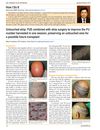 4 citations
,
January 2012 in “International Society of Hair Restoration Surgery”
4 citations
,
January 2012 in “International Society of Hair Restoration Surgery” Combining FUE and strip surgery increases hair harvested in one session and keeps options open for future transplants.
3 citations
,
January 2010 Refined open donor harvesting techniques can reduce hair follicle damage in hair restoration surgery.
October 2022 in “Hair Transplantation” Improving donor scar appearance in hair transplants involves careful technique and addressing factors like tension, scalp elasticity, and patient habits.
 December 2023 in “Facial Plastic Surgery”
 Follicular unit excision (FUE) is a popular hair transplant method that avoids a linear scar but has potential challenges and side effects if not done properly.
 3 citations
,
November 2017 in “The American Journal of Cosmetic Surgery”
3 citations
,
November 2017 in “The American Journal of Cosmetic Surgery” The new Cosmetic Surgery Scar Assessment Scale (CSSAS) was found to be simple and effective in evaluating scars from hair restoration surgeries.
 6 citations
,
January 2010 in “Actas Dermo-Sifiliográficas”
6 citations
,
January 2010 in “Actas Dermo-Sifiliográficas” Follicular Unit Hair Transplantation has become a less invasive procedure with natural results, suitable for certain adults with hair loss.
 November 1995 in “Dermatologic Surgery”
 The concentric mini-micrografting method is effective for extensive baldness, creating a natural look and efficiently using donor hair.
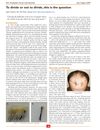 July 2009 in “International Society of Hair Restoration Surgery”
 Dividing hair grafts may make hair look fuller, but more research is needed.
 November 1997 in “Archives of Dermatology”
 The book provides basic insights into hair transplant surgery but is not detailed enough to be a complete guide for surgeons.
March 1996 in “The American Journal of Cosmetic Surgery” The technique offers natural-looking hair transplants with minimal bleeding.