 6 citations
,
May 2004 in “Facial Plastic Surgery Clinics of North America”
6 citations
,
May 2004 in “Facial Plastic Surgery Clinics of North America” By 2004, Follicular Unit Transplantation (FUT) was the most effective method for surgical hair restoration, while the newer Follicular Unit Extraction (FUE) had more disadvantages and was less recommended.
 5 citations
,
February 2019 in “Oral and Maxillofacial Surgery”
5 citations
,
February 2019 in “Oral and Maxillofacial Surgery” Hair loss can be reversed or even cured using advanced hair restoration techniques, with rare complications like swelling and bleeding.
 5 citations
,
June 2016 in “Dermatologic Surgery”
5 citations
,
June 2016 in “Dermatologic Surgery” Hair restoration for East Asians should consider their unique characteristics like head shape, hair thickness, and hair density, and use modified procedures and treatments to minimize scarring and maintain hair density.
 5 citations
,
July 1999 in “Plastic and Reconstructive Surgery”
5 citations
,
July 1999 in “Plastic and Reconstructive Surgery” Unsatisfactory hair restoration results can be significantly improved with strategic hair redistribution and new donor hair placement, despite previous surgery challenges.
 5 citations
,
March 1985 in “Head & Neck Surgery”
5 citations
,
March 1985 in “Head & Neck Surgery” Combining scalp reduction and hair transplants improves coverage and appearance for male baldness.
 4 citations
,
January 2012 in “International Society of Hair Restoration Surgery”
4 citations
,
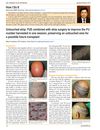
January 2012 in “International Society of Hair Restoration Surgery” Combining FUE and strip surgery increases hair harvested in one session and keeps options open for future transplants.
 4 citations
,
January 2005 in “Elsevier eBooks”
4 citations
,
January 2005 in “Elsevier eBooks” Follicular Unit Transplantation is a precise hair restoration technique that requires careful planning and a skilled team, and Follicular Unit Extraction offers a less invasive option.
 3 citations
,
February 1996 in “Dermatologic Surgery”
3 citations
,
February 1996 in “Dermatologic Surgery” Walter P. Unger suggests using advanced hair transplant techniques for broader coverage, as they provide natural results and use donor tissue efficiently, while also recommending personalized planning due to the unpredictable progression of baldness.
 2 citations
,
May 2005 in “Seminars in Plastic Surgery”
2 citations
,
May 2005 in “Seminars in Plastic Surgery” The Juri Temporo-Parieto-Occipital Flap is a good option for scalp reconstruction and hairline restoration with a natural look, despite some risk of necrosis and scarring.
 2 citations
,
January 2001 in “Dermatologic Surgery”
2 citations
,
January 2001 in “Dermatologic Surgery” Poliglecaprone 25 is better than steel staples for hair transplant surgery, causing less discomfort and finer scars.
 1 citations
,
January 1993 in “Facial Plastic Surgery”
1 citations
,
January 1993 in “Facial Plastic Surgery” Surgical hair restoration has improved since 1959, with new techniques like minigrafts, micrografts, and scalp reductions creating more natural hairlines and reducing bald skin, despite some risks and potential for scarring.
 1 citations
,
January 1985 in “Facial Plastic Surgery”
1 citations
,
January 1985 in “Facial Plastic Surgery” The document recommends careful planning and techniques for successful punch hair grafting in hair restoration.
 June 2020 in “Journal of cosmetic medicine”
 Eyebrow transplants use hair from the scalp or pubic area, with blonde hair looking more natural, and can leave scars depending on the method used.
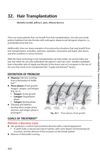 January 2018 in “Georg Thieme Verlag eBooks”
 Hair transplantation is a surgical procedure to move hair to bald areas, requires good donor hair, and results show in about a year.
 September 2017 in “Springer eBooks”
 FUE hair transplants have improved to give more natural results with less scarring and pain.
 June 2017 in “JPRAS Open”
 Hair transplant was successful on a bald area after skin graft surgery.
 August 2014 in “Plastic Surgery”
 Dr. WP Unger suggested that traditional strip harvesting might be better for hair transplants than Follicular Unit Extraction due to higher hair survival rates and less risk of a patchy look at the donor site.
 January 2010 in “Elsevier eBooks”
 Hair transplantation is a treatment for hair loss mainly caused by genetics, with various techniques and potential complications, and results visible after 8-12 months.
 June 2004 in “Dermatologic Surgery”
 The commentary suggests that using a single-scar technique for hair transplants can give good cosmetic results, but some surgeons hesitate to use it despite ways to address their concerns.
 November 2002 in “Dermatologic Surgery”
 Scalp reduction gives the most natural result for significant crown baldness, despite potential complications, and a systematic approach to surgical hair restoration results in few complications and high graft survival.
 October 2002 in “Dermatologic Surgery”
 The document concludes that careful planning, efficient use of every hair graft, and setting surgical priorities are crucial for successful hair restoration surgery.
 88 citations
,
June 2016 in “Human Reproduction Update”
88 citations
,
June 2016 in “Human Reproduction Update” New hormonal contraceptives are safer, have fewer side effects, and offer health benefits for women.
 15 citations
,
March 2000 in “Dermatologic Surgery”
15 citations
,
March 2000 in “Dermatologic Surgery” Hair transplantation has evolved since 1822, with significant advancements by key figures and widespread international growth.
 19 citations
,
February 2008 in “Facial Plastic Surgery”
19 citations
,
February 2008 in “Facial Plastic Surgery” The article concludes that microvascular free flaps, especially the latissimus dorsi flap, are recommended for large scalp reconstructions, and hair transplantation offers high survival rates and excellent aesthetic results.
 9 citations
,
January 1995 in “Aesthetic Plastic Surgery”
9 citations
,
January 1995 in “Aesthetic Plastic Surgery” New suturing technique with wider intervals and shallow stitches helps prevent scalp scars and promotes hair growth.
 1 citations
,
February 2004 in “Dermatologic Surgery”
1 citations
,
February 2004 in “Dermatologic Surgery” Deep Plane Fixation in scalp surgeries allows for more tissue removal with less tension, leading to better healing and less scarring.
 February 2004 in “Dermatologic Surgery”
 Deep Plane Fixation in scalp surgeries allows for more tissue removal with less tension and minimal scarring.
47 citations
,
November 2010 in “Vox Sanguinis” Iron supplements helped female blood donors with low iron avoid anaemia and return to donate again.
 May 2026 in “European Burn Journal”
 The scalp is a safe and effective donor site for skin grafts in children with burns.
 1 citations
,
May 2016 in “Hair transplant forum international”
1 citations
,
May 2016 in “Hair transplant forum international” Using scalp micropigmentation (a special tattoo technique) with hair transplantation can effectively treat hair loss, especially for those with low donor density or those unsuitable for only hair transplantation.