December 2025 in “Advanced Healthcare Materials” The Spherical Skin Model improves drug and cosmetic testing by accurately mimicking human skin for efficient compound screening.
June 2019 in “Problems of Cryobiology and Cryomedicine”  May 2020 in “Research Square (Research Square)”
 Human stem cells can turn into functional eye cells that might help treat retinal diseases.
4 citations
,
February 2023 in “Stem Cell Research & Therapy” Mouse skin cells can become sperm-like cells in the lab.
April 2026 in “Biomedical and Biotechnology Research Journal (BBRJ)” 3D culture better preserves key properties of hair follicle cells for regeneration.
 15 citations
,
June 2015 in “Human Cell”
15 citations
,
June 2015 in “Human Cell” Spheroid culture in agarose dishes improves survival and nerve cell growth in thawed human fat-derived stem cells.
March 2006 in “Chinese journal of plastic surgery” Microencapsulated human hair cells can regenerate hair follicles in mice ears.
 May 2023 in “Stem cell research & therapy”
 New method efficiently isolates hair growth cells from newborn mouse skin.
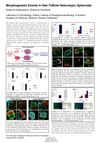
Researchers developed a method to create artificial hair follicles that may help with hair loss treatment and research.
47 citations
,
August 2016 in “American Journal Of Pathology” Fibroblast changes in systemic sclerosis may help understand disease severity and treatment.
 March 1998 in “Journal of dermatological science”
 Diphencyprone initially increases mouse hair growth, then slows it, possibly due to changes in specific protein levels.
January 2018 in “Belarusian State Pedagogical University repository (Belarusian State Pedagogical University)” Adipose-derived stem cells can be used to create cells that help grow new hair.
1 citations
,
October 2021 in “Journal of Investigative Dermatology” 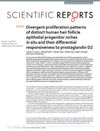 21 citations
,
November 2017 in “Scientific Reports”
21 citations
,
November 2017 in “Scientific Reports” Different human hair follicle stem cells grow at different rates and respond differently to a baldness-related compound.
 18 citations
,
February 2023 in “PLoS ONE”
18 citations
,
February 2023 in “PLoS ONE” A new triple drug system using nanoparticles effectively targets breast tumors in 3D models.
7 citations
,
September 1980 in “Zoological Journal of the Linnean Society” Dendritic cells help regulate skin development and hair growth in mice.
36 citations
,
May 2005 in “BMC dermatology” DPCP is effective for treating severe alopecia areata, but relapse is common.
January 2022 in “Yokohama National University Repository (Yokohama National University)” Exosomes from dermal papilla cells may help treat hair loss by promoting hair growth.
8 citations
,
May 2024 in “ACS Applied Materials & Interfaces” PCL nanoscaffold-based liver spheroids are effective for drug screening and studying liver toxicity.
 11 citations
,
June 2012 in “Journal of Dermatological Science”
11 citations
,
June 2012 in “Journal of Dermatological Science” Scientists identified a group of human skin cells with high growth and regeneration potential.
22 citations
,
March 1999 in “International Journal of Clinical Practice” Diphencyprone (DCP) is an effective treatment for severe alopecia areata and resistant warts, with some risks.
January 2014 in “Institutional Repositories DataBase (IRDB)” Fibroblast spheres can form stem cells, but marker distribution needs more study.
January 2006 in “Chinese Journal of Dermatology” Cultured dermal papilla cells can regenerate hair follicles and sustain hair growth.
 44 citations
,
June 2018 in “Journal of Cellular Physiology”
44 citations
,
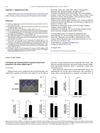
June 2018 in “Journal of Cellular Physiology” Researchers developed a 3D model of human hair follicle cells that can help understand hair growth and test new hair loss treatments.
18 citations
,
January 2021 in “Theranostics” The targeted nanohybrids effectively reduced psoriasis symptoms and improved skin health.
 20 citations
,
May 2016 in “Journal of Cutaneous Pathology”
20 citations
,
May 2016 in “Journal of Cutaneous Pathology” Using CD123 to detect certain immune cells helps diagnose a type of hair loss condition.
37 citations
,
February 2007 in “Experimental Dermatology” Increasing PDCD4 protein may help prevent or treat some skin cancers.
1 citations
,
July 2025 in “Scientific Reports” CD133+ cells are crucial for hair growth.
 3 citations
,
February 2021 in “Experimental dermatology”
3 citations
,
February 2021 in “Experimental dermatology” Dermal papilla microtissues could be useful for initial hair growth drug testing.
125 citations
,
March 2017 in “Micromachines” Microfluidic technology improves cell spheroid creation for better drug testing and tissue engineering.