 128 citations
,
August 2015 in “Cell Stem Cell”
128 citations
,
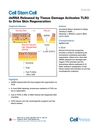
August 2015 in “Cell Stem Cell” Damage to skin releases dsRNA, which activates TLR3 and helps in skin and hair follicle regeneration.
97 citations
,
March 2006 in “Journal of Investigative Dermatology” Mutations in the DSG4 gene cause a severe form of brittle hair and skin issues.
26 citations
,
April 2011 in “British Journal of Dermatology” New mutations in the DSG4 gene cause a rare hair condition.
8 citations
,
June 2020 in “The journal of investigative dermatology/Journal of investigative dermatology” A boy's skin fragility and sparse hair were caused by a genetic mutation affecting skin cell adhesion.
7 citations
,
January 2022 in “Bioengineering” The formulation with oleic acid may be better for treating male pattern baldness.
7 citations
,
August 2008 in “Immunogenetics” A gene mutation in mice causes increased mast cells and disorganized hair follicles in their skin.
3 citations
,
January 2021 in “Oxidative Medicine and Cellular Longevity” Nrf-2-modified stem cells from hair follicles significantly improve ulcerative colitis in rats.
 2 citations
,
July 2015 in “Archives of Dermatological Research”
2 citations
,
July 2015 in “Archives of Dermatological Research” A new gene variant in the DSP gene is linked to a unique type of hair loss.
 1 citations
,
March 2023 in “Frontiers in Cardiovascular Medicine”
1 citations
,
March 2023 in “Frontiers in Cardiovascular Medicine” A specific gene variant is linked to heart disease, increased heart muscle, curly hair, and thick skin on palms and soles.
July 2024 in “Journal of Investigative Dermatology” DS-2325a is safe and well-tolerated, supporting further development for Netherton Syndrome treatment.
May 2025 in “BMC Genomics” Circ 0020938 slows down hair growth in cashmere goats.
 April 2023 in “The journal of investigative dermatology/Journal of investigative dermatology”
 Noncoding dsRNA helps produce exosomes that aid in skin regeneration.
 November 2022 in “Journal of the Endocrine Society”
 A boy with a new NR5A1 gene mutation has a sex development disorder without affecting his adrenal glands.
 December 2021 in “Molecular genetics and genomics”
 Cats with abnormal hair had DSG4 gene changes causing hair problems.
 April 2018 in “Journal of Investigative Dermatology”
 Dsg1 is essential for maintaining a healthy skin barrier in mice.
April 2017 in “The journal of investigative dermatology/Journal of investigative dermatology” Double stranded RNA helps skin wounds heal by coordinating specific proteins and signaling pathways.
 April 2016 in “Journal of Investigative Dermatology”
 Double-stranded RNA activates a pathway that causes a skin protein to be expressed in the wrong place.
Chemical treatments weaken hair's thermal stability and structure.
44 citations
,
May 2008 in “Plant journal” D'orenone stops root hair growth by disrupting auxin transport, but adding auxin can reverse this.
 October 2025 in “International Journal of Reproduction Contraception Obstetrics and Gynecology”
 The combined therapy improved fertility in women with PCOS, especially in certain types.
June 2010 in “Seoul National University Open Repository (Seoul National University)” Reduced Vitamin D receptor expression may cause hair loss through the Wnt/b-catenin pathway.
 119 citations
,
July 2016 in “Annals of the New York Academy of Sciences”
119 citations
,
July 2016 in “Annals of the New York Academy of Sciences” Vitamin D has potential benefits for cancer prevention, heart health, diabetes, obesity, muscle function, skin health, and immune function, but clinical results are mixed and more research is needed.
 47 citations
,
June 2019 in “Nature Communications”
47 citations
,
June 2019 in “Nature Communications” Noncoding dsRNA boosts hair growth by activating TLR3 and increasing retinoic acid.
 1 citations
,
February 2025 in “Frontiers in Endocrinology”
1 citations
,
February 2025 in “Frontiers in Endocrinology” Diet and sunlight are important for maintaining good vitamin D levels.
 1 citations
,
November 2022 in “World Family Medicine Journal /Middle East Journal of Family Medicine”
1 citations
,
November 2022 in “World Family Medicine Journal /Middle East Journal of Family Medicine” People in Jeddah know about Vitamin D and its sources but are unclear on how much they need daily, and while many women take supplements, attitudes towards increasing Vitamin D levels vary.
 October 2025 in “HAL (Le Centre pour la Communication Scientifique Directe)”
 Variegated coat color in cats is linked to the Silver locus.
Vitamin D is crucial for skin health and managing skin diseases.
 January 2022 in “Medical research archives”
 Taking vitamin D might improve life for MS patients and reduce skin side effects from alemtuzumab treatment.
 January 2021 in “Medical Research Archives”
 Genetically modified rats help reveal how vitamin D affects bone and skin health.
September 2025 in “Clinics and Practice” Collagen with calcium and vitamin D improves bone health, skin elasticity, and reduces hair loss in menopausal women.