 124 citations
,
August 1994 in “Journal of Investigative Dermatology”
124 citations
,
August 1994 in “Journal of Investigative Dermatology” Dexamethasone speeds up hair loss in mice, while cyclosporin A slows it down.
 June 2026 in “Reports of Morphology”
 A nutrient-rich diet improved skin and hair health in stressed rats.
 20 citations
,
November 1943 in “Experimental Biology and Medicine”
20 citations
,
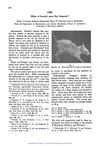
November 1943 in “Experimental Biology and Medicine” Inositol helped prevent and cure hair loss in rats.
20 citations
,
May 2011 in “Journal of Clinical Investigation” The study created a mouse model to mimic degenerative diseases for testing tissue repair and new therapies.
31 citations
,
September 1996 in “Differentiation” The upper dermal sheath can regenerate hair in rats.
 45 citations
,
January 2010 in “Journal of Veterinary Medical Science”
45 citations
,
January 2010 in “Journal of Veterinary Medical Science” A gene mutation causes curly hair and hair loss in rats.
 2 citations
,
March 1997 in “Hair transplant forum international”
2 citations
,
March 1997 in “Hair transplant forum international” Transplanting rat whisker follicles can lead to successful hair growth after cutting them.
18 citations
,
March 2004 in “The Journal of Urology” Hypospadiac rats showed abnormal genital development, useful for studying human hypospadias.
1 citations
,
February 2019 in “Nanoscience and Nanotechnology Letters” January 2008 in “Medical Entomology and Zoology” 5 citations
,
February 1981 in “Experientia” A new gene causes hairlessness and skin cysts in rats.
September 1973 in “Primates”  February 2026 in “Scientific Reports”
 The model effectively mimics radiation-induced skin damage for future research.
 23 citations
,
January 2009 in “Veterinary Dermatology”
23 citations
,
January 2009 in “Veterinary Dermatology” The hepatitis B vaccine did not cause hair loss in the tested mice.
 3 citations
,
February 2009 in “Chinese Journal of Traumatology (english Edition)”
3 citations
,
February 2009 in “Chinese Journal of Traumatology (english Edition)” Human hair cells can be used to grow new hair on rat ears, suggesting a possible treatment for hair loss.
18 citations
,
March 2014 in “Journal of Pharmacological and Toxicological Methods” The animal models successfully simulated dry eye related to sex steroid deficiency.
 3 citations
,
June 2002 in “Transgenic Research”
3 citations
,
June 2002 in “Transgenic Research” Scientists made a mouse that can be made to lose hair and then grow it back.
2 citations
,
January 1977 in “PubMed” 23 citations
,
December 1991 in “Annals of the New York Academy of Sciences” Balding scalps slow down hair growth.
rhKGF2 significantly promotes hair growth and follicle development.
January 2026 in “SSRN Electronic Journal”  November 2022 in “Journal of Investigative Dermatology”
 The research found specific genes that are more active in balding cells, which could be causing hair loss.
A new image-based method improves accuracy in measuring hair loss in mice.
44 citations
,
March 1947 in “Endocrinology” Thiourea compounds affect hair growth and pigmentation in black rats.
1 citations
,
July 2007 in “Journal of Investigative Dermatology” The mutation causes hairless mice due to mislocalized and dysfunctional HR protein.
 1 citations
,
August 2024 in “Transgenic Research”
1 citations
,
August 2024 in “Transgenic Research” Activated β-catenin affects hair growth and skin thickness, and changes are reversible.
2 citations
,
July 1994 in “Journal of Dermatological Science” Grafted human scalp samples on mice can produce human hair, useful for studying hair genetics.
February 2018 in “bioRxiv (Cold Spring Harbor Laboratory)” Rodent spiny hair traits are due to genetic factors other than the Edar gene.
11 citations
,
August 1995 in “Journal of Investigative Dermatology”