Search
for
Sort by
Research
450-480 / 1000+ results
research Sulfation of minoxidil by liver sulfotransferase
Liver enzyme helps minoxidil work better for blood vessel relaxation.
research Minoxidil
Using minoxidil can cause severe skin reactions in some people.
research Diagnosis Of Occult Asthma By Methacholine Bronchoprovocation Test
Finasteride effectively prevents hair loss and promotes hair growth in men with androgenetic alopecia.

research Efficacy of Skin Patting and Iontophoresis with Dutasteride Gel in Male and Menopausal Female Androgenetic Alopecia: A Pilot Study
The treatment improved hair growth and was well-received without side effects.
research Novel topical booster enhances follicular sulfotransferase activity in patients with androgenetic alopecia: a new strategy to improve minoxidil response
Topical booster improves hair loss treatment effectiveness.

research Minoxidil: effectiveness and prospects for use in the treatment of androgenetic alopecia
Minoxidil is an effective and safe treatment for common hair loss when applied to the skin, but more research is needed for optimal use.
research Minoxidil
Minoxidil helps lower blood pressure and can also promote hair growth.
research Response to Kang et al, “Efficacy of low-dose oral minoxidil in the management of anticancer therapy-induced alopecia in patients with breast cancer: A retrospective cohort study”
Low-dose oral minoxidil combined with topical minoxidil improves hair density in breast cancer patients but may cause excess hair growth.
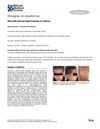
research Minoxidil induced hypertrichosis in children
Minoxidil caused unwanted hair growth in a child, but stopped after stopping treatment.
research Comparison between Topical Minoxidil 5% Alone versus Combined with Dutasteride (Topical 0.02% through Microneedling or Oral 0.5 mg) in Treatment of Androgenetic Alopecia
Combining Minoxidil with topical Dutasteride via microneedling is the most effective and safe treatment for hair loss.
research LB1777 A novel ex vivo model of human hair follicle immune privilege collapse reveals the potential of farudodstat, a DHODH inhibitor, as a therapeutic for alopecia areata treatment
Farudodstat may help treat alopecia areata by protecting hair follicles.
research Combination oral minoxidil and spironolactone for the treatment of androgenetic alopecia in adolescent females / supplemental files
research sQuiz your knowledge: Polycyclic annular plaques on the trunk following dutasteride treatment
Dutasteride for hair loss can cause skin reactions like itchy red plaques.
research Minoxidil: Topical or Oral
Oral Minoxidil may be better for hair growth than topical, but its long-term safety is unclear.

research Prospective cardiovascular evaluation with 24-hour Holter and 24-hour ambulatory blood pressure monitoring in men using 5-mg oral minoxidil for androgenetic alopecia
The conclusion is that 24 weeks of low-dose oral minoxidil is safe for men with hair loss, with no significant changes in heart rate or blood pressure.
research The Pharmacokinetics of 2.5- to 10-mg Oral Doses of Minoxidil in Healthy Volunteers
This document studied minoxidil in healthy volunteers. Minoxidil is quickly absorbed and eliminated from the body.
research Hair follicle sulfotransferase activity and effectiveness of oral minoxidil in androgenetic alopecia
Low SULT activity in hair follicles leads to better response to oral minoxidil for hair loss.

research 42889 Long-term efficacy and safety of dutasteride in Korean men with androgenetic alopecia: 5-year follow-up data exhibiting clinical improvement with sustained efficacy
Dutasteride is safe and effective long-term for male hair loss.
research Efficacy and safety of oral minoxidil 5 mg in male patients with androgenetic alopecia.
Oral minoxidil is safe and effective for increasing hair thickness in men with hair loss.
research 미녹시딜 도포후 전신에 발생한 다모증 1 례
A 5-year-old boy grew too much hair after using minoxidil, but it went away after stopping the treatment.
research Application of big data analytics in minoxidil drug development: a data-driven model for predicting efficacy and side effect risks
The model predicts minoxidil's effectiveness and side effects better than traditional methods.
research A COMBINATION STUDY BETWEEN TOPICAL 5%MINOXIDIL AND TOPICAL PROCAPIL IN MEN WITH ANDROGENIC ALOPECIA
Combining Procapil with minoxidil improves hair growth in men with hair loss.
research A COMBINATION STUDY BETWEEN TOPICAL 5%MINOXIDIL AND TOPICAL PROCAPIL IN MEN WITH ANDROGENIC ALOPECIA
Combining Procapil with minoxidil improves hair growth in men with hair loss.
research Development and evaluation of polyherbal formulation for hair growth–promoting activity
The herbal formulation promoted hair growth faster and more effectively than minoxidil in rats.
research Androgenetic alopecia, trichotrophic substances, and histologic studies of the human scalp
Minoxidil promotes hair growth but exact mechanism is unknown.
research Time to Maximal Response with Low-Dose Oral Minoxidil in Clinical Treatment of Androgenetic Alopecia
research Double-blind, placebo-controlled evaluation of topical minoxidil in extensive alopecia areata
Minoxidil helps hair growth in 63.6% of alopecia patients, with 27.3% having excellent results.
research Dutasteride, a novel dual 5-A reductase inhibitor, reduces serum DHT to a greater extent versus finasteride and achieves finasteride maximal reduction in a larger proportion of patients
Dutasteride reduces DHT more effectively than finasteride.

research Faculty Opinions recommendation of A randomized, single-blind trial of 5% minoxidil foam once daily versus 2% minoxidil solution twice daily in the treatment of androgenetic alopecia in women.
5% minoxidil foam used once daily is as effective as 2% minoxidil solution used twice daily for hair loss in women, but with fewer side effects like itching and dandruff.