2 citations
,
January 2014 in “Journal of the American Academy of Dermatology” Topical minoxidil effectively promotes hair regrowth in male pattern baldness.
 March 2021 in “Hair transplant forum international”
 Minoxidil helps hair growth.
2 citations
,
November 2025 in “Journal of the American Academy of Dermatology” Deuruxolitinib effectively regrows hair in adults with alopecia areata and is well tolerated.
 July 2015 in “Actas Dermo-Sifiliográficas”
 A woman experienced excessive hair growth after using a hair loss treatment with minoxidil.
 October 2019 in “DOAJ (DOAJ: Directory of Open Access Journals)”
 Minoxidil nanoparticles improve hair growth more effectively than regular minoxidil.
 192 citations
,
March 1998 in “British Journal of Dermatology”
192 citations
,
March 1998 in “British Journal of Dermatology” Minoxidil boosts growth factor in hair cells, potentially promoting hair growth.
58 citations
,
March 2006 in “Current topics in medicinal chemistry” Dutasteride effectively treats benign prostatic hyperplasia and may reduce prostate cancer risk.
Electrical stimulation with minoxidil boosts hair cell growth.
July 2013 in “DOAJ (DOAJ: Directory of Open Access Journals)” Minoxidil can effectively treat patchy hair loss by stimulating hair growth.
 January 2024 in “International Journal of Dermatology Research”
 Minoxidil alone is as effective as the combination but has fewer side effects.
17 citations
,
March 1985 in “Acta Dermato Venereologica” 1% topical minoxidil helped some hair regrow, but only one person had noticeable results.
 12 citations
,
November 2011 in “International Journal of Dermatology”
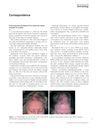
12 citations
,
November 2011 in “International Journal of Dermatology” A woman developed a scalp condition from using minoxidil, which improved with a different treatment but left scarring.
November 2006 in “Yafteh” The herbal drug worked faster than Minoxidil for treating telogen effluvium.
January 2009 in “프로그램북(구 초록집)”  January 2024 in “Journal of the Egyptian Women's Dermatologic Society (Print)”
 Combining minoxidil with dutasteride and microneedling is more effective for female pattern hair loss than just dutasteride and microneedling.
 March 1998 in “Journal of Dermatological Science”
 Combining RU58841 and minoxidil significantly increases hair growth.
 September 2024 in “Journal of the American Academy of Dermatology”
 Oral minoxidil is easier to use and more satisfying for hair loss treatment but may cause more unwanted hair growth.

More minoxidil applied topically leads to better hair growth in male pattern baldness.
 4 citations
,
May 2011 in “Current Drug Discovery Technologies”
4 citations
,
May 2011 in “Current Drug Discovery Technologies” A new liposomal system for applying dutasteride to the skin was developed, showing better skin absorption and stability, potentially improving treatment for hair loss.
January 2017 in “Faculty of 1000 Research Ltd” Oral minoxidil reduced hair shedding in women with chronic telogen effluvium.
 2 citations
,
January 2021 in “Journal of The American Academy of Dermatology”
2 citations
,
January 2021 in “Journal of The American Academy of Dermatology” Low-dose oral minoxidil for hair loss seems to have rare side effects, but more research is needed to confirm its safety.

Media coverage led to more dermatologists prescribing low-dose oral minoxidil for hair loss.
3 citations
,
January 1987 in “Archives of Dermatology” Most dermatologists prescribed topical minoxidil for hair loss, with few reporting complications.
 39 citations
,
April 2010 in “International Journal of Pharmaceutics”
39 citations
,
April 2010 in “International Journal of Pharmaceutics” Nanoparticles improve minoxidil skin permeation, but more research needed for effective hair growth.
 1 citations
,
October 2017 in “Food Additives & Contaminants: Part A”
1 citations
,
October 2017 in “Food Additives & Contaminants: Part A” A new minoxidil-like substance, triaminodil, was found in an illegal hair growth supplement.
 January 2026 in “Frontiers in Pharmacology”
 Minoxidil can treat hair loss with topical, oral, and sublingual options, offering personalized choices.
Nanostructured lipid carriers can improve androgenic alopecia treatment by reducing dutasteride dosage and maintaining its presence in hair follicles longer.
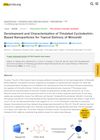
Thiolated cyclodextrin-based nanoparticles effectively deliver Minoxidil for scalp treatment without causing skin irritation.
 13 citations
,
April 2009 in “Acta Medica Scandinavica”
13 citations
,
April 2009 in “Acta Medica Scandinavica” Minoxidil lowers blood pressure and causes hair growth, with some side effects.
 21 citations
,
March 2021
21 citations
,
March 2021 Oral minoxidil effectively treats hair loss, with women needing lower doses (0.25 to 2.5 mg daily) and men needing higher doses (1.25 to 5 mg daily).