5 citations
,
September 2021 in “Journal of Molecular Histology” LHX2, with other markers, can identify hair placodes in rats.
9 citations
,
April 1999 in “Mammalian Genome” Acidic keratin genes are on CFA9 and basic keratin genes are on CFA27 in dogs.
6 citations
,
April 2024 in “Journal of Investigative Dermatology” CRISPR-based tools improve understanding and treatment of skin development and conditions.
November 2024 in “Journal of Investigative Dermatology” ATP-sensitive potassium channels are important for hair growth.
June 2023 in “bioRxiv (Cold Spring Harbor Laboratory)” Scientists created cell lines to study a genetic skin disorder using CRISPR technology.
 162 citations
,
August 2005 in “The journal of investigative dermatology/Journal of investigative dermatology”
162 citations
,
August 2005 in “The journal of investigative dermatology/Journal of investigative dermatology” The new "differential stripping" method effectively measures how much substance gets into hair follicles.
43 citations
,
April 1996 in “Journal of Investigative Dermatology”  September 2019 in “The journal of investigative dermatology/Journal of investigative dermatology”
 Tet1/2/3 enzymes affect hair follicle cell development by influencing BMP signaling.
5 citations
,
June 2008 in “British Journal of Dermatology” January 2019 in “Florida International University Digital Commons (Florida International University)” TOF-SIMS improved chemical mapping in cells, confirming gunshot residue, tracking anti-tumor drugs, and identifying molecules in mosquitoes and wounds.
73 citations
,
April 2006 in “BioTechniques” Protein microarrays are highly sensitive tools useful for disease diagnosis and studying proteins.
42 citations
,
July 2015 in “PLoS ONE” The study revealed the detailed structure of a keratin dimer, aiding understanding of how intermediate filament proteins function.
 4 citations
,
December 2012 in “Human Biology”
4 citations
,
December 2012 in “Human Biology” The most different genetic segment between Africans and East Asians is the EDA2R/AR region, with two main types influenced by population changes and natural selection, and linked to baldness.
29 citations
,
February 2001 in “Proceedings of the National Academy of Sciences” A specific DNA region controls skin cell gene expression by working with certain proteins.
1 citations
,
January 2023 in “Frontiers in Physiology” The method allows precise cell removal without harming nearby tissues.
32 citations
,
November 1998 in “Journal of Biological Chemistry” Mouse and human keratin 16 can both form filaments, with differences likely due to the tail domain, not the helical domain.
 75 citations
,
October 2010 in “Mammalian genome”
75 citations
,
October 2010 in “Mammalian genome” Sphynx cats are hairless and Devon Rex cats have curly hair due to specific genetic mutations.
13 citations
,
April 1982 in “The Journal of Dermatology” Poly(ADP-ribose) synthesis is linked to skin cell differentiation.
 10 citations
,
May 2010 in “Analytica Chimica Acta”
10 citations
,
May 2010 in “Analytica Chimica Acta” New tests detect finasteride and dutasteride in urine quickly and easily.
 September 2017 in “Journal of Investigative Dermatology”
 Hair follicle cells change their DNA packaging during growth cycles and when grown in the lab.
53 citations
,
June 2005 in “The journal of investigative dermatology/Journal of investigative dermatology” KAP genes show significant genetic variability, but its impact on hair traits is unclear.
 6 citations
,
November 2022 in “Forensic Science Medicine and Pathology”
6 citations
,
November 2022 in “Forensic Science Medicine and Pathology” Genetic markers can help predict ear shapes for forensic use.
 4 citations
,
January 2012 in “International Society of Hair Restoration Surgery”
4 citations
,
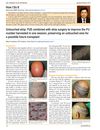
January 2012 in “International Society of Hair Restoration Surgery” Combining FUE and strip surgery increases hair harvested in one session and keeps options open for future transplants.
 2 citations
,
September 2023 in “Aging”
2 citations
,
September 2023 in “Aging” Elastic Net DNA methylation clocks are inaccurate for predicting age and health status; a "noise barometer" may better indicate aging and disease.
May 2022 in “The journal of investigative dermatology/Journal of investigative dermatology” Loss of TET2 increases the risk of skin and oral cancer.
 May 2023 in “Stem cell research & therapy”
 New method efficiently isolates hair growth cells from newborn mouse skin.
7 citations
,
May 2021 in “EBioMedicine” Increased methylation of the Filip1l gene may contribute to aggressive skin cancer.
 8 citations
,
July 2018 in “Analytical sciences”
8 citations
,
July 2018 in “Analytical sciences” Using 5-butylpicolinate esters improves the sensitivity and reliability of detecting testosterone and dihydrotestosterone in saliva.
4 citations
,
January 2017 in “Acta dermato-venereologica” A new EDA gene mutation was found in a Chinese family with a specific skin disorder.
3 citations
,
March 2025 in “Science Advances” A specific DNA duplication in Polish chickens affects feather shape by altering gene expression.