100 citations
,
August 2011 in “Journal of Investigative Dermatology” Lack of vitamin D receptor increases skin tumor risk by boosting hedgehog signaling.
 1 citations
,
January 2023 in “Burns and trauma”
1 citations
,
January 2023 in “Burns and trauma” Tiny particles from 3D-grown skin cells speed up wound healing by promoting blood vessel growth.
 October 2022 in “Medičnì perspektivi”
 Darier-White disease causes skin and nail issues, starts around age 20, worsens until 40-50, and has poor treatment options.
October 2025 in “Clinical and Experimental Pediatrics” A novel CLDN1 mutation in a 2-month-old with NISCH showed improvement with symptom management.
 12 citations
,
November 2003 in “Journal of the American Academy of Dermatology”
12 citations
,
November 2003 in “Journal of the American Academy of Dermatology” Topical diphencyprone helped regrow hair in mice and rats with a condition similar to human hair loss.
 February 2022 in “JID Innovations”
 The Virtual Magic Wand program successfully trained dermatologists in innovation, with most feeling capable of leading innovation teams and many starting companies.
 November 2024 in “Skin Appendage Disorders”
 Telogen effluvium most affects quality of life in alopecia patients.
 1 citations
,
May 2025 in “The Journal of Rheumatology”
1 citations
,
May 2025 in “The Journal of Rheumatology” Careful monitoring is crucial to prevent JC virus reactivation in lupus patients treated with rituximab.
15 citations
,
February 2021 in “Cells” Transfected cells with VEGF and FGF2 genes improve skin wound healing by enhancing blood flow and regeneration.
 18 citations
,
September 2003 in “The journal of investigative dermatology/Journal of investigative dermatology”
18 citations
,
September 2003 in “The journal of investigative dermatology/Journal of investigative dermatology” VDUP1 is found in skin and hair follicles, interacts with sciellin, and may help regulate skin cell differentiation.
 18 citations
,
September 1990 in “Veterinary Dermatology”
18 citations
,
September 1990 in “Veterinary Dermatology” Lambs' skin showed similar but more severe responses to a second orf virus infection, involving immune cells and new skin formation.
February 2026 in “American Journal of Case Reports” AS-OCT is crucial for diagnosing VZV interstitial keratitis and avoiding unnecessary treatments.

Patients with graft-versus-host disease often have nail changes related to the nail matrix, with severity not linked to skin condition.
 October 2025 in “Pediatric Dermatology”
 A 16-year-old boy's facial condition improved with doxycycline, suggesting an immune response to hair follicle damage.
 October 2021 in “Journal of Investigative Dermatology”
 DPP4, a molecule in skin, helps heal large wounds and regrow hair follicles when its levels are reduced.
36 citations
,
January 2010 in “Journal of Pediatric Endocrinology and Metabolism” A new gene mutation causes vitamin D resistance and hair loss in two unrelated girls.
1 citations
,
January 1989 in “Carcinogenesis” Dexamethasone reduces inflammation and delays skin cell changes caused by TPA.
 9 citations
,
September 2006 in “Veterinary pathology”
9 citations
,
September 2006 in “Veterinary pathology” A dog with unusual skin lesions near its tail was successfully treated for a rare form of lupus.
November 2008 in “British Journal of Hospital Medicine” Non-drug methods effectively managed agitation in a patient with a heart device, leading to improved mental function.
 August 2004 in “Journal of the American College of Surgeons”
 Dermagraft and Dermalogen had a lot of granulation, while Alloderm, Integra, and ADM had good blood vessel growth for skin healing.
15 citations
,
July 2004 in “AIDS” Indinavir therapy can cause reversible skin, hair, and nail darkening.
17 citations
,
April 2011 in “Journal of Dermatological Science” The study created a mouse model that survives longer and shows fewer symptoms of pemphigus vulgaris.
15 citations
,
March 2008 in “The Journal of Dermatology” Topical squaric acid dibutylester worsened discoid lupus erythematosus in a patient.
July 2024 in “Journal of Investigative Dermatology” INTASYL is a promising, adaptable RNAi technology for treating skin cancers.
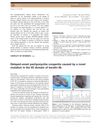 4 citations
,
December 2013 in “The Journal of Dermatology”
4 citations
,
December 2013 in “The Journal of Dermatology” A new mutation in the K6b gene caused a girl's late-appearing nail condition.
 4 citations
,
May 2018 in “Journal of Neuro-Ophthalmology”
4 citations
,
May 2018 in “Journal of Neuro-Ophthalmology” New treatments for relapsing multiple sclerosis are more effective and convenient but have higher risks of serious side effects.
 4 citations
,
January 2018 in “International Journal of Trichology”
4 citations
,
January 2018 in “International Journal of Trichology” A rare genetic disease causes sparse hair and early blindness due to a gene mutation.
10 citations
,
September 2004 in “PubMed” Vitamin D receptor FokI gene variation is not linked to alopecia areata.
55 citations
,
November 2010 in “Journal of Allergy and Clinical Immunology” The L412F variant of TLR3 is linked to skin infections, more viral infections, and autoimmune issues.
21 citations
,
December 2019 in “PloS one” The rat model showed early perimenopause with regular cycles and low hormones, and late perimenopause with irregular cycles and higher hormone levels.