9 citations
,
November 2006 in “Journal of Microscopy” Dye mainly stays on the hair surface and endocuticle.
 46 citations
,
January 2009 in “Textile Research Journal”
46 citations
,
January 2009 in “Textile Research Journal” Researchers developed a new method to identify animal hair in textiles, which is effective for various fibers and more reliable than previous methods.
 13 citations
,
January 1995 in “Journal of the American Institute for Conservation”
13 citations
,
January 1995 in “Journal of the American Institute for Conservation” Researchers developed a less damaging way to extract red dyes from wool using EDTA and DMF, preserving the fiber's strength for further analysis.
 June 2021 in “Research Square (Research Square)”
 Dyed chitin nanofibers are strong, colorful, and water-resistant, enhancing resin strength and color.
 January 2014 in “Sen'i Gakkaishi”
 Researchers developed a method to identify animal fibers in textiles, which works on processed and blended materials.
 5 citations
,
February 2015 in “Journal of Bio- and Tribo-Corrosion”
5 citations
,
February 2015 in “Journal of Bio- and Tribo-Corrosion” Plasma jet treatments can clean hair and might replace peroxide for hair care.
 29 citations
,
August 2005 in “Biopolymers”
29 citations
,
August 2005 in “Biopolymers” L-cysteine slows down the breaking of bonds in hair due to electrostatic interactions.
 5 citations
,
April 2005 in “Journal of applied polymer science”
5 citations
,
April 2005 in “Journal of applied polymer science” PEI diffuses into hair at a constant rate, and urea speeds up this process.
 21 citations
,
January 1995 in “Journal of the American Institute for Conservation”
21 citations
,
January 1995 in “Journal of the American Institute for Conservation” A new method extracts red dyes from wool without damaging it, although it slightly weakens the wool.
 14 citations
,
September 1954 in “Textile Research Journal”
14 citations
,
September 1954 in “Textile Research Journal” Hair absorbs different substances from solutions based on pH levels.
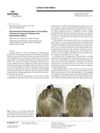 5 citations
,
January 2015 in “Skin appendage disorders”
5 citations
,
January 2015 in “Skin appendage disorders” Colored hair-thickening fibers can help hide hair loss in some people with Epidermolysis Bullosa but may cause scalp irritation.
 4 citations
,
June 2021 in “Scientific Reports”
4 citations
,
June 2021 in “Scientific Reports” Hair fiber shape and curvature are not significantly linked when ancestry is considered.
 3 citations
,
January 2018 in “Open Access Macedonian Journal of Medical Sciences”
3 citations
,
January 2018 in “Open Access Macedonian Journal of Medical Sciences” Implant safely and effectively treats hair loss.
Acidic sandy clay damages archaeological hair the most, while dry conditions preserve but make it brittle; silicone oil can help keep the hair flexible.
 March 2005 in “International Journal of Cosmetic Science”
 A new method helps understand hair shine and various products improve hair care.
 6 citations
,
January 2016 in “Environmental footprints and eco-design of products and processes”
6 citations
,
January 2016 in “Environmental footprints and eco-design of products and processes” The industry should promote pure luxury hair fibers, improve technology, and diversify products to support growers and ensure sustainable use.
 2 citations
,
March 2005 in “International Journal of Cosmetic Science”
2 citations
,
March 2005 in “International Journal of Cosmetic Science” Human hair structure varies by ethnicity, and certain treatments can improve hair condition and appearance.
 1 citations
,
March 2005 in “International Journal of Cosmetic Science”
1 citations
,
March 2005 in “International Journal of Cosmetic Science” Twisting hair weakens it, but strength can be recovered at low twist levels.
 8 citations
,
November 2019 in “International Journal of Morphology”
8 citations
,
November 2019 in “International Journal of Morphology” Henna dye improves hair cuticle and thickness but effects vary by hair type and health.
 3 citations
,
June 2019 in “Journal of cosmetic dermatology”
3 citations
,
June 2019 in “Journal of cosmetic dermatology” Lower pH straighteners change hair more but weaken it.
 March 2005 in “International Journal of Cosmetic Science”
 DVI provides detailed 3D imaging of hair and shows how various products protect and enhance hair.
 13 citations
,
January 2017 in “Cosmetics”
13 citations
,
January 2017 in “Cosmetics” Different tests are used to see how hair care products affect hair, and choosing the right test is important for accurate results.
 11 citations
,
July 2021 in “Sustainability”
11 citations
,
July 2021 in “Sustainability” Concrete made from animal bones and human hair is stronger and more environmentally friendly than traditional concrete.
Hair properties change under electromagnetic fields and are influenced by individual characteristics and the environment.
January 2026 in “Brazilian Journal of Pharmaceutical Sciences” Conditioners with jojoba and coconut oils improve hair feel and reduce damage perception.
 73 citations
,
June 2001 in “Endocrinology”
73 citations
,
June 2001 in “Endocrinology” Prolactin affects when mice shed and grow hair.
 40 citations
,
April 2006 in “Journal of the European Academy of Dermatology and Venereology”
40 citations
,
April 2006 in “Journal of the European Academy of Dermatology and Venereology” The Trichoscan system was found to be inaccurate for measuring hair growth, needing better software to be useful.
20 citations
,
December 2012 in “Journal of molecular structure” The study found that thioglycolic acid breaks down hair bonds more consistently than l-cysteine, which is less damaging to hair.
 15 citations
,
February 2017 in “International Journal of Women's Dermatology”
15 citations
,
February 2017 in “International Journal of Women's Dermatology” Hair camouflage offers various options for hair loss, helping reduce psychological impact.
 15 citations
,
February 2017 in “International Journal of Women's Dermatology”
15 citations
,
February 2017 in “International Journal of Women's Dermatology” Hair aging and loss are caused by genetics, hormones, environment, and grooming, with treatments like minoxidil effective for certain types of hair loss.