20 citations
,
April 2022 in “Journal of Personalized Medicine” Powered exoskeleton training improves body perception and quality of life in spinal cord injury patients.
 8 citations
,
December 2009 in “Journal of The European Academy of Dermatology and Venereology”
8 citations
,
December 2009 in “Journal of The European Academy of Dermatology and Venereology” Researchers found a new mutation in the FERMT1 gene in a Spanish family with Kindler syndrome.
65 citations
,
September 2014 in “Orphanet Journal of Rare Diseases” Different STUB1 gene mutations cause varied symptoms in autosomal recessive ataxias.
 May 2015 in “Journal of The American Academy of Dermatology”
 A woman with Parry-Romberg syndrome developed new curly hair on one side of her scalp, a condition not previously linked to the syndrome.
January 2005 in “Journal of Zhejiang University(Sciences Edition)” Yuyi hairless mice lose hair after birth, develop thick, loose skin with folds, and show disorganized skin structure as they age.
March 2011 in “Open Archive (Karolinska Institutet)” The mouse model showed defects in adult stem cell maintenance related to Hutchinson-Gilford progeria syndrome.
 2 citations
,
August 2025 in “Scientific Reports”
2 citations
,
August 2025 in “Scientific Reports” Pexidartinib often causes liver issues and fatigue, especially in women.
 19 citations
,
October 2020 in “Biomedical Microdevices”
19 citations
,
October 2020 in “Biomedical Microdevices” Derma rollers show promise for skin improvement and drug delivery, but more research is needed on their safety and effectiveness.
13 citations
,
May 2001 in “Current problems in dermatology” Keratin proteins in epithelial cells are dynamic and crucial for cell processes and disease understanding.
January 2008 in “Projeto: revista mensal de arquitetura” Targeted cancer drugs can cause skin reactions, so dermatologists must manage these effects.
 April 2017 in “Journal of Investigative Dermatology”
 Scientists can control how skin stem cells divide by using different treatments.
8 citations
,
December 2003 in “Experimental Dermatology” Altering the keratin 17 gene in mice hair follicles caused temporary hair issues, but changes were minimal and short-lived.
 19 citations
,
June 2015 in “Actas Dermo-Sifiliográficas”
19 citations
,
June 2015 in “Actas Dermo-Sifiliográficas” Chronic kidney disease can cause skin problems that affect patient quality of life, and treating these conditions can improve outcomes.
 27 citations
,
May 2007 in “Archives of dermatological research”
27 citations
,
May 2007 in “Archives of dermatological research” Diphencyprone treatment increases CD8 lymphocytes in the scalp, which is associated with hair regrowth in alopecia areata patients.
January 2016 in “The Korean Journal of Internal Medicine” Doxazosin may cause breast enlargement and pain in men.
19 citations
,
April 2024 in “Nature Cell Biology” 20 citations
,
April 2000 in “Experimental dermatology” ODC transgenic mice can model human hair loss with skin lesions.

Equine Cushing's disease in horses causes hormonal imbalance, leading to symptoms like abnormal hair growth and requires lifelong treatment with pergolide.
 28 citations
,
July 2017 in “Expert Review of Anticancer Therapy”
28 citations
,
July 2017 in “Expert Review of Anticancer Therapy” Breast cancer patients taking CDK4/6 inhibitors are more likely to experience fatigue, hair loss, and mouth sores.
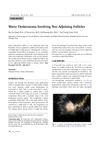 10 citations
,
January 2011 in “Annals of Dermatology”
10 citations
,
January 2011 in “Annals of Dermatology” A rare scalp tumor involving two hair follicles was successfully removed with surgery, with no recurrence after 7 months.
 April 2020 in “Journal of the Endocrine Society”
 A patient with myotonic dystrophy had several autoimmune disorders and thyroid cancer, suggesting a possible link between these conditions.
5 citations
,
January 2016 in “International Journal of Trichology” Erlotinib can cause hair loss and texture changes.
 192 citations
,
January 2015 in “Journal of the American Academy of Dermatology”
192 citations
,
January 2015 in “Journal of the American Academy of Dermatology” Targeted cancer therapies often cause serious skin problems that need careful management.
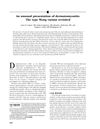 36 citations
,
November 2000 in “Journal of the American Academy of Dermatology”
36 citations
,
November 2000 in “Journal of the American Academy of Dermatology” A woman with dermatomyositis showed rare skin symptoms, was treated successfully, and her case suggests checking for cancer in similar patients.
1 citations
,
August 2025 in “Frontiers in Neuroscience” Cellular senescence may play a role in ALS, and anti-senescence therapies could be a promising treatment.
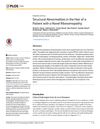 6 citations
,
March 2016 in “PLoS ONE”
6 citations
,
March 2016 in “PLoS ONE” The patient's hair was thinner and had fewer lipids due to a genetic mutation.
Spiny mice have resilient, large mitochondria that help them regenerate tissue.
 June 2024 in “Journal of Clinical Oncology”
 Dalpiciclib is the safest and most satisfying CDK4/6 inhibitor for advanced breast cancer patients in China.

The document suggests that drugs for prostate issues might cause lasting sexual, mental, and physical health problems due to blood vessel damage in the penis.
January 2026 in “British Journal of Dermatology” The ATP assay can measure skin microbiome changes and recovery, with ethanol-treated skin taking longer to recover than tape-stripped skin.