Accurate diagnosis and tailored treatments are crucial for managing hair loss in humans and animals.
5 citations
,
January 2011 in “Archives de Pédiatrie” A severe form of Netherton syndrome caused by a specific gene mutation led to neonatal deaths in a family.
April 2012 in “Neuropediatrics” Trichothiodystrophy is a rare genetic disorder causing hair issues and sometimes linked to DNA repair defects.
13 citations
,
July 2012 in “International Journal of Trichology” TTD symptoms vary widely, requiring thorough evaluations.
 30 citations
,
June 2014 in “Seminars in Immunology”
30 citations
,
June 2014 in “Seminars in Immunology” Future research on ectodysplasin should explore its role in diseases, stem cells, and evolution, and continue developing treatments for genetic disorders like hypohidrotic ectodermal dysplasia.
 28 citations
,
February 2010 in “British journal of dermatology/British journal of dermatology, Supplement”
28 citations
,
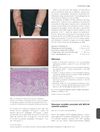
February 2010 in “British journal of dermatology/British journal of dermatology, Supplement” WNT10A mutations cause varied symptoms in patients with odonto-onycho-dermal dysplasia.
13 citations
,
July 2016 in “Indian Journal of Dermatology” DPR can show different hair characteristics, as seen in two brothers with normal hair.
12 citations
,
January 2013 in “Indian dermatology online journal” Dermatopathia pigmentosa reticularis causes skin discoloration, hair loss, and nail problems.
3 citations
,
June 2018 in “Internal Medicine” Recombinant thrombomodulin can effectively treat severe complications in Cronkhite-Canada syndrome.
1 citations
,
June 2022 in “Tidsskrift for Den norske legeforening” A young boy's uncombable hair is due to a rare genetic condition that usually improves over time.
 1 citations
,
February 2017 in “International journal of anatomy and research”
1 citations
,
February 2017 in “International journal of anatomy and research” Understanding fetal skin development helps diagnose congenital skin diseases.
Alopecia in dogs requires identifying the cause for effective treatment.

This rare genetic disorder causes permanent hair loss and skin bumps from birth.
 April 2023 in “The journal of investigative dermatology/Journal of investigative dermatology”
 Deleting the Hoxc13 gene in frogs shows its crucial role in developing skin structures similar to hair.
 January 2021 in “Veterinary research forum”
 A Holstein calf in Iran with a severe genetic skin disorder was euthanized due to incurable symptoms.
Mutant Cx43 causes slower wound healing and hair growth issues in ODDD.
January 2009 in “Epsilon: Revista de la Sociedad Andaluza de Educación Matemática "Thales"” A CCS patient with severe complications was successfully treated using combined therapies.
 49 citations
,
August 2004 in “The FASEB Journal”
49 citations
,
August 2004 in “The FASEB Journal” Mice with human skin protein K8 had more skin problems and cancer.
 33 citations
,
August 1973 in “American Heart Journal”
33 citations
,
August 1973 in “American Heart Journal” Propranolol can cause reversible hair loss.
 2 citations
,
December 2013 in “Veterinary dermatology”
2 citations
,
December 2013 in “Veterinary dermatology” Three dogs with a rare skin condition improved with treatment.
175 citations
,
December 1980 in “Archives of Dermatology” Trichothiodystrophy is a condition with brittle hair and various physical and mental issues due to low sulfur in proteins.
 43 citations
,
February 2013 in “Developmental dynamics”
43 citations
,
February 2013 in “Developmental dynamics” Foxi3 expression in developing teeth and hair is controlled by the ectodysplasin pathway.
 January 2026 in “Frontiers in Medicine”
 A child has a rare hair and skin disorder due to specific gene variants, suggesting broader genetic testing is needed.
 March 2023 in “International journal of trichology”
 Six genetic conditions are often linked to complete scalp hair loss in children.
32 citations
,
November 2006 in “Veterinary dermatology” Congenital alopecia in domestic animals is rare and involves abnormal hair follicle development, needing better understanding and classification.
26 citations
,
August 2014 in “Veterinary Dermatology” Sphynx cats have abnormal hair follicles and keratinization affecting their skin.
15 citations
,
July 2015 in “Developmental Dynamics” Orai1 protein is crucial for tooth development and affects enamel thickness and mineralization.
10 citations
,
July 2001 in “PubMed” A new type of pachyonychia congenita may exist, caused by a different keratin mutation.
10 citations
,
June 1999 in “Veterinary Dermatology” Two cows had a rare hair disorder causing hair loss but were otherwise healthy.
6 citations
,
October 2022 in “Frontiers in Physiology” Calcium channels are vital for normal skin function and their dysfunction can lead to skin issues.