 January 2023 in “Indian dermatology online journal”
 A child with ectodermal dysplasia-syndactyly syndrome has a new mutation in the NECTIN4 gene.
 December 2022 in “Journal of Experimental Biology and Agricultural Sciences”
 Using certain plant growth regulators together improves the cloning of the medicinal plant Eclipta alba.
 October 2022 in “International journal of pharmaceutical sciences review and research”
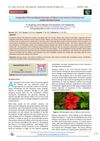
 Hibiscus leaf extract is better for diabetes, and Eclipta alba bark extract is better for antioxidants.
June 2022 in “International Journal of Science and Research (IJSR)” Eclipta alba, or Bhringraj, is safe and beneficial for hair growth and other health uses.
 May 2022 in “International Journal for Research in Applied Science and Engineering Technology”
 Eclipta prostrata has potential as a natural antibiotic.
 February 2022 in “Research Journal of Biotechnology”
 Eclipta alba L. is a medicinal plant with many health benefits, including treating diseases and promoting hair growth.
January 2022 in “Zenodo (CERN European Organization for Nuclear Research)” Eclipta prostrata has many health benefits, including protecting the liver, fighting cancer, and reducing inflammation.
False daisy is a medicinal herb with many health benefits, including hair growth promotion.
 June 2021 in “Dermatology Online Journal”
 A girl with a rare genetic condition affecting hair and nails also developed a common type of hair loss, suggesting a possible genetic link.
Eclipta alba shows promise for treating hair loss.
 March 2021 in “Research Square (Research Square)”
 The new 3D sponge-like material helps cells grow and heals wounds effectively.
 December 2020 in “Dermatología argentina”
 A patient got a skin reaction on their hands and feet after using secukinumab for psoriasis.
 December 2020 in “International Journal of Biosciences (IJB)”
 Eclipta alba shows promise for medicinal use but needs more research.
July 2020 in “Research Square (Research Square)” A 3D co-culture model improved stem cell function and wound healing.
April 2020 in “Journal of the Endocrine Society” The patient with a misplaced pituitary gland and interrupted pituitary stalk is being treated with hormone replacement.
April 2020 in “Journal of the Endocrine Society” Somatostatin analogues effectively manage ectopic ACTH syndrome when surgery isn't possible.
January 2020 in “Ayurline: IJ-RIM” Bhrungraj extract showed strong potential to fight liver cancer cells.
September 2019 in “The journal of investigative dermatology/Journal of investigative dermatology” New RIPK4 gene mutations were found to cause a type of skin and limb birth defect.
 September 2019 in “Journal of Investigative Dermatology”
 Abrocitinib at 100 mg and 200 mg daily may significantly improve moderate-to-severe atopic dermatitis in patients 12 years and older.
 May 2019 in “Asian Journal of Pharmaceutical and Clinical Research”
 Eclipta prostrata, particularly its chloroform fraction, effectively reduces inflammation and arthritis.
 April 2018 in “The journal of investigative dermatology/Journal of investigative dermatology”
 Researchers found a new way to isolate sweat glands from the scalp for study and culture.

Eclipta alba can be used in products to treat hair loss.
 April 2017 in “The journal of investigative dermatology/Journal of investigative dermatology”
 CD101 is highly effective in treating dermatophytosis in guinea pigs.
 January 2017 in “Bulletin of Pharmaceutical Research”
 Chemical fingerprints can distinguish Eclipta prostrata from Wedelia calendulacea to prevent confusion and adulteration.
January 2017 in “Lithuanian University of Health Sciences” People in Vilnius often buy hair care products outside pharmacies and lack knowledge about ecological products and their benefits.
 September 2016 in “Journal of dermatological science”
 Transplanted whisker follicles caused hair growth on the spine of mice.
 August 2016 in “Journal of Investigative Dermatology”
 The enzyme CD73 helps control human hair growth and could be targeted to treat hair growth disorders.
April 2016 in “Journal of Investigative Dermatology” Mutations in the TSPEAR gene cause a new form of ectodermal dysplasia affecting hair and tooth development.
 April 2016 in “Journal of Investigative Dermatology”
 The Engrailed-1 gene plays a key role in the development of sweat glands in mice.
 February 2016 in “The journal of allergy and clinical immunology/Journal of allergy and clinical immunology/The journal of allergy and clinical immunology”
 A new TP63 mutation was found in a baby with EEC syndrome, showing the need for TREC testing to check for immune issues.