 November 2020 in “International journal of contemporary pediatrics”
 Two siblings had a rare immune disorder caused by a FOXN1 gene mutation.
 January 2019 in “Przegląd Dermatologiczny”
 An 87-year-old woman was diagnosed with type 3 autoimmune polyendocrine syndrome and had multiple autoimmune issues.
 December 2018 in “IntechOpen eBooks”
 Neurohormones help control skin health and could treat skin disorders.


Skin stem cells are crucial for maintaining and repairing skin, with potential for treating skin disorders and improving wound healing.
 September 2013 in “Experimental Dermatology”
 The document concluded that stem cells are crucial for skin repair, regeneration, and may help in developing advanced skin substitutes.
 March 2013 in “Revista Brasileira de Cirurgia Plástica”
 Using platelet growth factors can improve hair density in transplants, especially for those with fine hair.
 January 2012 in “Durham e-Theses (Durham University)”
 Keratin 15 affects cell behavior and characteristics in skin cells.
 June 2006 in “British Journal of Dermatology”
 The document reports unique growth lines in a child after Stevens-Johnson syndrome, skin reaction from parsnips and sun in a girl, and itchy skin with xanthomas in a boy with Alagille syndrome.
 May 2026 in “Frontiers in Cell and Developmental Biology”
 Hair follicle organoids can help study hair biology and disorders but need improvements for wider use.

The hairline can reliably guide neurosurgical planning.
 April 2026 in “Human Genome Variation”
 The MBTPS2 gene variant c.970+5G>A is a common mutation causing IFAP syndrome.
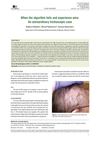 January 2026 in “Forum Dermatologicum”
 Thorough hair examination is crucial for accurate diagnosis and treatment.
 April 2024 in “Cell death and differentiation”
 Cell death shapes skin stem cell environments, affecting inflammation, repair, and cancer.
 April 2024 in “bioRxiv (Cold Spring Harbor Laboratory)”
 GRK2 is essential for healthy hair follicle function, and its absence can lead to hair loss and cysts.
 November 2023 in “bioRxiv (Cold Spring Harbor Laboratory)”
 Disrupted cholesterol production impairs hair follicle stem cells, leading to hair loss.
 October 2023 in “bioRxiv (Cold Spring Harbor Laboratory)”
 Immune cells are essential for early hair and skin development and healing.
 October 2023 in “Clinical medicine and medical research”
 Thyroid function may influence hair loss after COVID-19.
 March 2023 in “Scientific reports”
 Hair growth-related cells need the enzyme SCD1 to help maintain the area that supports hair growth.
 January 2023 in “bioRxiv (Cold Spring Harbor Laboratory)”
 Newly born mesenchymal cells quickly spread out in response to tissue tension during early development.
 May 2020 in “bioRxiv (Cold Spring Harbor Laboratory)”
 The study found that certain genes are important for hedgehog skin appendage development and immunity, with spines possibly evolving for protection and infection resistance.

The document is a detailed guide on skin conditions and treatments for dermatologists.

Accurate diagnosis and tailored treatments are crucial for managing hair loss in humans and animals.
 February 2019 in “bioRxiv (Cold Spring Harbor Laboratory)”
 The gene Prss53 affects hair shape and bone development in rabbits.
 April 2018 in “Journal of Investigative Dermatology”
 Older hair follicle stem cells have a reduced ability to renew themselves, leading to more hair loss.
 April 2018 in “Journal of Investigative Dermatology”
 Both Th1 and Th2 immune responses are increased in alopecia areata, with Th2 response more strongly linked to how severe the disease is.
 April 2018 in “Journal of Investigative Dermatology”
 Activating Nrf2 helps wounds heal faster by increasing hair follicle stem cells.
 April 2018 in “Journal of Investigative Dermatology”
 Topical tofacitinib is effective in promoting hair growth for non-scarring alopecia.
 January 2018 in “Stem cell biology and regenerative medicine”
 The conclusion is that the nuclear lamina and LINC complex in skin cells respond to mechanical signals, affecting gene expression and cell differentiation, which is important for skin health and can impact skin diseases.
 January 2018 in “Stem cells in clinical applications”
 Exosomes show promise for tissue repair and regeneration with advantages over traditional cell therapies.