1 citations
,
April 2023 in “Preprints.org” SEFFI is a safe and effective anti-aging treatment with few complications.
6 citations
,
December 2024 in “F1000Research” Fibroblast and immune cell interactions affect tissue repair and fibrosis.
28 citations
,
July 1993 in “The journal of investigative dermatology/Journal of investigative dermatology” 4 citations
,
November 2020 in “Case reports in dermatology” A rare skin condition causes red, dark, bumpy facial lesions.
September 2025 in “Development” Nelfb is crucial for forming skin fat tissue by regulating genes needed for fat cell development.
November 2025 in “Journal of Investigative Dermatology” KLHL24-mutant stem cells help understand skin and heart disease.
 January 2020 in “Medical journal of clinical trials & case studies”
 A 37-year-old male with severe skin and internal issues has a rare inherited skin condition called dystrophic epidermolysis bullosa.
 June 2024 in “ESMO Gastrointestinal Oncology”
 The combination treatment showed a higher response rate but no significant survival benefits.
June 2026 in “Frontiers in Medicine” The excimer laser is a promising and safe treatment for frontal fibrosing alopecia.
3 citations
,
August 2017 in “Clinical case reports” A rare skin condition causes red and dark patches on the face and limbs.
January 2001 in “Chinese Journal of Reparative and Reconstructive Surgery” EGF aids skin development and healing, while bFGF absence in embryos may allow scar-free healing.
60 citations
,
July 2014 in “Autophagy” The protein FLCN is involved in cellular cleanup and is regulated by ULK1.
7 citations
,
September 2013 in “Familial cancer” Birt–Hogg–Dubé syndrome is a rare genetic condition causing skin lesions, lung cysts, and a higher chance of kidney cancer.
7 citations
,
August 2017 in “Genetic testing and molecular biomarkers” A new mutation in the FLCN gene linked to Birt-Hogg-Dube syndrome was found, suggesting people with certain lung collapse should be tested for this mutation and screened for kidney and colon cancer.
 December 2025 in “International Journal of Surgery”
 GBP1 is a key target for treating Epstein-Barr virus-related kidney cancer, and finasteride may help.
51 citations
,
January 1997 in “PubMed” GABEB is a less severe skin condition caused by a gene mutation affecting collagen, leading to blisters and other symptoms.
125 citations
,
February 2007 in “The EMBO Journal” Fgfr2b helps maintain healthy skin and prevent cancer.
 13 citations
,
February 2007 in “British Journal of Dermatology”
13 citations
,
February 2007 in “British Journal of Dermatology” EF and PXE not closely related.
 September 2022 in “PubMed”
 Entadfi, a mix of finasteride and tadalafil, is used for BPH.
1 citations
,
December 2012 in “Journal of dermatological science” Combining ficlatuzumab and gefitinib can cause severe scarring hair loss.
66 citations
,
June 2004 in “Development” FGF signaling is crucial for starting feather development in chicken embryos.
39 citations
,
July 1993 in “The journal of investigative dermatology/Journal of investigative dermatology” FGF and EGF are crucial for hair follicle development and growth.
1 citations
,
April 2025 in “American Journal of Medical Genetics Part C Seminars in Medical Genetics” Eflornithine improved symptoms in Bachmann–Bupp Syndrome patients.
The protein's size was reduced, but more work is needed to confirm its function.
February 2024 in “Frontiers in Cell and Developmental Biology” Eribulin-based chemotherapy is more effective and has fewer side effects for advanced triple-negative breast cancer.
 January 2019 in “Springer Reference Medizin”
 Follicle Stimulating Hormone is important for fertility.
 14 citations
,
July 2012 in “Journal of the American Academy of Dermatology”
14 citations
,
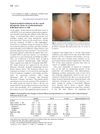
July 2012 in “Journal of the American Academy of Dermatology” Topical tacalcitol ointment can help improve symptoms of EFFC.
 June 2026 in “Springer Link (Chiba Institute of Technology)”
 FGFs have evolved differently across species, affecting skin and wound healing.
Low-level laser therapy reduces symptoms and inflammation in frontal fibrosing alopecia.
39 citations
,
October 2012 in “Familial cancer” New therapies for Birt–Hogg–Dubé syndrome are being developed based on understanding the FLCN gene's role.