70 citations
,
December 2004 in “Proceedings of the National Academy of Sciences” BMP signaling affects hair color by interacting with the MC-1R pathway.
1 citations
,
May 2022 in “International journal of molecular sciences” Faulty LEF1 activation causes faster skin cell differentiation in premature aging syndrome.
34 citations
,
September 2007 in “Experimental Dermatology” The outer layer of Merino wool is rich in sulfur proteins, making it resistant to damage.
198 citations
,
October 1986 in “Differentiation” 118 citations
,
January 2004 in “European Journal of Cell Biology” Balanced protease activity is crucial for healthy skin and hair development.
17 citations
,
June 2003 in “The journal of investigative dermatology. Symposium proceedings/The Journal of investigative dermatology symposium proceedings” Mutations in hKAP1 genes may cause hereditary hair disorders.
CCC1 is essential for ion balance and proper plant cell function.
January 2024 in “Animals” Circular RNA ERCC6 helps activate stem cells important for cashmere goat hair growth by interacting with specific molecules in an m6A modification-dependent way.
 58 citations
,
June 2018 in “Scientific reports”
58 citations
,
June 2018 in “Scientific reports” Researchers found 15 new genetic links to skin traits in Japanese women.
15 citations
,
July 2015 in “Developmental Dynamics” Orai1 protein is crucial for tooth development and affects enamel thickness and mineralization.
 2 citations
,
April 2020 in “bioRxiv (Cold Spring Harbor Laboratory)”
2 citations
,
April 2020 in “bioRxiv (Cold Spring Harbor Laboratory)” The skin's basement membrane is specially designed to support different types of connections between skin layers and hair follicles.
72 citations
,
December 2018 in “Journal of Experimental Zoology Part B Molecular and Developmental Evolution” Corneous beta-proteins evolved uniquely in reptiles and birds, forming scales, claws, beaks, and feathers.
 19 citations
,
April 2015 in “International Journal of Molecular Sciences”
19 citations
,
April 2015 in “International Journal of Molecular Sciences” The research identified genes and pathways important for sheep wool growth and shedding.
 June 2023 in “Journal of biological chemistry/The Journal of biological chemistry”
 Sdr16c5 and Sdr16c6 genes regulate a key point in lipid production that affects eye and skin gland function.
 November 2022 in “bioRxiv (Cold Spring Harbor Laboratory)”
 MOF controls skin development by regulating genes for mitochondria and cilia.
June 2026 in “British Journal of Dermatology” A rare genetic mutation in the EGFR gene caused severe skin issues and other health problems in a Slovakian girl, who is now 4 years old and receiving care.
April 2016 in “Journal of Investigative Dermatology” Mutations in the TSPEAR gene cause a new form of ectodermal dysplasia affecting hair and tooth development.
 98 citations
,
June 2008 in “Human mutation”
98 citations
,
June 2008 in “Human mutation” A genetic change in the EDAR gene causes the unique hair traits found in East Asians.
January 2026 in “PLoS Biology” ARHGEF3 is essential for proper hair follicle development in mice.
January 2025 in “Repository of Digital Objects for Teaching Research and Culture (University of Valencia)” Non-coding RNAs may be key in diagnosing and treating rare skin disorders.
3 citations
,
January 2025 in “International Journal of Molecular Sciences” EGCG shows strong electron transfer interactions when bonded to DPPG lipids.
 8 citations
,
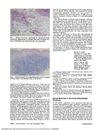
November 1990 in “Archives of Dermatology”
8 citations
,
November 1990 in “Archives of Dermatology” A woman with EMS showed unusual skin mucinosis without the typical hard skin syndrome, suggesting EMS can cause skin mucinosis.
32 citations
,
May 2018 in “The Plant Cell” ERULUS is crucial for root hair growth by controlling calcium levels.
 April 2023 in “Journal of Investigative Dermatology”
 MPZL3 protein helps control the size of oil glands and the growth of oil-producing cells in both mice and humans.
 June 2026 in “Communications Biology”
 Hoxc13 and hair keratin are needed for forming rough skin on frog mating pads.
 10 citations
,
March 2015 in “Journal of dermatology”
10 citations
,
March 2015 in “Journal of dermatology” The boy's severe skin disorder is caused by two new mutations in his TGM1 gene.
 38 citations
,
October 2011 in “Analytical biochemistry”
38 citations
,
October 2011 in “Analytical biochemistry” Hair proteins have weak spots in their α-helical segments.
 April 2023 in “Journal of Investigative Dermatology”
 The specific skin disease variant p.(Arg2000Trp) in plectin can cause a wide range of symptoms, which should be considered when diagnosing patients.
42 citations
,
July 2015 in “PLoS ONE” The study revealed the detailed structure of a keratin dimer, aiding understanding of how intermediate filament proteins function.
9 citations
,
December 2018 in “Journal of Natural Fibers” Magra sheep's wool luster is linked to specific keratin gene expression and protein variations.