 January 2015 in “Ankara Üniversitesi Tıp Fakültesi mecmuası”
 Men with severe hair loss may have a higher risk of heart disease.
 June 1996 in “Archives of Dermatology”
 Minoxidil, tretinoin, and finasteride may help hair regrowth in mild to moderate androgenetic alopecia.
April 2023 in “Journal of Investigative Dermatology” CD8+ T cells attack hair follicle stem cells, causing scarring and hair loss.
1 citations
,
April 2025 in “Clinical Cosmetic and Investigational Dermatology” A rare skin lesion in a 64-year-old woman was successfully treated with a laser, showing minimal redness and no return after one month.
6 citations
,
January 2015 in “Indian Dermatology Online Journal” PEODDN is a rare skin disorder with limited treatment options, best treated with laser therapy.
 33 citations
,
November 1994 in “Archives of Biochemistry and Biophysics” 18 citations
,
January 2018 in “BMC dermatology”
33 citations
,
November 1994 in “Archives of Biochemistry and Biophysics” 18 citations
,
January 2018 in “BMC dermatology” A new mutation in the PLEC gene causes a rare condition with skin blistering, muscle weakness, and hair loss.
7 citations
,
January 2020 in “Dermatology online journal” An adult with a rare skin condition improved with tazarotene treatment.
 3 citations
,
January 2019 in “Journal of Dermatology”
3 citations
,
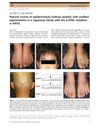
January 2019 in “Journal of Dermatology” The p.P25L mutation in the KRT5 gene causes a rare skin condition that worsens over time and may lead to hair loss starting in young adulthood.
3 citations
,
January 2020 in “The journal of investigative dermatology/Journal of investigative dermatology” Skin cells from people with Epidermolysis Bullosa Simplex have abnormally placed and less active mitochondria.
20 citations
,
January 1997 in “Dermatology” The patient with EEC syndrome had scarring alopecia due to deep folliculitis, possibly linked to abnormal hair structure.
 19 citations
,
May 2016 in “Aging Cell”
19 citations
,
May 2016 in “Aging Cell” Older people's sweat glands are less effective at helping skin wounds heal due to weaker cell connections.
2 citations
,
July 2016 in “Veterinary dermatology” Hyperaesthetic leucotrichia in horses causes painful, recurring skin lesions and hair color changes, especially in Arabian and American paint horses.
September 2021 in “CRC Press eBooks” Erosive pustular dermatosis of the scalp causes painful, scarring skin lesions on the scalp, mainly in elderly people with sun-damaged skin.
 65 citations
,
March 2018 in “Journal of Dermatological Science”
65 citations
,
March 2018 in “Journal of Dermatological Science” Skin problems can be caused or worsened by physical forces and pressure on the skin.
189 citations
,
July 2009 in “The Journal of clinical investigation/The journal of clinical investigation” Epidermolysis bullosa simplex causes easily blistered skin due to faulty skin cell proteins, leading to new treatment ideas.
2 citations
,
August 2004 in “Veterinary Dermatology” A dog with a hereditary skin condition causing blisters and hair loss survived for a year.
July 2024 in “Journal of Investigative Dermatology” Mechanical tension worsens keloid scars by activating inflammation and fibrosis pathways.
 April 2023 in “Journal of Investigative Dermatology”
 The specific skin disease variant p.(Arg2000Trp) in plectin can cause a wide range of symptoms, which should be considered when diagnosing patients.
August 2025 in “Indian Dermatology Online Journal” Early recognition and treatment of EPDS are crucial to prevent permanent hair loss.
 21 citations
,
January 2015 in “Dermatologic Therapy”
21 citations
,
January 2015 in “Dermatologic Therapy” Latanoprost may cause scalp inflammation and delayed healing.
 4 citations
,
January 2010 in “Journal of Veterinary Medical Science”
4 citations
,
January 2010 in “Journal of Veterinary Medical Science” The analyses helped identify different skin diseases in the two dogs.
44 citations
,
January 2017 in “Journal of Investigative Dermatology” Mutations in the KLHL24 gene cause skin blistering in epidermolysis bullosa simplex.
 4 citations
,
June 2014 in “The Journal of Dermatology”
4 citations
,
June 2014 in “The Journal of Dermatology” Elkonyxis, a rare nail condition, improved when patients stopped their nail-picking habits.
 80 citations
,
March 2000 in “Journal of cutaneous pathology”
80 citations
,
March 2000 in “Journal of cutaneous pathology” The VVG stain effectively differentiates scar tissue from normal skin and helps classify types of permanent alopecia.
30 citations
,
May 2008 in “International Journal of Dermatology” Lipedematous alopecia causes permanent hair loss due to increased scalp fat.
 2 citations
,
June 2021 in “PubMed”
2 citations
,
June 2021 in “PubMed” Chronic scalp lesions with crusts and pus indicate Erosive Pustular Dermatosis, which is confirmed by biopsy and effectively treated with strong topical steroids.
Loose anagen syndrome causes easy hair shedding in children, often resolving on its own.
 May 2020 in “JOJ Dermatology & Cosmetics”
 A rare skin condition usually on the face was found on a man's heel.
 4 citations
,
June 2021 in “Wounds-a Compendium of Clinical Research and Practice”
4 citations
,
June 2021 in “Wounds-a Compendium of Clinical Research and Practice” Chronic scalp lesions with crusts and pus that heal with strong topical steroids suggest Erosive Pustular Dermatosis, confirmed by biopsy showing specific immune cells.