 40 citations
,
January 2010 in “International Journal of Trichology”
40 citations
,
January 2010 in “International Journal of Trichology” Loose Anagen Syndrome is a hair condition where hairs can be easily pulled out, mainly affecting young girls, and may improve on its own or with treatment.
10 citations
,
November 2017 in “Skin Appendage Disorders” Erosive pustular dermatosis in elderly people may be linked to aging immune systems and skin damage.
 10 citations
,
March 1990 in “The Journal of Dermatology”
10 citations
,
March 1990 in “The Journal of Dermatology” Long-term etretinate use may cause delayed wound healing and extra tissue growth after injury.
37 citations
,
June 2000 in “Experimental dermatology” The Lanceolate hair-J mutation in mice mimics human hair disorders like Netherton's syndrome.
4 citations
,
March 2021 in “Journal of Histotechnology” Hidradenitis suppurativa lesions have less collagen and elastin but more new blood vessels.
 January 2020 in “Medical journal of clinical trials & case studies”
 A 37-year-old male with severe skin and internal issues has a rare inherited skin condition called dystrophic epidermolysis bullosa.
 July 2022 in “The journal of investigative dermatology/Journal of investigative dermatology”
 A patient with a PLEC mutation has epidermolysis bullosa, muscular dystrophy, and myasthenia gravis, which improved with steroid treatment.
The man likely has a condition causing eyelash loss and scaling on his eyelid.
 2 citations
,
December 2017 in “Skin appendage disorders”
2 citations
,
December 2017 in “Skin appendage disorders” An elderly man's non-healing scalp lesion was successfully treated with a strong topical steroid.
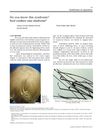
The document concludes that Loose Anagen Hair Syndrome is a benign condition where hair is thin and easily pulled out, often improving with age.
71 citations
,
October 2017 in “Journal of Investigative Dermatology” PPAR-γ agonists like pioglitazone may help manage lichen planopilaris but don't fully reverse scarring.
 5 citations
,
July 2014 in “Actas dermo-sifiliográficas/Actas dermo-sifiliográficas”
5 citations
,
July 2014 in “Actas dermo-sifiliográficas/Actas dermo-sifiliográficas” Latanoprost eye drops caused excessive hair growth and eyelash whitening in a woman.
 4 citations
,
January 1987 in “Journal of The American Academy of Dermatology”
4 citations
,
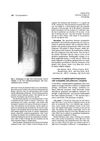
January 1987 in “Journal of The American Academy of Dermatology” A man with both skin lesions and lung cancer improved quickly with chemotherapy, suggesting the skin condition might be a reaction to immune system injury.
January 2021 in “Dermatology online journal” One twin girl has Loose anagen syndrome with poorly anchored hair, diagnosed with a simple hair pull test, while her identical twin does not have the condition.
 4 citations
,
May 2021 in “The journal of investigative dermatology/Journal of investigative dermatology”
4 citations
,
May 2021 in “The journal of investigative dermatology/Journal of investigative dermatology” ELL is crucial for gene transcription related to skin cell growth.
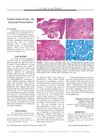 8 citations
,
September 2016 in “The American Journal of Dermatopathology”
8 citations
,
September 2016 in “The American Journal of Dermatopathology” Enlarged sweat gland ducts may indicate scarring hair loss.
 September 2022 in “Anais Brasileiros de Dermatologia”
 Dermoscopy helped diagnose a rare skin disease which slightly improved with treatment.
1 citations
,
July 2017 in “Skin Appendage Disorders” A woman developed permanent hair loss after a face-lift surgery despite various treatments.
July 2023 in “Media Dermato Venereologica Indonesiana” Accurate diagnosis of RDEB-mitis in older adults is crucial for proper management without immunosuppressants.
3 citations
,
February 2015 in “Mechanisms of development” Hormones and stretching both needed for nipple area skin growth in mice.
187 citations
,
May 1979 in “British Journal of Dermatology” Topical steroids can manage chronic scalp pustules in elderly women.
1 citations
,
April 2024 in “The Journal of Dermatology” Untreated epidermolysis bullosa acquisita can cause total hair and nail loss.
12 citations
,
May 2021 in “The journal of investigative dermatology/Journal of investigative dermatology” Laminin 332 is essential for normal skin cell behavior and structure.
8 citations
,
January 2019 in “JAAD Case Reports” EPDS can cause recurring scalp sores and hair loss if not treated.
7 citations
,
August 2008 in “Immunogenetics” A gene mutation in mice causes increased mast cells and disorganized hair follicles in their skin.
July 2011 in “Journal of Pediatric and Adolescent Gynecology” A 15-year-old girl has a skin condition causing blisters on her feet, likely inherited from her family.
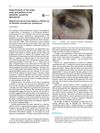 1 citations
,
January 2015 in “Actas dermo-sifiliográficas/Actas dermo-sifiliográficas”
1 citations
,
January 2015 in “Actas dermo-sifiliográficas/Actas dermo-sifiliográficas” Latanoprost eye drops caused excessive cheek hair growth and eyelash whitening in a woman.
 21 citations
,
November 2009 in “Dermatologic Clinics”
21 citations
,
November 2009 in “Dermatologic Clinics” The document suggests that certain protein deficiencies and scalp blistering in Epidermolysis Bullosa may cause hair loss.
51 citations
,
January 1997 in “PubMed” GABEB is a less severe skin condition caused by a gene mutation affecting collagen, leading to blisters and other symptoms.