 12 citations
,
February 2008 in “Journal of The American Academy of Dermatology”
12 citations
,
February 2008 in “Journal of The American Academy of Dermatology” Combining skin tissue pathology with genetics has greatly improved the diagnosis and understanding of certain skin diseases.
11 citations
,
January 1977 in “Archives of dermatological research” Mouse tail skin has different keratinization near hair follicles and scales.
16 citations
,
October 2013 in “Anais Brasileiros de Dermatologia” Scalp condition healed with prednisone and tacrolimus.
7 citations
,
April 2004 in “International Journal of Dermatology” The newborn's skin blistering is due to a genetic condition called epidermolytic hyperkeratosis.
October 2020 in “Tierärztliche Praxis. Ausgabe Grosstiere, Nutztiere” Cows moving from tie-stalls to free-stalls had fewer leg injuries but more stress and heel horn erosions.
15 citations
,
March 2021 in “EMBO Reports” PRSS35 enzyme may help start skin tumors and could be a target for cancer treatment.
11 citations
,
December 1990 in “British Journal of Dermatology” Alopecia areata may involve disrupted mesenchymal function in hair follicles.
 September 2019 in “The journal of investigative dermatology/Journal of investigative dermatology”
 Not having enough cystatin M/E protein causes less hair growth and dry skin.
January 2017 in “Elsevier eBooks” Telogen effluvium is a condition that causes temporary hair loss due to stress or shock to the body.
46 citations
,
May 2013 in “The journal of investigative dermatology/Journal of investigative dermatology” Significant progress was made in understanding PXE, but effective treatments are still needed.
January 2000 in “The Mouseion at the JAXlibrary (Jackson Laboratory)” The lanceolate hair-J mutation in mice helps understand human hair disorders like Netherton's syndrome.
 56 citations
,
January 2001 in “Dermatology”
56 citations
,
January 2001 in “Dermatology” Teloptosis is a key point in hair loss that could help in creating prevention-focused hair care strategies.
 7 citations
,
November 2017 in “Cureus”
7 citations
,
November 2017 in “Cureus” Ear creases might indicate heart disease risk, needing more research.
July 2024 in “Journal of Investigative Dermatology” Reactive lipids from aging cells change the extracellular matrix, affecting cell function and inflammation.
 25 citations
,
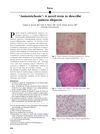
April 2007 in “Journal of The American Academy of Dermatology”
25 citations
,
April 2007 in “Journal of The American Academy of Dermatology” The document suggests "anisotrichosis" as a new term for hair thickness variation in common baldness.
1 citations
,
January 2015 in “The Journal of Dermatology” Genetic testing is crucial for diagnosing and managing non-Herlitz junctional epidermolysis bullosa.
 3 citations
,
August 2021 in “Research Square (Research Square)”
3 citations
,
August 2021 in “Research Square (Research Square)” The most common sign of aging at the gene level is more Ectodysplasin A2 Receptor (EDA2R) being made.
8 citations
,
January 2014 in “Indian Dermatology Online Journal” Trichostasis spinulosa is a common but often unnoticed skin condition involving bundled vellus hairs, especially in people with darker skin or UV exposure.
 January 2018 in “Springer eBooks”
 Telogen Effluvium causes more hair loss because hair moves to the resting phase too soon.
 1 citations
,
September 2019 in “Springer eBooks”
1 citations
,
September 2019 in “Springer eBooks” Telogen effluvium is a condition that causes temporary hair loss due to stress or shock to the body.
October 1967 in “Archives of Dermatology” A 42-year-old woman had a scalp lesion that didn't cause hair loss and showed specific changes under a microscope.
January 2006 in “DOAJ (DOAJ: Directory of Open Access Journals)” Loose anagen hair syndrome causes easily pulled, thin hair in kids but is harmless and temporary.
56 citations
,
October 2010 in “Pediatric Clinics of North America” Epidermal nevi are skin cell clusters linked to various syndromes.
 March 2020 in “The journal of investigative dermatology/Journal of investigative dermatology”
 Suppressing very long chain fatty acids is linked to skin cancer.
 30 citations
,
August 2010 in “American Journal of Clinical Dermatology”
30 citations
,
August 2010 in “American Journal of Clinical Dermatology” Cetuximab can cause eyelash growth, which is rare but manageable.
1 citations
,
April 2022 in “Journal of cosmetic dermatology” Krox20 overexpression in fibroblasts may play a role in abnormal scar formation and could be a target for new treatments.
20 citations
,
November 2003 in “American Journal Of Pathology” Fibroblasts from healthy donors can prevent changes seen in recessive epidermolysis bullosa simplex.
4 citations
,
November 2020 in “Case reports in dermatology” A rare skin condition causes red, dark, bumpy facial lesions.
July 2023 in “Clinical Cosmetic and Investigational Dermatology” Accurate diagnosis of granular parakeratosis is crucial for effective treatment and improvement.
November 2024 in “Journal of Investigative Dermatology” Changes in hair follicle structure may help diagnose and monitor alopecia.