 1 citations
,
September 2016 in “Journal of Dermatological Science”
1 citations
,
September 2016 in “Journal of Dermatological Science” FGF18 treatment during hair's resting phase can protect against hair loss from radiation.
 October 2005 in “CRC Press eBooks”
 Telogen effluvium is a condition where hair falls out due to various factors like illness, stress, or nutrient deficiency.
 23 citations
,
September 2011 in “Journal of Dermatological Science”
23 citations
,
September 2011 in “Journal of Dermatological Science” Red LED light helps mouse hair grow by increasing growth factors from skin cells.
 April 2024 in “Cognizance journal”
 The alexandrite laser effectively reduces unwanted hair by about 75%.
 9 citations
,
August 2017 in “Photochemistry and Photobiology”
9 citations
,
August 2017 in “Photochemistry and Photobiology” Red light at 627 nm can safely trigger IL-4 release in skin cells, potentially helping treat inflammatory skin conditions.

The laser treatment effectively and safely improves hair lightening, pigment clearance, and skin rejuvenation.
28 citations
,
November 2009 in “Journal of Structural Biology” High flux X-ray beams quickly damage the structure of human hair.
10 citations
,
October 2000 in “PubMed” E6/E7 oncogenes in hair follicles cause continuous hair growth by skipping the resting phase.
 September 2019 in “The journal of investigative dermatology/Journal of investigative dermatology”
 Hair follicles repair 3D injuries using a 2D healing process.
9 citations
,
June 2020 in “European Radiology Experimental” 15-Gy x-ray irradiation temporarily alters rat calvaria skin without causing significant inflammation or fibrosis.
4 citations
,
February 1992 in “Archives of Dermatology” The book is a detailed guide for professionals on permanent and temporary hair removal techniques.
1 citations
,
June 2025 in “British Journal of Dermatology” Smartwatch light therapy may help regrow hair in alopecia areata.
 27 citations
,
December 2014 in “Current problems in dermatology”
27 citations
,
December 2014 in “Current problems in dermatology” Photodynamic therapy is the preferred treatment for skin precancer due to its effectiveness and safety.
 2 citations
,
December 2021
2 citations
,
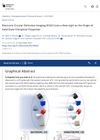
December 2021 The research found that the properties of solid-state Electronic Circular Dichroism (ss-ECD) are influenced by the orientation of local crystals, which could help in examining and mapping chiral materials like pharmaceutical ingredients.
4 citations
,
June 2025 in “Journal of Cosmetic Dermatology” The triple-wavelength diode laser effectively and safely reduces hair and improves skin appearance in people with darker skin.
 February 2023 in “Cosmoderma”
 Combining red LED therapy with beta-carotene is more effective for treating photoaging than red LED therapy alone.
 1 citations
,
April 2023 in “Canadian journal of ophthalmology”
1 citations
,
April 2023 in “Canadian journal of ophthalmology” Using a diode laser for hair removal without eye protection can cause serious eye injuries.
March 2022 in “Institutional Repositories DataBase (IRDB)” January 2016 in “프로그램북(구 초록집)” LED light promotes hair growth by stimulating cell proliferation and reducing cell death.
August 2000 in “Microscopy and Microanalysis” The method successfully visualizes iodine in biological tissues.
43 citations
,
November 2012 in “Pharmaceutical research” Fractional CO2 laser treatment significantly boosts drug and nanoparticle skin absorption, especially through hair follicles.
 May 2008 in “The International Conference on Mathematics and Engineering Physics”
 Nanoparticles can increase light sensitivity in oil-producing skin glands.
 August 2024 in “Journal of Cutaneous and Aesthetic Surgery”
 Microneedling radiofrequency significantly improves hair growth with minimal side effects.
 4 citations
,
January 2022 in “Journal of Bioscience and Bioengineering”
4 citations
,
January 2022 in “Journal of Bioscience and Bioengineering” Electric stimulation can increase hair growth by activating certain genes in skin cells.
10 citations
,
May 2021 in “Clinical, cosmetic and investigational dermatology” UV exposure causes hair thinning, graying, and changes in hair growth cycles in mice.
 10 citations
,
January 2007 in “Journal of cosmetic and laser therapy”
10 citations
,
January 2007 in “Journal of cosmetic and laser therapy” The IPL device is safe, effective, and has high patient satisfaction for hair removal.
Electrical stimulation with minoxidil boosts hair cell growth.

Microneedling with exosome therapy may effectively regrow hair without side effects.
 June 2020 in “The journal of investigative dermatology/Journal of investigative dermatology”
 Pulsed red light boosts collagen and energy in cells faster than continuous red light.
 February 2025 in “Cosmetics”
 Blue light therapy is promising for skin and hair conditions but needs more research for widespread use.