 September 2022 in “Institutional Repositories DataBase (IRDB)”
 3D-oxy exosomes may significantly boost hair growth, offering new treatment options for hair loss.
 June 2022 in “International Journal of Research -GRANTHAALAYAH”
 Antioxidants like catalase are important for preventing hair loss conditions like alopecia.
 May 2022 in “Research Square (Research Square)”
 OBEME effectively enhances wound healing and could be a promising carrier for skin treatments.
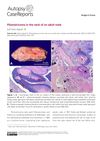 January 2022 in “Autopsy and Case Reports”
 A man had a non-cancerous neck tumor related to hair follicles removed with no return of the tumor.
 January 2022 in “Acta dermatovenerologica Alpina, Pannonica et Adriatica (Tiskana izd.)”
 Uncombable hair syndrome causes frizzy hair and can affect the nervous system, eyes, and ears, often co-occurring with other hair, skin, nail, and teeth conditions, and is linked to three specific gene mutations.
 November 2021 in “International journal of life science and pharma research”
 The new gel for psoriasis is effective, stable, and easy to apply.
 August 2021 in “Josai University Repository of Academia (Josai University)”
 The nanoparticles improved minoxidil's skin absorption, making them promising for skin treatments.
 March 2021 in “bioRxiv (Cold Spring Harbor Laboratory)”
 Removing a specific gene in certain skin cells causes hair loss on the body by disrupting normal hair development.
March 2021 in “Research Square (Research Square)” Ketoconazole's structure and dynamics are linked, aiding antifungal drug development.
 September 2020 in “Nature, Environment and Pollution Technology/Nature, environment and pollution technology”
 Eating plants from polluted areas can cause liver and kidney damage in rats due to toxic metals.
 January 2020 in “Medpulse International Journal of Medicine”
 Nail and hair changes are common in severe chronic kidney disease and should be treated to improve patients' quality of life.
 April 2019 in “Journal of Investigative Dermatology”
 Non-coding RNA boosts retinoic acid production and signaling, aiding regeneration.
 November 2018 in “Springer eBooks”
 Children need early diagnosis and treatment for iron-deficiency anemia to prevent learning problems and promote health.
 June 2018 in “Journal of Acupuncture and Meridian Studies”
 New technologies in acupuncture and biosensors show promise for better medical treatments and healing.
 April 2018 in “D-Scholarship@Pitt (University of Pittsburgh)”
 Keratin-75 is secreted by ameloblasts in a unique way without a signal peptide.
 April 2018 in “Journal of Investigative Dermatology”
 Desmoglein 3 organization in cell connections changes without calcium, affecting cell adhesion.
 April 2018 in “Journal of Investigative Dermatology”
 Dsg1 is essential for maintaining a healthy skin barrier in mice.
 April 2018 in “Journal of Investigative Dermatology”
 IL-9 increases skin cell movement but decreases their ability to invade, and this effect is controlled by cell contractility, not by MMPs.
 April 2018 in “Journal of Investigative Dermatology”
 The conclusion is that a new method combining magnetic tweezers and traction force microscopy may help understand skin cell interactions and diseases.
 April 2018 in “Journal of Investigative Dermatology”
 Nonmelanoma skin cancers have higher levels of certain osteopontin variants than normal skin.
 September 2017 in “Pediatric Dermatology”
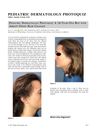
 A 14-year-old boy was diagnosed with a rare hair condition that may lead to hair thinning and has no known effective treatments.
 July 2017 in “Contemporary Endocrinology”
 The document concludes that patient outcomes for Congenital Adrenal Hyperplasia are often not ideal because of poor management and a need for better diagnosis and treatment methods.
 May 2017 in “Journal of microscopy and ultrastructure”
 Water quality affects mineral content in hair, and coconut oil can protect against damage.
 November 2016 in “Zoo biology”
 Adding more vegetables and fruits improved capybaras' coat quality and health.
 April 2016 in “Journal of the American Academy of Dermatology”
 Dermoscopy helped correctly diagnose a skin condition that was previously misidentified as a different hair loss disease.
Forensic hair analysis for drugs is now more reliable and accurate.
 October 2015 in “Cosmetic Dermatology”
 Hair straightening changes hair structure and can cause damage if done wrong, but improvements in the methods are expected to continue.
 January 2015 in “Journal of Nutrition and Health”
 Fish oil improves hair growth in diabetic and high-cholesterol rats.
 September 2014 in “Proceedings of SPIE, the International Society for Optical Engineering/Proceedings of SPIE”
 OCT can effectively examine and reveal details about human hair and scalp conditions.
 January 2013 in “Transactions of the Materials Research Society of Japan”
 CMADK reduces hair damage from bleaching and permanent waving.