Search
for
Sort by
Research
60-90 / 1000+ resultsresearch Meibomian Gland Dysfunction: Intense Pulsed Light Therapy in Combination with Low-Level Light Therapy as Rescue Treatment
Combined light therapy improves eye health and quality of life for those with meibomian gland dysfunction.
research Clinical and dermoscopic evaluation of red light emitting diodes with beta-carotene versus red light emitting diodes alone in treatment of photoaging
Combining red LED therapy with beta-carotene is more effective for treating photoaging than red LED therapy alone.
research Expression of retinoid-X receptors (-Æ,-a,-a) and retinoic acid receptors (-Æ,-a,-a) in normal human skin: an immunohistological evaluation
RXR and RAR proteins in skin may help with cell growth, hair growth, and gland function.

research Clinical comparison of extended-release divalproex versus delayed-release divalproex: pooled data analyses from nine trials
Extended-release divalproex is better tolerated and more effective for seizures and psychiatric symptoms than delayed-release divalproex, but doesn't reduce hair loss.
research Tangent screens are still useful in the assessment of vigabatrin induced visual field defects
Tangent screens help detect visual field defects from vigabatrin.

research Dose‐response of human follicles during laser‐based hair removal: Ex vivo photoepilation model with classification system embracing morphological and histological features
Higher light doses cause more damage to hair follicles, predicting better hair removal results.

research Electronic Circular Dichroism Imaging (ECD i ) Casts a New Light on the Origin of Solid‐State Chiroptical Properties
The research found that the properties of solid-state Electronic Circular Dichroism (ss-ECD) are influenced by the orientation of local crystals, which could help in examining and mapping chiral materials like pharmaceutical ingredients.
research Electro-optical imaging of F-actin and endoplasmic reticulum in living and fixed plant cells.
Imaging living plant cells shows dynamic changes in actin and endoplasmic reticulum linked to root hair growth.
research Immunohistochemical expressions of mGluR5, P2Y2 receptor, PLC-?1, and IP3R-I and -II in Merkel cells in rat sinus hair follicles
research Radiofrequency Currents Modulate Inflammatory Processes in Keratinocytes
CRET therapy affects inflammation in skin cells by changing cytokine levels and activating certain proteins.

research Characterization of Prostaglandin F2α Receptors in Human Eyelids
PGF2α receptors in human eyelids are found in specific parts of hair follicles, explaining eyelash changes with glaucoma treatment.
research Electroosmotic pore transport in human skin.
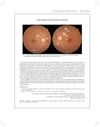
research Fundus changes in systemic lupus erythematosus
Regular eye exams are important for detecting serious complications in lupus patients.

research Effect of 150 kHz Electromagnetic Radiation on the Development of Polycystic Ovaries Induced by Estradiol Valerate in Sprague Dawley Rats.
150 kHz electromagnetic radiation may improve polycystic ovary condition in rats.
research Electric Stimulation at 448 kHz Modulates Proliferation and Differentiation of Follicle Dermal Papilla Cells
Electric stimulation at 448 kHz can promote hair growth by enhancing cell activity in hair follicles.

research 201 Pain digital biomarker detecting by epidermal biopotential flexible sensor and AI-based system
A new pain-measuring system using sensors and AI can effectively detect pain in mice, which may help assess pain in humans and develop treatments.
research Transcranial Red LED Therapy: A Promising Non-Invasive Treatment to Prevent Age-Related Hippocampal Memory Impairment
Red light therapy may help prevent memory loss as we age.
research Comparison of Activities Dependent on Glutathione S-Transferase and Cytochrome P-450 IA1 in Cultured Keratinocytes and Reconstructed Epidermal Models
Reconstructed skin models are useful for studying how skin processes certain chemicals.

research Effect of 150 kHz electromagnetic radiation on the development of polycystic ovaries induced by estradiol Valerate in Sprague Dawley rats
150 kHz electromagnetic radiation might help improve PCOS in rats.

research Manifest hair repigmentation associated with etretinate therapy
An 82-year-old man's white hair regained color after taking etretinate for psoriasis.
research Ocular involvement caused by the accumulation of porphyrins in a patient with congenital erythropoietic porphyria
A patient with congenital erythropoietic porphyria showed eye issues due to porphyrin buildup.
research Effect of Retinoids on Follicular Cells.
research Immunolocalization of Enzymes, Binding Proteins, and Receptors Sufficient for Retinoic Acid Synthesis and Signaling During the Hair Cycle
Retinoic acid production and signaling in hair follicles are regulated by location and timing, affecting hair growth and cycling.

research 1298 External light activates hair follicle stem cells through eyes via the ipRGC-SCN-sympathetic neural circuit
Light can activate hair growth through a pathway from the eyes to hair follicles.

research Photosensory Function, Reception and Response in Human Skin
Human skin responds to light with protective mechanisms, but more research is needed to understand these processes and their implications for health and therapy.

research Reflectance spectroscopy for noninvasive evaluation of hair follicle stage
Reflectance spectroscopy can noninvasively track hair growth stages by measuring skin reflectance and melanin changes.
research Efficacy of fractional radiofrequency in the treatment of erythematous capillary rosacea: A split‐face study
Fractional radiofrequency effectively and safely improves rosacea symptoms.

research Synergistic effect of rice bran extract and extremely low-frequency electromagnetic fields on dermal papilla/melanocytes in melanogenesis
Rice bran extract and low-frequency electromagnetic fields together may help treat vitiligo and white hair.

research Six-year Retrospective Review of Drug Reaction with Eosinophilia and Systemic Symptoms
Early detection and stopping the drug are key to managing DRESS, and careful monitoring is important due to possible severe reactions.