 3 citations
,
July 2017 in “Journal of Molecular Graphics & Modelling”
3 citations
,
July 2017 in “Journal of Molecular Graphics & Modelling” The study found that baicalin has different stable shapes in gas and water, with two shapes better for interacting with positive charges in water.
63 citations
,
May 2020 in “Advanced Healthcare Materials” The new wound dressing helps skin heal completely, including blood vessels and hair growth.
20 citations
,
December 2012 in “Journal of molecular structure” The study found that thioglycolic acid breaks down hair bonds more consistently than l-cysteine, which is less damaging to hair.
17 citations
,
July 2021 in “Polymers” Using ultrasonication at 45 kHz for 30 minutes is an efficient, low-cost way to produce high-quality chitin nanofibers from crab shells.
15 citations
,
June 2016 in “Computers in Biology and Medicine” Ascorbyl Tetraisopalmitate penetrates skin better in the stratum corneum than in the infundibulum.
8 citations
,
January 1968 DMSO causes reversible swelling in hair but has a complex, less reversible effect on skin.
 6 citations
,
January 2000 in “Dermatology”
6 citations
,
January 2000 in “Dermatology” A girl's severely tangled hair couldn't be fixed and had to be cut due to a rare condition called plica neuropathica.
 February 2026 in “Molecules”
 BBR-SA nanomedicine is a safe and effective treatment for breast cancer.

Lavender and tea seed oil in nanostructured carriers effectively promote hair growth.

Lavender and tea seed oil in nanostructured carriers boost hair growth better than a commercial product.
7 citations
,
October 2016 in “Cellular and Molecular Bioengineering” E-cadherin is important for cell movement in electric fields, and the new tracking method works well.
 20 citations
,
September 2019 in “Nanomaterials”
20 citations
,
September 2019 in “Nanomaterials” A portable device can create nanofibers to improve the appearance of thinning hair better than commercial products.
 December 2024 in “Regenerative Biomaterials”
 Electrospinning creates materials that help heal wounds by mimicking natural tissue and delivering proteins.
15 citations
,
May 2009 in “Chemical Physics Letters” A new method accurately measures molecular movement without complex modeling.
50 citations
,
December 2000 in “Journal of Pharmaceutical Sciences” Hair follicles significantly enhance electroosmotic transport during iontophoresis.
 November 2021 in “International journal of research - granthaalayah”
 The document suggests that human hair has electrical charges because of a gap in nerve cell coverage that affects electromagnetic radiation.
 1 citations
,
September 2021 in “International journal of research - granthaalayah”
1 citations
,
September 2021 in “International journal of research - granthaalayah” Human hair has bipolar electrical charges because of a gap in the hair follicle's electromagnetic field.
17 citations
,
October 2023 in “Polymers” Electrospun nanofibers are promising for medical, sensing, and energy uses, especially with 3D printing.
 October 2023 in “Journal of Drug Delivery Science and Technology”
 Electrospun nanofibers might be a promising new treatment for hair loss.
June 2026 in “ChemistryOpen” Modified nanofibers improve finasteride skin absorption.
Hair properties change under electromagnetic fields and are influenced by individual characteristics and the environment.
 34 citations
,
May 2021 in “Journal of Nanobiotechnology”
34 citations
,
May 2021 in “Journal of Nanobiotechnology” The 3D electrospun fibrous sponge is promising for tissue repair and healing diabetic wounds.
March 2022 in “Book Publisher International (a part of SCIENCEDOMAIN International)” Human hair has bipolar electrical charges due to gaps in the hair follicle's electromagnetic fields.
 16 citations
,
April 2017 in “ACM Transactions on Graphics”
16 citations
,
April 2017 in “ACM Transactions on Graphics” Light scatters differently from elliptical hair fibers than from circular ones, and a new model better predicts this behavior, especially for shiny highlights.
 44 citations
,
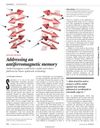
February 2016 in “Science”
44 citations
,
February 2016 in “Science” Researchers developed a new type of memory using antiferromagnets that is stable, not disrupted by magnets, and works at room temperature.
19 citations
,
March 2015 Human hair has electromagnetic properties.
2 citations
,
July 2016 in “Journal of nature and science” Human hair can transmit magnetic signals through glass.
 9 citations
,
September 1947 in “Archives of dermatology and syphilology”
9 citations
,
September 1947 in “Archives of dermatology and syphilology” Electrolysis is better for permanent hair removal with less scarring.
198 citations
,
May 2021 in “Advanced Materials” Triboelectric nanogenerators can use body movement to power therapeutic treatments, potentially transforming personalized healthcare.
 March 2021 in “Research Square (Research Square)”
 The new 3D sponge-like material helps cells grow and heals wounds effectively.