39 citations
,
January 1998 in “Dermatology” Milia, SM, and EVHC may be related conditions, not separate ones.
July 2025 in “Journal of Investigative Dermatology” Resident memory T cells and necroptosis may drive fibrosis in eosinophilic fasciitis and morphea.
 30 citations
,
June 2014 in “Seminars in Immunology”
30 citations
,
June 2014 in “Seminars in Immunology” Future research on ectodysplasin should explore its role in diseases, stem cells, and evolution, and continue developing treatments for genetic disorders like hypohidrotic ectodermal dysplasia.
4 citations
,
March 2023 in “Cancer Innovation” Flexible bioelectronics show promise in non-invasive cancer detection and treatment but need improvements in stability and effectiveness.
September 2025 in “International Journal of Pharmaceutics and Drug Analysis” Ethosomes improve drug delivery through the skin but face stability challenges.
 22 citations
,
September 2015 in “Clinical lymphoma myeloma & leukemia/Clinical lymphoma, myeloma and leukemia”
22 citations
,
September 2015 in “Clinical lymphoma myeloma & leukemia/Clinical lymphoma, myeloma and leukemia” Recognizing and treating skin symptoms in essential thrombocythemia is crucial for patient quality of life.
33 citations
,
August 2000 in “Experimental Cell Research” 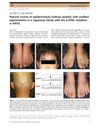 3 citations
,
January 2019 in “Journal of Dermatology”
3 citations
,
January 2019 in “Journal of Dermatology” The p.P25L mutation in the KRT5 gene causes a rare skin condition that worsens over time and may lead to hair loss starting in young adulthood.
July 2024 in “Journal of Investigative Dermatology” ATR12-351 ointment safely delivers LEKTI protein to the skin, reducing enzyme activity in Netherton syndrome.
 32 citations
,
December 2014 in “Cold Spring Harbor Perspectives in Medicine”
32 citations
,
December 2014 in “Cold Spring Harbor Perspectives in Medicine” Disruptions in epidermal polarity genes can lead to skin diseases.
11 citations
,
January 2010 in “Current problems in dermatology” Ichthyoses are genetic skin disorders that affect the skin's barrier function.
September 2016 in “Journal of Dermatological Science” Polarizing light microscopy can easily and reliably diagnose congenital keratinizing disorders like Netherton syndrome.
22 citations
,
March 2023 in “Bioengineering” Stem cell therapies may help improve symptoms and quality of life for people with epidermolysis bullosa.
21 citations
,
March 2018 in “American Journal Of Pathology” Mutations in NIPAL4 cause skin issues by disrupting lipid layers, but some improvement is seen with topical treatment.
January 2019 in “Lung India” A 68-year-old woman with lupus and blood disorders improved after increased steroids and immunoglobulin treatment.
 August 2019 in “Journal of Medical Histology”
 EMT helps heal tissues but can cause scarring and other issues if prolonged.
January 2019 in “University of Liverpool” Equine eosinophilic granuloma is the most common skin disease in horses, while mast cell tumors are less common and differ in their cellular makeup.
 November 2022 in “Journal of Investigative Dermatology”
 Neutrophils quickly respond to skin injury.
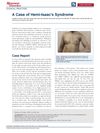 1 citations
,
August 2021 in “Movement disorders clinical practice”
1 citations
,
August 2021 in “Movement disorders clinical practice” A man with Isaac's syndrome affecting only one side of his body improved after immune system-targeted treatment.
50 citations
,
December 2000 in “Journal of Pharmaceutical Sciences” Hair follicles significantly enhance electroosmotic transport during iontophoresis.
 2 citations
,
August 2012 in “Journal of the American Academy of Dermatology”
2 citations
,
August 2012 in “Journal of the American Academy of Dermatology” Two patients with the same genetic mutation had both blistering skin and easily pulled out hair.
 September 2020 in “Kocatepe Veterinary Journal”
 Equine adipose stem cells can become different cell types and are promising for healing injuries.

Erythropoietin overexpression disrupts hair growth and fat formation in mice.
 38 citations
,
December 2012 in “Journal of Cutaneous Pathology”
38 citations
,
December 2012 in “Journal of Cutaneous Pathology” EVG staining is a valuable, simple, and cost-effective method for diagnosing various skin conditions in dermatopathology.
3 citations
,
July 2022 in “Indian Journal of Dermatology” ALEP is a drug-triggered skin reaction with pustules that clears up in a week after stopping the drug.
2 citations
,
December 2013 in “The Journal of Dermatology” 56 citations
,
October 2010 in “Pediatric Clinics of North America” Epidermal nevi are skin cell clusters linked to various syndromes.
2 citations
,
June 2013 in “Journal of Dermatological Case Reports” Olmsted syndrome is a rare skin disorder causing thickened skin and other symptoms.
January 2011 in “Hispania Judaica bulletin” Mechanical forces are crucial for hair regeneration in skin organoids.
 30 citations
,
November 2018 in “EMBO Reports”
30 citations
,
November 2018 in “EMBO Reports” The Ovol2-Zeb1 circuit is crucial for skin healing and hair growth by guiding cell movement and growth.