1 citations
,
June 1998 in “Journal of Forestry Research” Mammalian hair scales change from smooth to wavy due to friction.
91 citations
,
December 2000 in “The journal of cell biology/The Journal of cell biology” Scientists successfully created mouse hair proteins in the lab, which are stable and similar to natural hair.
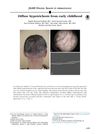 September 2016 in “Journal of The American Academy of Dermatology”
 The girl has a genetic hair condition causing thin hair since childhood.
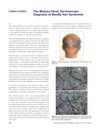 7 citations
,
January 2012 in “International Journal of Trichology”
7 citations
,
January 2012 in “International Journal of Trichology” A man with Woolly Hair Syndrome had very curly, fragile hair, and doctors used a special scalp examination to diagnose him without invasive tests.
34 citations
,
March 2009 in “British journal of dermatology/British journal of dermatology, Supplement” Vitamin C derivative helps hair grow longer by making cells produce a growth factor through a specific cellular pathway.
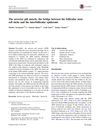 14 citations
,
July 2016 in “Anatomical Science International”
14 citations
,
July 2016 in “Anatomical Science International” The study suggests that the arrector pili muscle is important for hair health and its damage might contribute to hair loss.
 January 2014 in “Elsevier eBooks”
 The study concluded that genetic mutations affect human hair diseases and identified key genes and pathways involved in hair growth and cycling.
January 2002 in “Europe PMC (PubMed Central)” The model successfully simulates human hair growth and patterns, including hair loss types.
 20 citations
,
February 2016 in “American Journal of Pathology”
20 citations
,
February 2016 in “American Journal of Pathology” The genes OVOL1 and OVOL2 are important for hair growth and may be involved in a type of skin tumor.
 11 citations
,
January 1987 in “Electrophoresis”
11 citations
,
January 1987 in “Electrophoresis” Keratin proteins are consistent across different hair types from the same person.
 30 citations
,
May 2010 in “British Journal of Dermatology”
30 citations
,
May 2010 in “British Journal of Dermatology” Intermediate hair follicles are a better model for studying hair growth and testing hair loss treatments.
14 citations
,
January 2010 in “Dermatology” Some people with congenital triangular alopecia have a central tuft of hair in the bald patch, but the cause is unknown.
Hair growth is controlled by cell interactions and influenced by specific growth factors and hormones.
3 citations
,
December 2018 in “Routledge eBooks” Hair is made of strong keratin fibers that protect against the environment.
4 citations
,
November 2016 in “The Journal of Dermatology” Pili torti hair is fragile due to loose keratin filaments and weak disulfide bonds.
 72 citations
,
February 2011 in “American Journal of Biological Anthropology”
72 citations
,
February 2011 in “American Journal of Biological Anthropology” The conclusion is that recognizing hair growth cycles can improve the precision of dietary and health assessments from hair analysis.
March 2026 in “Skin Appendage Disorders” Diagnosing and treating monilethrix is challenging when it occurs with other hair disorders.
11 citations
,
January 1981 in “Cells Tissues Organs” Human hair cuticle has five cell layers with specific junctions and granules.
 2 citations
,
June 1980 in “International Journal of Dermatology”
2 citations
,
June 1980 in “International Journal of Dermatology” Scalp biopsies are important for diagnosing hair loss conditions.
 2 citations
,
January 2013 in “Elsevier eBooks”
2 citations
,
January 2013 in “Elsevier eBooks” The document explains the genetic causes and characteristics of inherited hair disorders.
 September 2017 in “Journal of Investigative Dermatology”
 The research concluded that hyaluronic acid affects the formation and growth of hair follicle-like structures in a lab setting.
 146 citations
,
May 2002 in “The American journal of pathology”
146 citations
,
May 2002 in “The American journal of pathology” Cathepsin L is essential for normal hair growth and development.
18 citations
,
January 2018 in “Advances in experimental medicine and biology” Hair keratins evolved from ancient proteins, diversifying through gene changes, crucial for forming claws and later hair in mammals.
28 citations
,
April 1988 in “Archives of Dermatological Research” 9 citations
,
January 1989 in “Journal of Small Animal Practice” Abyssinian cats can have a hair abnormality that makes their coat look rough and dull.
 4 citations
,
November 1968 in “Textile research journal”
4 citations
,
November 1968 in “Textile research journal” Hair fibers may have a unique, non-protein sheath not previously identified.
29 citations
,
July 2004 in “The journal of investigative dermatology/Journal of investigative dermatology” The enzymes Aldh1a2 and Aldh1a3 are involved in making retinoic acid in hair follicles and have different roles in hair growth.
34 citations
,
July 1958 in “Biochimica et Biophysica Acta”  3 citations
,
December 2013 in “Journal of Dermatology”
3 citations
,
December 2013 in “Journal of Dermatology” Scanning electron microscopy revealed four distinct hair root shapes in alopecia areata, suggesting a less invasive diagnostic method.