 3 citations
,
September 2022 in “Frontiers in veterinary science”
3 citations
,
September 2022 in “Frontiers in veterinary science” Melatonin affects cashmere growth in goats by influencing stem cell and certain signaling pathways.
 14 citations
,
July 2012 in “Journal of the American Academy of Dermatology”
14 citations
,
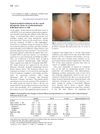
July 2012 in “Journal of the American Academy of Dermatology” Topical tacalcitol ointment can help improve symptoms of EFFC.
January 1969 in “Santes Creus: Boletín del Archivo Bibliográfico de Santes Creus” Planarians regenerate using conserved gene expression mechanisms, with runt-1 crucial for cell type specification.
 2 citations
,
September 2022 in “Frontiers in genetics”
2 citations
,
September 2022 in “Frontiers in genetics” Different proteins are linked to the varying thickness of sheep and goat hair types.
 22 citations
,
December 2016 in “PloS one”
22 citations
,
December 2016 in “PloS one” A specific protein in chicken embryos links early skin layers to feather development.
 58 citations
,
February 2016 in “Scientific reports”
58 citations
,
February 2016 in “Scientific reports” Blocking BACE1 and BACE2 enzymes causes hair color loss in mice.
3 citations
,
September 2022 in “European Journal of Dermatology” Gene sequencing is crucial for diagnosing Junctional epidermolysis bullosa.
98 citations
,
May 2016 in “Genes” Understanding wool keratin-associated proteins in sheep can help improve wool quality through selective breeding.
 2 citations
,
April 2025 in “Lasers in Medical Science”
2 citations
,
April 2025 in “Lasers in Medical Science” Combining fractional CO2 laser with halometasone cream is more effective for chronic eczema than the cream alone.
 January 2022 in “Figshare”
 Melatonin affects when and how certain genes work during the different stages of goat hair growth.
9 citations
,
July 2022 in “Journal of Biological Chemistry” WWP2 is crucial for tooth development in mice.
 August 2004 in “Journal of the American College of Surgeons”
 Several genes, including Hox-7A, Stra6, and Lim-1, are involved in normal palate formation.
 22 citations
,
November 2013 in “Clinical and experimental dermatology (Print)”
22 citations
,
November 2013 in “Clinical and experimental dermatology (Print)” Ecklonia cava, a type of seaweed, may help hair grow.
18 citations
,
November 2005 in “European Journal of Cell Biology” Keratin gene clusters in humans and marsupials are similarly organized.
 73 citations
,
March 2017 in “Scientific Reports”
73 citations
,
March 2017 in “Scientific Reports” Bioengineered tooth germ can restore whole teeth in dogs.
5 citations
,
January 1988 Only two of the four keratin genes are expressed in wool fibers.
January 2019 in “University of Liverpool” Equine eosinophilic granuloma is the most common skin disease in horses, while mast cell tumors are less common and differ in their cellular makeup.
5 citations
,
May 2017 in “Journal of dermatological science” The combined treatment effectively managed severe skin issues in Olmsted syndrome.
June 2010 in “Chinese Journal of Dermatology” A new gene mutation is linked to monilethrix in the studied family.
 October 2021 in “Austin journal of biomedical engineering”
 The material combining eggshell protein and scaffold helps wounds heal faster and regenerates tissue effectively.
 5 citations
,
October 2022 in “BMC genomics”
5 citations
,
October 2022 in “BMC genomics” Certain microRNAs are important for sheep hair follicle development and could help improve wool quality.
50 citations
,
January 1986  4 citations
,
June 2014 in “The Journal of Dermatology”
4 citations
,
June 2014 in “The Journal of Dermatology” Elkonyxis, a rare nail condition, improved when patients stopped their nail-picking habits.
36 citations
,
June 1988 in “Australian Journal of Biological Sciences” Mouse epidermal growth factor injections in sheep affected wool growth and skin, but saline did not.

Single-cell omics can improve sheep and goat breeding by enhancing traits like wool quality and fertility.
 243 citations
,
October 2003 in “Developmental biology”
243 citations
,
October 2003 in “Developmental biology” Ectodin integrates BMP, SHH, and FGF signals in developing ectodermal organs.
 November 2025 in “BMC Genomics”
 Melatonin helps control hair growth in cashmere goats, which could improve cashmere production.
 January 2022 in “Figshare”
 Melatonin affects when and how certain genes work during the different stages of hair growth in goats.
4 citations
,
February 2024 in “Poultry Science” miR-140-y helps control feather growth in geese by affecting the Wnt signaling pathway.
 8 citations
,
May 2004 in “Textile Research Journal”
8 citations
,
May 2004 in “Textile Research Journal” Scientists made antibodies to tell cashmere and wool apart, which could improve how we identify animal fibers.