14 citations
,
September 2001 in “Archives of Dermatological Research” Blocking hair follicle development stops key gene signals needed for hair growth in mice.
13 citations
,
November 2003 in “Humana Press eBooks” ES cells can be turned into hair follicle cells in a lab setting.
 12 citations
,
December 2020 in “Archives animal breeding/Archiv für Tierzucht”
12 citations
,
December 2020 in “Archives animal breeding/Archiv für Tierzucht” EDA and EDAR are important for hair follicle development in cashmere goats and affect other related genes.
12 citations
,
April 2019 in “Nature protocols” Scientists created a functional 3D skin system from stem cells that can be transplanted into wounds.
 9 citations
,
March 2019 in “Science”
9 citations
,
March 2019 in “Science” Blocking cell death in certain stem cells can improve wound healing and tissue regeneration.
7 citations
,
July 2018 in “Stem cell research” Hair samples can be used to create stem cells easily and non-invasively.
 7 citations
,
November 2014 in “Histochemistry and Cell Biology”
7 citations
,
November 2014 in “Histochemistry and Cell Biology” The we/we wal/wal mice have defects in hair growth and skin layer formation, causing hair loss, useful for understanding alopecia.
 6 citations
,
August 2015 in “Journal of Molecular Histology”
6 citations
,
August 2015 in “Journal of Molecular Histology” Caspase-7 has functions in skin and hair that are not related to cell death.
 5 citations
,
September 2022 in “Journal of Investigative Dermatology”
5 citations
,
September 2022 in “Journal of Investigative Dermatology” Careful selection of mice by genetics and age, and controlled housing conditions improve the reliability of hair regrowth in wound healing tests.
 5 citations
,
January 2022 in “PloS one”
5 citations
,
January 2022 in “PloS one” Deleting the p63 gene in certain cells causes problems in thymus development and severe hair loss in mice.
 5 citations
,
August 2013 in “InTech eBooks”
5 citations
,
August 2013 in “InTech eBooks” KLF4 is important for maintaining stem cells and has potential in cancer treatment and wound healing.
 5 citations
,
January 2005 in “Cytotherapy”
5 citations
,
January 2005 in “Cytotherapy” The meeting highlighted important advances in stem cell research and its potential for creating new medical treatments.
4 citations
,
January 2016 in “Methods in molecular biology” HAP stem cells can repair nerves, grow hair follicle nerves, and become heart muscle cells, making them useful for regenerative medicine.
4 citations
,
April 2011 in “Stem Cell Reviews and Reports” The research helps understand how stem cells turn into hair follicle cells.
3 citations
,
July 2017 in “Endogenous locus-driven H-Ras G12V expression induces senescence-like phenotype in primary fibroblasts of the Costello syndrome mouse model” Mouse hair follicle stem cells have a flexible chromatin state that supports skin health and hair growth.
 3 citations
,
January 2014 in “Elsevier eBooks”
3 citations
,
January 2014 in “Elsevier eBooks” Different stem cells have benefits and challenges for tissue repair, and more research is needed to find the best types for each use.
 3 citations
,
May 2013 in “Pediatric Dermatology”
3 citations
,
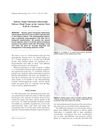
May 2013 in “Pediatric Dermatology” A newborn girl had a rare case of salivary gland tissue on her chest, which was safely removed.
Retinoic acid can change skin development, like turning scales into feathers or forming glands.
 2 citations
,
December 2022 in “Journal of Biochemistry and Molecular Biology”
2 citations
,
December 2022 in “Journal of Biochemistry and Molecular Biology” Organoids created from stem cells are used to model diseases, test drugs, and develop personalized and regenerative medicine.
 1 citations
,
May 2017 in “Journal of Stem Cell Research & Therapeutics”
1 citations
,
May 2017 in “Journal of Stem Cell Research & Therapeutics” Pluripotent stem cells show promise for treating skin color loss disorders like vitiligo.
1 citations
,
June 2014 in “Journal of developmental biology” Retinoic acid helps change skin cells and is important for skin development and hair growth.
 1 citations
,
June 2010 in “Development”
1 citations
,
June 2010 in “Development” The document concludes that pig iPSCs show promise for transplant therapies and the field is advancing in controlling cell behavior for biology and medicine.
1 citations
,
April 1999 in “Dermatologic clinics” Cultured hair follicles need careful handling and respond well to growth factors.
 April 2026 in “Journal of Dermatological Science”
 Hair organoids are effective for testing hair loss treatments.
October 2025 in “Animals” miR-200a reduces goose fibroblast growth by targeting PITX2 in the Wnt pathway.
 May 2024 in “Scientific reports”
 Twist2 is essential for scarless skin healing and hair growth in mouse fetuses.
 March 2024 in “Research Square (Research Square)”
 Twist2 is essential for proper skin healing and hair growth in developing mice.
 August 2023 in “Military Medical Research”
 Scientists have improved 3D models of human skin for research and medical uses, but still face challenges in perfectly replicating real skin.
 July 2023 in “Journal of bioscience and bioengineering”
 DMSO and microfinger devices show promise for preserving hair grafts for hair loss treatments.
 January 2023 in “bioRxiv (Cold Spring Harbor Laboratory)”
 Newly born mesenchymal cells quickly spread out in response to tissue tension during early development.