26 citations
,
May 2007 in “Differentiation” Foxn1 helps skin cells mature by controlling a specific protein's activity.
5 citations
,
August 2021 in “Experimental dermatology” Overexpressing Merkel cell virus proteins in human hair follicles can create clusters of cells that resemble Merkel cell cancer.
 13 citations
,
March 2020 in “Genes”
13 citations
,
March 2020 in “Genes” Disrupting the FGF5 gene in rabbits leads to longer hair by extending the hair growth phase.
 July 2023 in “British journal of dermatology/British journal of dermatology, Supplement”
 HPV8 E6 gene causes growth of certain skin stem cells.
December 2024 in “International Journal of Molecular Sciences” Platelet-rich fibrin may help reduce nonmelanoma skin cancer cell growth.
 24 citations
,
November 2023 in “Nature”
24 citations
,
November 2023 in “Nature” The extracellular matrix affects where tumors can start in the body.
April 2023 in “Journal of Investigative Dermatology” CD8+ T cells attack hair follicle stem cells, causing scarring and hair loss.
March 2026 in “Anais Brasileiros de Dermatologia” Lichen planopilaris and frontal fibrosing alopecia are likely distinct diseases with different tissue involvement.
33 citations
,
April 2003 in “Oncogene” Protein profiling of forehead skin can help distinguish between frontal fibrosing alopecia and androgenetic alopecia.
 September 2017 in “Journal of Investigative Dermatology”
 Certain miRNAs might be involved in a hair loss condition called frontal fibrosing alopecia and could possibly help in its diagnosis.
 July 2026 in “npj Regenerative Medicine”
 Gli2 and Serpinh1 are key for skin wound healing by helping fibroblasts close wounds.
29 citations
,
July 2003 in “Experimental Dermatology” The upper hair follicle is stable, while the lower part allows movement during hair growth.

Inhibiting AP-1 changes skin tumor types and affects tumor cell identity.
58 citations
,
April 1993 in “Developmental Biology” bFGF delays hair growth in mice.
 15 citations
,
November 2022 in “Cell Death and Disease”
15 citations
,
November 2022 in “Cell Death and Disease” CEP135 may predict cancer outcomes, and targeting PLK1 could help treat certain sarcomas.
83 citations
,
October 2016 in “Stem Cells and Development” Epidermal growth factor helps hair stem cells grow by activating specific cell pathways.
December 2015 in “OPAL (Open@LaTrobe) (La Trobe University)” QLT0267 stops hair follicle cell growth and movement.
 January 2020 in “Clinical Case Reports and Reviews”
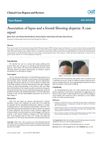
 Lupus and frontal fibrosing alopecia may share a common cause.
September 2017 in “Journal of Investigative Dermatology” RCS-01 is safe and may help rejuvenate aging skin.
 16 citations
,
February 2010 in “Journal of the European Academy of Dermatology and Venereology”
16 citations
,
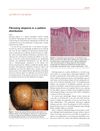
February 2010 in “Journal of the European Academy of Dermatology and Venereology” Fibrosing alopecia in a pattern distribution is a unique hair loss condition that may respond to antiandrogen therapy.
January 2001 in “Chinese Journal of Reparative and Reconstructive Surgery” EGF aids skin development and healing, while bFGF absence in embryos may allow scar-free healing.
November 2022 in “Journal of Investigative Dermatology” NCSTN gene mutation causes abnormal skin cell differentiation and more inflammation, contributing to Hidradenitis Suppurativa.
6 citations
,
March 2011 in “European Journal of Dermatology” Nestin-positive cells are important for hair follicle regeneration in alopecia areata.
 June 2021 in “bioRxiv (Cold Spring Harbor Laboratory)”
 KIF18B is important for correctly positioning cell division machinery in skin cells, affecting hair follicle development.
 April 2018 in “Journal of Investigative Dermatology”
 Fetuin A may increase collagen production and promote scarring.
 August 2013 in “Nature Reviews Drug Discovery”
 A protein called FGF9 helps regenerate hair follicles in mice after skin damage, and increasing FGF9 could potentially help human hair growth.
 May 2024 in “Australasian journal of dermatology”
 A man with a type of skin lymphoma had unusual yellowish skin growths despite normal blood lipid levels, and treatment reduced some symptoms but not the growths.
 November 2022 in “The journal of investigative dermatology/Journal of investigative dermatology”
 Linalool in personal care products may contribute to hair loss by damaging hair follicle stem cells and triggering harmful immune responses.
 238 citations
,
March 2013 in “Development”
238 citations
,
March 2013 in “Development” Fat cells help recruit healing cells and build skin structure during wound healing.