 July 2024 in “Iranian journal of pathology”
 Frontal fibrosing alopecia mainly affects women over 50, causing hair loss and specific skin changes.
August 2021 in “Journal of Investigative Dermatology” ILC1-like cells can cause alopecia areata by disrupting hair follicle immunity, suggesting a new treatment approach.
 March 2025 in “International Journal of Trichology”
 FAPD in children may not depend on androgens and should be treated with anti-inflammatory measures and minoxidil.
January 2003 in “Zhonghua shaoshang zazhi” Murine fetal epidermal stem cells can help regenerate hair follicles.
 November 2020 in “International journal of contemporary pediatrics”
 Two siblings had a rare immune disorder caused by a FOXN1 gene mutation.
 May 2021 in “Experimental Cell Research”
 FOXC1 boosts SFRP1 in hair loss, suggesting new treatments.
 36 citations
,
March 2011 in “Nature Communications”
36 citations
,
March 2011 in “Nature Communications” Cells from a skin condition can create new hair follicles and similar growths in mice, and a specific treatment can reduce these effects.
IL-1 and IL-7 help activate cells that boost hair follicle stem cell growth, aiding wound healing.
1 citations
,
May 2025 in “Current Issues in Molecular Biology” Centipeda minima and brevilin A protect skin cells from damage and aging.
 1 citations
,
April 2023 in “Science Advances”
1 citations
,
April 2023 in “Science Advances” High levels of ERK activity are key for tissue regeneration in spiny mice, and activating ERK can potentially redirect scar-forming healing towards regenerative healing in mammals.
43 citations
,
January 2016 in “Development” LHX2 is essential for hair follicle development, controlled by NF-κB and TGFβ2 signaling.
150 citations
,
June 1999 in “Oncogene” 14 citations
,
March 2015 in “Stem Cell Research & Therapy” ABCG2 protein marks stem-like skin cells in human epidermis.
25 citations
,
January 2003 in “Plastic & Reconstructive Surgery” Nail-matrical fibroblasts can make non-nail cells produce hard keratin, useful for nail repair.
 1 citations
,
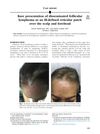
April 2019 in “JAAD case reports”
1 citations
,
April 2019 in “JAAD case reports” A woman with lymphoma had a rare skin rash on her scalp and forehead, which was hard to diagnose but responded well to treatment.
2 citations
,
June 2025 in “Preprints.org” Targeting amphiregulin may improve treatment for fibrotic diseases and cancer.
 12 citations
,
January 2017 in “Skin appendage disorders”
12 citations
,
January 2017 in “Skin appendage disorders” Two patients with skin lupus were mistakenly thought to have a different scalp condition but improved with lupus treatment.
 8 citations
,
April 2009 in “International journal of oncology”
8 citations
,
April 2009 in “International journal of oncology” Hair follicle cells resist turning into skin cells.
23 citations
,
May 2023 in “Cell Proliferation” TGF-β and FGF pathways are crucial for skin development and regeneration.
July 2022 in “Journal of Investigative Dermatology” 8 citations
,
February 2024 in “Matrix Biology” July 2025 in “Pharmaceutics” Recombinant Human Annexin A5 may help treat localized scleroderma by reducing skin thickening and inflammation.
 4 citations
,
June 2022 in “Journal of Cosmetic Dermatology”
4 citations
,
June 2022 in “Journal of Cosmetic Dermatology” Multi-peptide factors from fibroblasts may stimulate hair growth by increasing growth factors and β-catenin in hair cells.
June 2026 in “Experimental Dermatology” Large wounds have more infundibular basal keratinocytes, aiding hair follicle regeneration.
 April 2018 in “Journal of Investigative Dermatology”
 Hair follicle stem cells can change their role to ensure proper hair development.
33 citations
,
June 2009 in “Journal of Cutaneous Pathology” Erlotinib can cause nonscarring hair loss and itchy skin.
 April 2018 in “Journal of Investigative Dermatology”
 IL-17C is important in inflammatory skin diseases and could be a target for treatment.
 31 citations
,
April 2010 in “British journal of dermatology/British journal of dermatology, Supplement”
31 citations
,
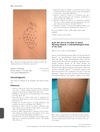
April 2010 in “British journal of dermatology/British journal of dermatology, Supplement” Frontal fibrosing alopecia can cause sudden hair loss on limbs, similar to scalp hair loss.
January 2024 in “Updates in clinical dermatology” Frontal fibrosing alopecia is a scarring hair loss condition mainly affecting postmenopausal women, with unclear causes.
 January 2012 in “Institutional Repositories DataBase (IRDB)”
 Cells from skin and lung can help regenerate hair follicles.