March 2026 in “Experimental Dermatology” The new model helps understand and develop treatments for genetic skin disorders like AEC.
 April 2016 in “Journal of Investigative Dermatology”
 The Engrailed-1 gene plays a key role in the development of sweat glands in mice.

mEphA1 receptor tyrosine kinase is important for skin and hair development and may play a role in certain diseases.
April 2018 in “DSpace@MIT (Massachusetts Institute of Technology)” Nephronectin is linked to worse outcomes in breast cancer and helps cancer spread.
 13 citations
,
January 2021 in “Scientific Reports”
13 citations
,
January 2021 in “Scientific Reports” Pannexin 3 helps skin and hair growth by controlling a protein called Epiprofin.
 March 2025 in “FEBS Journal”
 Epiprofin suppresses parathyroid hormone gene activity, helping regulate calcium levels and could be a treatment target for hyperparathyroidism.
 3 citations
,
July 2021 in “Life science alliance”
3 citations
,
July 2021 in “Life science alliance” PNKP is essential for keeping adult mouse progenitor cells healthy and growing normally.
April 2018 in “The journal of investigative dermatology/Journal of investigative dermatology” Esrp1 is important for skin health by helping form and maintain the skin barrier.
7 citations
,
January 2020 in “The journal of investigative dermatology/Journal of investigative dermatology” NIPP1 is important for healthy skin and could help treat skin inflammation.
 January 2023 in “Indian dermatology online journal”
 A child with ectodermal dysplasia-syndactyly syndrome has a new mutation in the NECTIN4 gene.
 20 citations
,
February 2019 in “Genes”
20 citations
,
February 2019 in “Genes” The study concludes that mutations in the AEBP1 gene can cause a form of Ehlers-Danlos syndrome and should be considered in diagnosis.
32 citations
,
March 2018 in “Neoplasia” Nephronectin is linked to worse breast cancer outcomes and helps cancer spread.
 25 citations
,
November 2018 in “Cell reports”
25 citations
,
November 2018 in “Cell reports” The study concluded that specific proteins are necessary to maintain the structure that holds epithelial cells tightly together.
 59 citations
,
April 2016 in “Cell Reports”
59 citations
,
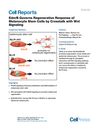
April 2016 in “Cell Reports” EdnrB signaling helps melanocyte stem cells regenerate and could be targeted to treat pigmentation issues.
33 citations
,
May 2017 in “Journal of Clinical Oncology” ETC-159 was safe up to 30 mg, but no tumor shrinkage was seen.
February 2026 in “Advanced Science” TTNPB helps turn stem cells into neural stem cells, improving depression-like behaviors in rats.
10 citations
,
February 2013 in “PLoS ONE” Neprilysin is important for hair growth regulation.
 4 citations
,
February 2021 in “Plant journal”
4 citations
,
February 2021 in “Plant journal” OsUEV1B protein is essential for controlling phosphate levels in rice.
 February 2024 in “Frontiers in plant science”
 Peps help Arabidopsis plants grow more root hairs by affecting specific genes and calcium signaling.
4 citations
,
April 2012 in “The journal of investigative dermatology/Journal of investigative dermatology” Krt16-deficient mice help understand skin disorders like PC and FNEPPK.
 11 citations
,
March 2020 in “American Journal of Medical Genetics Part A”
11 citations
,
March 2020 in “American Journal of Medical Genetics Part A” A mutation in the EDNRA gene causes Oro-Oto-Cardiac syndrome, affecting face and heart development.
 March 1998 in “Journal of dermatological science”
 Protease Nexin-1 is found in human hair growth cells and is affected by male hormones.
ANE syndrome is caused by a mutation in the RBM28 protein that disrupts ribosome assembly.
24 citations
,
July 2014 in “Journal of Investigative Dermatology” Nagashima-type palmoplantar keratosis in Asians is caused by a SERPINB7 gene mutation.
 3 citations
,
August 2021 in “Research Square (Research Square)”
3 citations
,
August 2021 in “Research Square (Research Square)” The most common sign of aging at the gene level is more Ectodysplasin A2 Receptor (EDA2R) being made.
 4 citations
,
May 2021 in “The journal of investigative dermatology/Journal of investigative dermatology”
4 citations
,
May 2021 in “The journal of investigative dermatology/Journal of investigative dermatology” ELL is crucial for gene transcription related to skin cell growth.
37 citations
,
December 1995 in “Journal of Cell Science” Nexin 1 may help control hair growth.
74 citations
,
October 2012 in “The American Journal of Human Genetics” Mutations in the HOXC13 gene cause hair and nail development issues.
29 citations
,
September 2018 in “Journal of the American Heart Association” EP 2 receptor is essential for heart repair by helping macrophages work properly.
 January 2026 in “BMC Veterinary Research”
 A genetic variant in "Blonde d'Aquitaine" calves causes death at birth due to a missing protein.