 1 citations
,
July 2025 in “Frontiers in Endocrinology”
1 citations
,
July 2025 in “Frontiers in Endocrinology” ApoBDs, once seen as waste, are now viewed as potential tools for disease treatment and tissue repair.
 1 citations
,
January 2025 in “Aging and Disease”
1 citations
,
January 2025 in “Aging and Disease” Lengthening telomeres may reverse aging and extend lifespan.
 1 citations
,
January 2020
1 citations
,
January 2020 Ift20 is essential for hair follicle function and skin cell movement.
 May 2026 in “Frontiers in Cell and Developmental Biology”
 Collagen networks play a key role in hair loss and follicle miniaturization.
 May 2026 in “Scientific Reports”
 Sr and Cu ions in borosilicate glasses improve strength, bone integration, and fight bacteria, making them good for orthopedic implants.
 March 2026 in “BioScience Trends”
 UV radiation causes skin aging by damaging cells and triggering harmful processes.
 January 2026 in “The Eurasian Journal of Life Sciences”
 Pectin nanofibers show promise for medical use due to their unique properties.
 January 2026 in “Food and Feed Research”
 Bananas have many health benefits, including treating diarrhea, diabetes, and colds.
 January 2026 in “International Journal of Current Research and Review”
 Maidenhair fern may help with health issues but should not be used during pregnancy.
 January 2026 in “Materials Horizons”
  December 2025 in “Journal of Pharma Insights and Research.”
 Injectable cryogels can deliver drugs and aid tissue repair with minimal surgery.

Blocking autophagy worsens lipid buildup and dysfunction in brain cells after injury.
 January 2025 in “Nanotechnology Reviews”
 Pumpkin seed extract can create copper oxide nanoparticles with potential antibacterial and cancer-fighting properties.

Elastin-like recombinamers show promise for better wound healing and skin regeneration.
 January 2024 in “Regenerative Biomaterials”
 Metal organic frameworks-based scaffolds show promise for tissue repair due to their unique properties.
 January 2023 in “Åbo Akademi University Research Portal”
 Vimentin is crucial for wound healing, cell growth, and managing immune responses.
 July 2022 in “International journal of KIU”
 Genetics influence opioid addiction risk, diet affects COVID-19 severity, Aerva lanata may harm kidneys, some plants fight fungi and cancer, and nursing students need better contraceptive knowledge.

Human hair keratins can be turned into useful 3D biomedical scaffolds through a freeze-thaw process.
 January 2021 in “Middle East journal of applied sciences”
 Zinc is essential for plant growth and human health, but many soils lack enough zinc, affecting crops and potentially leading to health problems.
 September 2020 in “Research Square (Research Square)”
 Researchers found that certain RNA sequences play a role in yak hair growth and these sequences are somewhat similar to those in cashmere goats.

L-PGDS has specific binding sites for its functions and could help in drug delivery system design.
 January 2019 in “Durham e-Theses (Durham University)”
 Advanced microscopy shows hair damage and keratin proteins' roles, aiding future cosmetic treatments.

Keratin hydrogels from human hair show promise for tissue engineering and regenerative medicine.
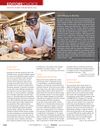 September 2013 in “Science”
 Undergraduate research experiences boost students' research skills, confidence, and career aspirations.
 September 2013 in “Science”
 The document concludes that human astrocytes aid stroke recovery, research confidence affects student career aspirations, collagen affects cancer spread, a microRNA suppresses brain cancer growth, calmodulin regulates water channels, and small magnesium pieces deform differently.
 September 2013 in “Science”
 Certain astrocytes can protect the brain and improve recovery after a stroke, and a hair loss drug might reduce cancer spread.
 September 2013 in “Science”
 Human stem cells can aid stroke recovery, research experiences boost students' career aspirations, minoxidil may reduce cancer spread, a molecule can slow tumor growth, a protein affects water flow in cells, magnesium behaves differently at tiny scales, and a new method detects slow-moving objects.
 September 2013 in “Science”
 Special astroglia cells improved stroke recovery in rats, a hair growth drug reduced cancer spread, and tiny magnesium structures were more easily shaped.
 September 2013 in “Science”
 Special astrocytes improved learning and memory in rats after a stroke.
 September 2013 in “Science”
 Transplanted human Olig2+ astroglia may help improve learning and memory after a stroke.