 11 citations
,
January 2006 in “Drug development and industrial pharmacy”
11 citations
,
January 2006 in “Drug development and industrial pharmacy” Adding TPGS to minoxidil solutions can improve skin penetration and retention, especially in water and PEG 400-based solutions.
4 citations
,
February 2023 in “Stem Cell Research & Therapy” Mouse skin cells can become sperm-like cells in the lab.
December 2019 in “Reproduction Fertility and Development” A new method helps grow skin stem cells better, which could improve skin grafts for burn victims.
32 citations
,
January 2000 in “International Journal of Cancer” Transglutaminase-3 is often reduced in esophageal cancer.
Editing the FGF5 gene in sheep increases fine wool growth.
 1 citations
,
January 2025 in “Frontiers in Pharmacology”
1 citations
,
January 2025 in “Frontiers in Pharmacology” Total glucosides of paeony can help treat skin conditions but need more research for clinical use.
 April 2024 in “Nepal journal of dermatology, venereology & leprology”
 Premature graying of hair is common and stressful, but not well understood or treated.
 13 citations
,
September 2019 in “Clinical, Cosmetic and Investigational Dermatology”
13 citations
,
September 2019 in “Clinical, Cosmetic and Investigational Dermatology” Early treatment of EPDS can improve outcomes and reduce recurrence risk.
9 citations
,
October 1989 in “Australian Journal of Agricultural Research” Mouse epidermal growth factor temporarily stops wool growth and causes cell changes in Merino sheep.
 108 citations
,
November 2006 in “Phytomedicine”
108 citations
,
November 2006 in “Phytomedicine” Green tea component EGCG could potentially promote human hair growth.
January 2012 in “Journal of Northwest A & F University” The Eda gene helps regulate the hair cycle in goats.
79 citations
,
October 2003 in “PubMed” Overexpression of PKCepsilon leads to increased TNFalpha, promoting metastatic squamous cell carcinoma in mice.
 September 2025 in “American Journal of Dermatopathology”
 PRAME is often present in Paget disease and could help in diagnosis, but more research is needed.
 3 citations
,
March 2016 in “Journal of Cosmetic Dermatology”
3 citations
,
March 2016 in “Journal of Cosmetic Dermatology” GPIGS peptide increases thick hair growth in balding Japanese men.
 12 citations
,
December 2020 in “Archives animal breeding/Archiv für Tierzucht”
12 citations
,
December 2020 in “Archives animal breeding/Archiv für Tierzucht” EDA and EDAR are important for hair follicle development in cashmere goats and affect other related genes.
39 citations
,
March 2009 in “Dermatology Online Journal” Understanding EGFR roles could lead to new hair loss treatments.
18 citations
,
December 2002 in “European Journal of Biochemistry” MsPG3 protein gathers at root hair tips, aiding growth.
November 2022 in “Journal of Investigative Dermatology” EGFR is crucial for preventing hair follicle inflammation and hair loss.
66 citations
,
June 2004 in “Development” FGF signaling is crucial for starting feather development in chicken embryos.
6 citations
,
March 2023 in “Materials” The GNP crosslinked scaffold with antibacterial coating is effective for rapid wound healing and infection prevention.
 1 citations
,
August 2023 in “Journal of Dentomaxillofacial Science”
1 citations
,
August 2023 in “Journal of Dentomaxillofacial Science” Freeze-dried platelet-rich plasma boosts bone growth in gum treatment.
Encapsulating hair follicle cells in a special gel boosts their activity.
 January 2017 in “Korean Journal of Pharmacognosy”
 Modified red ginseng extract promotes hair growth and has antioxidant and anti-inflammatory effects.
 April 2018 in “Journal of Investigative Dermatology”
 The document concludes that ERBB2 mutations are common in extramammary Paget disease and may respond to systemic treatments like cancer immunotherapy.
 April 2016 in “Journal of The American Academy of Dermatology”
 Ixekizumab is effective and safe for patients who did not improve with etanercept treatment for psoriasis.
 17 citations
,
January 2010 in “Acta Dermato Venereologica”
17 citations
,
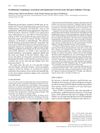
January 2010 in “Acta Dermato Venereologica” EGFR inhibitors can cause yellowish skin eruptions.
December 2024 in “The Eurasia Proceedings of Science Technology Engineering and Mathematics” Higher ꝩ-GCS enzyme levels in PCOS patients may play a role in the disease.
 25 citations
,
January 2017 in “Steroids”
25 citations
,
January 2017 in “Steroids” Allopregnanolone increases growth and changes gene activity in human brain cancer cells.
July 2022 in “Journal of Investigative Dermatology” The combination of a plant extract and a peptide can increase hair pigmentation and may reverse greying.

L-PGDS has specific binding sites for its functions and could help in drug delivery system design.