December 2025 in “The Journal of Cell Biology” Keratin 15 helps maintain skin cell growth and repair.
 November 2025 in “Bioengineering”
 The new method may improve skin grafts and hair growth.
 July 2023 in “International Journal of Molecular Sciences”
 N,N-Dimethylglycine Sodium Salt helps reduce skin inflammation and improves skin cell growth and healing.
 August 2019 in “Blucher Medical Proceedings”
 Lupus Panniculitis can be an early sign of Systemic Lupus Erythematosus.

Skin stem cells are crucial for maintaining and repairing skin, with potential for treating skin disorders and improving wound healing.
Protein profiling of forehead skin can help distinguish between frontal fibrosing alopecia and androgenetic alopecia.
 273 citations
,
May 2017 in “The Lancet”
273 citations
,
May 2017 in “The Lancet” Some drugs can cause rare but potentially deadly skin reactions, and early treatment and avoiding the drug again are key.
 88 citations
,
August 2019 in “Nature communications”
88 citations
,
August 2019 in “Nature communications” Researchers found a specific immune receptor in patients that causes severe skin reactions to a drug.
 67 citations
,
May 2014 in “International Journal of Molecular Sciences”
67 citations
,
May 2014 in “International Journal of Molecular Sciences” Using your own skin cells can help repair aging skin and promote hair growth.
 13 citations
,
December 2010 in “Annales de Dermatologie et de Vénéréologie”
13 citations
,
December 2010 in “Annales de Dermatologie et de Vénéréologie” The conclusion is that skin, mucous, and eye problems after Stevens-Johnson syndrome and Lyell syndrome significantly affect patients' lives, highlighting the need for comprehensive care and eye check-ups.
 8 citations
,
January 2013 in “The scientific world journal/TheScientificWorldjournal”
8 citations
,
January 2013 in “The scientific world journal/TheScientificWorldjournal” Human hair follicles may provide a noninvasive way to diagnose diseases and have potential in regenerative medicine.
8 citations
,
December 2003 in “Experimental Dermatology” Altering the keratin 17 gene in mice hair follicles caused temporary hair issues, but changes were minimal and short-lived.
1 citations
,
April 2023 in “International journal of molecular sciences” Certain skin proteins can form anchoring structures without the protein AMACO.
Type XVII collagen helps control skin cell growth and may have anti-aging effects.
Type XVII collagen may help prevent skin aging.
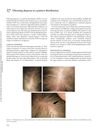 April 2012 in “Informa Healthcare eBooks”
 Fibrosing alopecia in a pattern distribution is a unique hair loss condition with inflammation and scarring, resembling but distinct from common balding.
33 citations
,
October 2012 in “Journal of Morphology” Reptile skin hardens by layering beta-proteins on keratin.
9 citations
,
June 2016 in “Stem cells” Overexpression of sPLA2-IIA in mouse skin reduces hair stem cells and increases cell differentiation through JNK/c-Jun pathway activation.
6 citations
,
December 2015 in “International journal of immunopathology and pharmacology” AE can have varied symptoms and genetic causes, but zinc therapy helps.
5 citations
,
November 2013 in “Journal of Investigative Dermatology” The glucocorticoid receptor helps protect skin from tumors and other issues.
93 citations
,
May 2002 in “Journal of Investigative Dermatology” Overexpressing thrombospondin-1 in mice skin prevents UVB-induced skin damage.
50 citations
,
September 1997 in “Developmental Biology” 21 citations
,
August 2007 in “Experimental Dermatology” Overexpression of hurpin in mice leads to abnormal skin and higher skin cancer risk.
18 citations
,
May 2011 in “Journal of Investigative Dermatology” Wnt signaling affects the development and growth of Langerhans cells in mice.
16 citations
,
June 2019 in “Journal of Investigative Dermatology” miR-21 increases skin aging by reducing SATB1, affecting skin cell function.
 February 2026 in “Medicina”
 Hyaluronic Acid Profhilo® reduces skin inflammation and nerve-related pain in atopic dermatitis.
May 2025 in “Dermatology Online Journal” Erlotinib can cause excessive eyelash growth.
209 citations
,
October 2018 in “Cell Reports” The study used single-cell transcriptomics to explore how Lgr5 and Lgr6 stem cells in mouse skin adapted during wound healing. It was found that Lgr5 progeny, initially in the hair follicle bulge, rapidly adapted to wound signals by adopting an interfollicular epidermis (IFE)-like signature within 1 day of wounding, allowing them to interact with the wound environment. In contrast, Lgr6 progeny, already in the IFE, were primed to respond to wound signals even before injury. The research highlighted the cellular plasticity of these stem cells and provided insights into their molecular adaptations during wound healing, emphasizing the importance of rapid transcriptional changes for effective wound repair. The study analyzed 1,873 cells, identifying 106 Lgr5TOM cells as potential wound cells, and revealed five distinct wound cell states.
11 citations
,
January 1977 in “Archives of dermatological research” Mouse tail skin has different keratinization near hair follicles and scales.
September 2006 in “Experimental Dermatology” Targeting multiple pathways and understanding genetic mutations are crucial for effective melanoma therapy.