36 citations
,
June 1988 in “Australian Journal of Biological Sciences” Mouse epidermal growth factor injections in sheep affected wool growth and skin, but saline did not.
24 citations
,
March 2022 in “Stem Cell Research & Therapy” Dendritic epidermal T cells help wounds heal faster by boosting skin stem cell growth.
 4 citations
,
July 2022 in “Annals of translational medicine”
4 citations
,
July 2022 in “Annals of translational medicine” Scientists created complete hair-like structures by growing mouse skin cells together in a special gel.
1 citations
,
May 2017 in “Molecular and Clinical Oncology” An epidermal cyst in the temporal bone can occur as a rare delayed complication after ear surgery.
 75 citations
,
January 2011 in “Plastic and Reconstructive Surgery”
75 citations
,
January 2011 in “Plastic and Reconstructive Surgery” The dermal regeneration template is effective in skin regeneration, reducing scarring, and has potential for future improvements.
57 citations
,
August 2002 in “American Journal Of Pathology” Cathepsin L deficiency causes hair and skin issues in mice.
20 citations
,
February 1977 in “The anatomical record” Excess vitamin A changes skin and hair follicle development and affects polysaccharide distribution.
 8 citations
,
April 2010 in “JEADV. Journal of the European Academy of Dermatology and Venereology/Journal of the European Academy of Dermatology and Venereology”
8 citations
,
April 2010 in “JEADV. Journal of the European Academy of Dermatology and Venereology/Journal of the European Academy of Dermatology and Venereology” The first pediatric case of naevus trichilemmocysticus was documented.
 4 citations
,
January 2013 in “Acta dermato-venereologica”
4 citations
,
January 2013 in “Acta dermato-venereologica” Some patients with Alopecia Areata experience itch due to immune cells and enzymes that cause itching.
 2 citations
,
September 2021 in “Journal of Pathology of Nepal”
2 citations
,
September 2021 in “Journal of Pathology of Nepal” Most skin cysts were common types found in unusual body parts, and examining tissue samples is important for accurate diagnosis.
2 citations
,
April 2010 in “Cancer Research” Removing EGFR in skin causes inflammation and abnormal hair growth.
 1 citations
,
October 1996 in “Journal of Cutaneous Medicine and Surgery”
1 citations
,
October 1996 in “Journal of Cutaneous Medicine and Surgery” Gene therapy shows promise for treating skin disorders and cancer, but faces technical challenges.
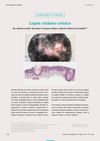 January 2024 in “Revista Dermatológica Centro Uraga”
 The patient has Chronic Cutaneous Lupus, a skin condition causing plaques and hair loss.
 January 2019 in “Clinical Dermatology Open Access Journal”
 Combining corticosteroids and non-ablative fractional laser therapy may effectively treat extensive alopecia areata.

Surgical repigmentation can permanently restore color to white hair in vitiligo patients.
21 citations
,
April 2008 in “Toxicologic Pathology” CI-1033 causes skin lesions in rats, similar to humans, due to EGF receptor inhibition.
 December 2025 in “The Journal of Basic and Applied Zoology”
 Red Sokoto goat fetuses develop firmer, pigmented skin with hair follicles as they grow.
164 citations
,
February 2010 in “Journal of Cell Science” Human dermal stem cells can become functional skin pigment cells.
 133 citations
,
September 2013 in “Nature Reviews Molecular Cell Biology”
133 citations
,
September 2013 in “Nature Reviews Molecular Cell Biology” Different types of stem cells and their environments are key to skin repair and maintenance.
 81 citations
,
June 2014 in “Cold Spring Harbor perspectives in medicine”
81 citations
,
June 2014 in “Cold Spring Harbor perspectives in medicine” Skin has specialized touch receptors that can tell different sensations apart.
 80 citations
,
June 2020 in “Dermatopathology”
80 citations
,
June 2020 in “Dermatopathology” COVID-19 can cause various skin lesions, which may result from the virus and immune response, and are not directly linked to illness severity.
73 citations
,
January 2016 in “International review of cell and molecular biology” Cornification evolved from keratinization in vertebrates, with differences between mammals and sauropsids.
65 citations
,
December 2000 in “PubMed” The biology of skin and hair is complex and not fully understood.
 62 citations
,
October 2010 in “Journal of biomedical nanotechnology”
62 citations
,
October 2010 in “Journal of biomedical nanotechnology” Nanoparticles can enter the skin, potentially causing toxicity, especially in damaged skin.
33 citations
,
January 2000 in “Acta Oto-Laryngologica” Epidermal growth factor increases extra hair cells in newborn rat ears.
31 citations
,
February 2007 in “Molecular Carcinogenesis” Overexpressing ATF3 in mice's epithelial cells may lead to oral cancer.
30 citations
,
August 2016 in “Skin research and technology” 3D imaging shows clearer details of skin structure changes with age.
30 citations
,
October 2013 in “BMC dermatology” VEGF gel increases hair growth but may have potential toxicity.
 28 citations
,
September 2015 in “Wiener Klinische Wochenschrift”
28 citations
,
September 2015 in “Wiener Klinische Wochenschrift” New skin substitutes for treating severe burns and chronic wounds are being developed, but a permanent solution for deep wounds is not yet available commercially.
 28 citations
,
March 2010 in “Histochemistry and cell biology”
28 citations
,
March 2010 in “Histochemistry and cell biology” Skin cells can help create early hair-like structures in lab cultures.