31 citations
,
February 2007 in “Molecular Carcinogenesis” Overexpressing ATF3 in mice's epithelial cells may lead to oral cancer.
99 citations
,
February 2000 in “PubMed” Overexpressing PKCepsilon in mice reduces papillomas but increases carcinomas.
 16 citations
,
December 2006 in “International Journal of Dermatology”
16 citations
,
December 2006 in “International Journal of Dermatology” A woman died from cancer that spread from a long-standing cyst on her abdomen.
July 2025 in “Journal of Investigative Dermatology” 92 citations
,
May 2004 in “Journal of Investigative Dermatology” January 2019 in “Publisher” Human basal cell carcinomas and squamous cell carcinomas have unique gene expression patterns not fully mirrored in mouse models.
Loss of Dnmt3a and Dnmt3b leads to more aggressive skin tumors, but blocking PPAR-γ can reduce this effect.
Loss of Dnmt3a and Dnmt3b increases aggressive skin tumors by affecting PPAR-γ.
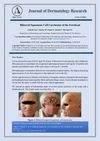
A 70-year-old man with skin cancer on both sides of his forehead was treated with surgery and cryotherapy, highlighting the need for early detection and prevention.
409 citations
,
May 1991 in “Genes & Development” TGF-alpha affects skin thickness, hair growth, and may contribute to psoriasis and papilloma formation.
171 citations
,
June 2004 in “Journal of Investigative Dermatology” GLI2 activates GLI1, promoting skin tumor growth and hair development.
157 citations
,
October 2002 in “Journal of Cutaneous Pathology” p63 may influence skin cancer development and cell differentiation.
72 citations
,
November 2017 in “Journal of developmental biology” The Hedgehog signaling pathway is important for skin and hair growth and can lead to cancer if it doesn't work right.
64 citations
,
February 2008 in “Cancer Research” Inactivating both p53 and Rb genes in mice speeds up aggressive skin cancer development.
 56 citations
,
March 2015 in “Cell death and differentiation”
56 citations
,
March 2015 in “Cell death and differentiation” Older skin has higher cancer risk due to inflammation and stem cell issues.
5 citations
,
January 1961 in “PubMed” Cholesterol and phospholipids increase in mouse skin during cancer development, with differences between male and female skin.
3 citations
,
November 2011 in “Small GTPases” Researchers found that hair follicle stem cells can become squamous cell carcinoma due to Ras activation, which could lead to new treatments.
 June 2026 in “Frontiers in Oncology”
 GSDMA deficiency slows skin cancer growth.
 March 2026 in “Frontiers in Cell and Developmental Biology”
 Understanding how certain proteins and genetic changes control skin stem cells is key to treating skin diseases.
January 2026 in “Medicina” CD34 is absent in most basal cell carcinoma cells but present in surrounding skin.
Loss of the p53 gene alone causes tumors, and losing both p53 and Rb genes speeds up aggressive skin cancer.
Loss of the p53 gene alone causes tumors, and losing both p53 and Rb genes speeds up aggressive skin cancer.
 September 2016 in “Journal of Dermatological Science”
 A specific mutation known for causing cancer is also found to cause a skin condition in a young girl.
99 citations
,
September 2004 in “Development” Proper hedgehog signaling is crucial for maintaining healthy skin stem cells.
34 citations
,
August 2018 in “Cancer research” Fixing DNA errors is crucial to prevent skin cancer.
11 citations
,
November 2011 in “The Journal of Dermatology” Connexin-26 gene mutations may increase cancer risk in KID syndrome patients.
March 2026 in “The Journal of Steroid Biochemistry and Molecular Biology” Deleting vitamin D and calcium receptors in skin cells increases skin cancer risk by reducing DNA repair and stress response.
November 2025 in “Journal of Investigative Dermatology” TEDAR is crucial for skin cell differentiation and barrier formation.
Ribonucleotide excision repair is crucial to prevent skin cancer.
Ribonucleotide excision repair is crucial to prevent skin cancer.