83 citations
,
October 2016 in “Stem Cells and Development” Epidermal growth factor helps hair stem cells grow by activating specific cell pathways.
 26 citations
,
July 2016 in “The journal of investigative dermatology/Journal of investigative dermatology”
26 citations
,
July 2016 in “The journal of investigative dermatology/Journal of investigative dermatology” The protein Par3 is crucial for healthy skin, affecting the skin barrier, cell differentiation, and stem cell maintenance.
July 2026 in “Frontiers in Immunology” Epidermal resident memory T cells play a crucial role in skin immunity and disease understanding.
 June 2025 in “bioRxiv (Cold Spring Harbor Laboratory)”
 In alopecia areata, certain immune cells increase and express a protein linked to immune activation.
154 citations
,
October 1996 in “Proceedings of the National Academy of Sciences of the United States of America” Estrogen affects hair growth and skin cell multiplication.
43 citations
,
January 2016 in “Cellular physiology and biochemistry” Epidermal Growth Factor helps hair follicle cells grow and move by activating a specific cell signaling pathway.
41 citations
,
January 2015 in “Development” Atoh1 expression can create new Merkel cells in the skin.
36 citations
,
April 2016 in “Biochimie” A substance called epidermal growth factor helps increase the growth of important hair follicle cells by activating a specific cell communication route.
31 citations
,
December 1991 in “Annals of the New York Academy of Sciences” ORS and hair matrix cells balance growth and differentiation better than normal keratinocytes, with human dermal fibroblasts crucial for proper differentiation.
31 citations
,
February 2007 in “Molecular Carcinogenesis” Overexpressing ATF3 in mice's epithelial cells may lead to oral cancer.
29 citations
,
June 2014 in “Experimental Cell Research” EGF–FGF2 helps mouse stem cells grow and become more like nerve cells.
 24 citations
,
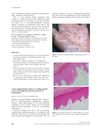
September 2008 in “Clinical and experimental dermatology”
24 citations
,
September 2008 in “Clinical and experimental dermatology” Repigmentation in vitiligo may come from melanocyte stem cells in the skin.
 16 citations
,
December 2006 in “International Journal of Dermatology”
16 citations
,
December 2006 in “International Journal of Dermatology” A woman died from cancer that spread from a long-standing cyst on her abdomen.
11 citations
,
January 2013 in “Veterinary dermatology” Keratinocytes from dog hair follicles can create a functional skin layer in a lab model, useful for dog skin therapy.
10 citations
,
January 2020 in “Acta Neurobiologiae Experimentalis” Valproic acid and crocin together boost cell growth and may help treat nerve injuries.
5 citations
,
December 2016 in “Microscopy Research and Technique” EPI-NCSCs from hair follicles may help treat brain development issues in mice.
3 citations
,
January 2020 in “Journal of Cutaneous and Aesthetic Surgery” A new treatment using skin and hair cells may help heal stubborn leg ulcers effectively and safely.
 1 citations
,
September 2012 in “Journal of Investigative Dermatology”
1 citations
,
September 2012 in “Journal of Investigative Dermatology” Aging reduces stem cell activation, leading to hair loss in mice lacking a specific enzyme.
 April 2023 in “The journal of investigative dermatology/Journal of investigative dermatology”
 The protein p21 is more abundant in normal skin cells than in melanoma cells and may help protect against melanoma, with UVB light affecting its levels.
 February 2023 in “bioRxiv (Cold Spring Harbor Laboratory)”
 Merkel cells stabilize nerve endings in the skin, and they change independently of each other.
Bcl-2 helps hair regeneration but can also increase cancer risk.
 September 2017 in “The journal of investigative dermatology/Journal of investigative dermatology”
 Scarred skin in lichen planopilaris loses immune cells due to a decrease in a specific protein in skin cells.
Epidermal growth factor speeds up hair cell regeneration in chickens after gentamicin damage.
The estrogen receptor pathway controls hair growth cycles and affects skin cell growth.
March 2021 in “Cell stem cell” Skin cell behavior is influenced by the tightness of nearby cells, affecting their growth and development.
 April 2019 in “Journal of Investigative Dermatology”
 Skin grafts from related donors significantly healed chronic wounds in patients with a severe skin condition over a year.
December 2022 in “Stem Cells and Development” Exosomes from stem cells help improve nerve repair in rats.
Par3–mInsc and Gαi3 work together to ensure proper cell division orientation in skin development.
July 2024 in “Journal of Investigative Dermatology” Substance P helps restore skin thickness and cell renewal when sensory nerves are reduced.
1 citations
,
April 2016 in “PubMed” Epidermis and dermis cells together can regenerate hair follicles.