 2 citations
,
November 2017 in “PloS one”
2 citations
,
November 2017 in “PloS one” Some vitamin D analogs can thicken skin and reduce pore size like a common acne treatment, with one analog also affecting skin growth factors.
 2 citations
,
October 2016
2 citations
,
October 2016 Chemotherapy and radiotherapy can cause skin side effects like rashes, hair loss, and nail changes, which are usually managed with conservative treatments.
 2 citations
,
April 2020 in “bioRxiv (Cold Spring Harbor Laboratory)”
2 citations
,
April 2020 in “bioRxiv (Cold Spring Harbor Laboratory)” The skin's basement membrane is specially designed to support different types of connections between skin layers and hair follicles.
 2 citations
,
January 2020 in “American Journal of Clinical Research and Reviews”
2 citations
,
January 2020 in “American Journal of Clinical Research and Reviews” All skin diseases might start in hair follicles.
 2 citations
,
December 2013 in “Veterinary dermatology”
2 citations
,
December 2013 in “Veterinary dermatology” Three dogs with a rare skin condition improved with treatment.
 1 citations
,
April 2025 in “Pediatria i Medycyna Rodzinna”
1 citations
,
April 2025 in “Pediatria i Medycyna Rodzinna” Restoring EDA and WNT pathways early may help improve skin, hair, and teeth issues in hypohidrotic ectodermal dysplasia.
 1 citations
,
December 2022 in “Parasitologists United Journal”
1 citations
,
December 2022 in “Parasitologists United Journal” House fly larvae substances improve wound healing and skin regeneration, especially in immunosuppressed mice.
 1 citations
,
January 2021
1 citations
,
January 2021 CD4+ skin cells may be precursors to basal cell carcinoma.
 1 citations
,
June 2017 in “Veterinary dermatology”
1 citations
,
June 2017 in “Veterinary dermatology” A cross-bred lamb with severe skin and movement issues had ichthyosis fetalis but normal vitamin A levels.
1 citations
,
April 2023 in “International journal of molecular sciences” Certain skin proteins can form anchoring structures without the protein AMACO.
 1 citations
,
January 2009 in “Elsevier eBooks”
1 citations
,
January 2009 in “Elsevier eBooks” The document concludes that a deeper understanding of skin aging and photodamage is needed to create better skin treatments.
 June 2026 in “Dermatology and Therapy”
 Combining multiple ingredients is the most effective treatment for hyperpigmentation.
 March 2026 in “bioRxiv (Cold Spring Harbor Laboratory)”
 The Enriched-GF method efficiently produces high-yield growth factors for tissue repair.
 February 2026 in “Frontiers in Medical Technology”
 Keratinocyte stem cells are crucial for skin renewal and have potential in wound healing and tissue regeneration.

Plasma-activated water heals diabetic wounds better than other treatments.
 November 2025 in “Clinical Cosmetic and Investigational Dermatology”
 The plant combination effectively repairs skin and delays aging.
 February 2025 in “Theranostics”
 3D bioprinting with special hydrogels can create artificial skin that heals wounds and regrows hair in mice.
 August 2024 in “Receptors”
 Vitamin D receptor is crucial for skin wound healing.
 April 2024 in “Cell death and differentiation”
 Cell death shapes skin stem cell environments, affecting inflammation, repair, and cancer.
 January 2024 in “bioRxiv (Cold Spring Harbor Laboratory)”
 A specific enzyme is essential for proper hair follicle stem cell development and healthy skin.

Cornification is the process where living skin cells die to create a protective barrier, and problems with it can cause skin diseases.
 April 2018 in “The journal of investigative dermatology/Journal of investigative dermatology”
 Researchers created a 3D-printed skin model that grew human hair when grafted onto mice by improving blood supply to the grafts.
 January 2015 in “Journal of Nutrition and Health”
 Fish oil improves hair growth in diabetic and high-cholesterol rats.

The research found that people's hair proteins vary, especially by ethnicity and body part, which could help identify individuals in forensic science.

The research found that people's hair proteins vary by individual and body part, with some differences between ethnic groups, which could help in forensics.
 January 2006 in “Carl von Ossiezky University of Oldenburg”
 Unpigmented keratinocytes absorb substances faster, while melanocytes bind more strongly to melanin.
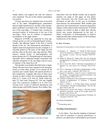 January 1999 in “Journal of the European Academy of Dermatology and Venereology”
 RAPK is a rare skin disorder with pigmented spots, mainly on hands and feet, starting in youth.
 January 1997 in “Elsevier eBooks”
 Hair and nails are skin parts that develop early and serve protective and functional roles.
 June 2026 in “Research Square”
 THBS4 helps hair grow by activating hair follicle stem cells.
 November 2025 in “Bioengineering”
 The new method may improve skin grafts and hair growth.