107 citations
,
June 1997 in “PubMed” EGFR is essential for normal hair development and follicle differentiation.
97 citations
,
June 2013 in “Journal of Dermatological Science” Understanding EGFR's role in skin is crucial for better treatments and managing side effects.
94 citations
,
July 2003 in “Journal of biological chemistry/The Journal of biological chemistry” EGF controls hair growth by regulating hair follicles' growth phases.
68 citations
,
January 2014 in “Dermatology research and practice” Skin side effects from cancer drugs targeting EGFR can affect treatment adherence but can be managed with antibiotics like tetracycline.
60 citations
,
December 1988 in “Journal of Biochemical Toxicology” TCDD reduces EGF receptors in the liver, affecting growth and development.
43 citations
,
January 2016 in “Cellular physiology and biochemistry” Epidermal Growth Factor helps hair follicle cells grow and move by activating a specific cell signaling pathway.
39 citations
,
March 2009 in “Dermatology Online Journal” Understanding EGFR roles could lead to new hair loss treatments.
39 citations
,
July 1993 in “The journal of investigative dermatology/Journal of investigative dermatology” FGF and EGF are crucial for hair follicle development and growth.
36 citations
,
April 2016 in “Biochimie” A substance called epidermal growth factor helps increase the growth of important hair follicle cells by activating a specific cell communication route.
24 citations
,
December 2016 in “Stem Cell Research & Therapy” P311 helps skin stem cells become myofibroblast-like cells, aiding wound healing.
21 citations
,
April 2008 in “Toxicologic Pathology” CI-1033 causes skin lesions in rats, similar to humans, due to EGF receptor inhibition.
12 citations
,
January 2021 in “Journal of Cutaneous and Aesthetic Surgery” Epidermal growth factor helps skin and hair regeneration but needs more research for better understanding.
 10 citations
,
October 2015 in “Medicina Clínica (english Edition)”
10 citations
,
October 2015 in “Medicina Clínica (english Edition)” Recombinant human epidermal growth factor is versatile, effective, and safe for long-term skin and mucosal treatments.
10 citations
,
December 1990 in “Archives of Dermatological Research” 9 citations
,
March 1987 in “British Journal of Dermatology” EGF and FGF can boost hair growth by speeding up cell growth.
 4 citations
,
January 2020 in “International Journal of Trichology”
4 citations
,
January 2020 in “International Journal of Trichology” Too much epidermal growth factor can cause hair loss.
 4 citations
,
January 2017 in “PubMed”
4 citations
,
January 2017 in “PubMed” Epidermal growth factor helps stem cells heal wounds and regenerate hair follicles faster.
3 citations
,
September 2024 in “International Journal of Molecular Sciences” Mathematical modeling helps understand and predict the MAPK cell signaling pathway.
March 2009 in “Dermatology Online Journal” Manipulating EGFR signaling may help treat hair loss and promote hair growth.
February 2009 in “Journal of Investigative Dermatology” EGFR is essential for organized skin nerve growth and branching.
January 1994 in “Skin research” EGF and TGF-α help maintain hair cell cultures, but TGF-β1 stops their growth.
53 citations
,
July 2009 in “Cancer Research” Blocking certain proteins can reduce skin inflammation caused by cancer treatment.
 38 citations
,
February 2012 in “Supportive Care in Cancer”
38 citations
,
February 2012 in “Supportive Care in Cancer” Skin problems like acne, dry skin, and nail and hair changes are common in patients taking EGFR inhibitors.
22 citations
,
March 2017 in “Journal of the Formosan Medical Association” The guidelines help doctors manage skin problems from certain cancer treatments to improve patients' lives.
 17 citations
,
January 2010 in “Acta Dermato Venereologica”
17 citations
,
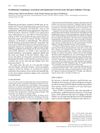
January 2010 in “Acta Dermato Venereologica” EGFR inhibitors can cause yellowish skin eruptions.
 7 citations
,
January 2020 in “Frontiers in Pharmacology”
7 citations
,
January 2020 in “Frontiers in Pharmacology” Jagged1 and Epidermal Growth Factor together significantly increased hair growth in mice with androgen-suppressed hair.
4 citations
,
September 2003 in “Livestock Production Science” Epidermal growth factor reduces hair growth, but cortisol does not.
 1 citations
,
January 2023 in “Cutis”
1 citations
,
January 2023 in “Cutis” You might not need to stop cancer treatment if you get a rare skin reaction from EGFR inhibitors, as skin treatments can help manage it.
 June 2026 in “Indian Journal of Postgraduate Dermatology”
 Rash from EGFRI treatment can indicate both side effects and treatment effectiveness.
November 2022 in “Journal of Investigative Dermatology” EGFR is crucial for preventing hair follicle inflammation and hair loss.