 8 citations
,
April 2010 in “JEADV. Journal of the European Academy of Dermatology and Venereology/Journal of the European Academy of Dermatology and Venereology”
8 citations
,
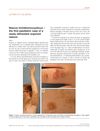
April 2010 in “JEADV. Journal of the European Academy of Dermatology and Venereology/Journal of the European Academy of Dermatology and Venereology” The first pediatric case of naevus trichilemmocysticus was documented.
2 citations
,
June 2023 in “Clinical Cosmetic and Investigational Dermatology” Using a dexpanthenol ointment after micro-needling speeds up skin healing without affecting benefits.
2 citations
,
April 2010 in “Cancer Research” Removing EGFR in skin causes inflammation and abnormal hair growth.
 1 citations
,
April 2017 in “Journal of Investigative Dermatology”
1 citations
,
April 2017 in “Journal of Investigative Dermatology” D-OCT shows increased blood vessel growth in response to tissue damage in Frontal Fibrosing Alopecia and is useful for diagnosis and monitoring.
 1 citations
,
December 2015 in “Journal of the Medical Sciences (Berkala Ilmu Kedokteran)”
1 citations
,
December 2015 in “Journal of the Medical Sciences (Berkala Ilmu Kedokteran)” Transplanting melanocyte stem cells from hair follicles can effectively treat vitiligo.
 March 2026 in “Scientific Journal”
 Early recognition and evaluation of nevus sebaceus are crucial to detect and manage potential cancerous changes.
 September 2023 in “Çukurova medical journal (Online)/Çukurova medical journal”
 EZH2 levels decrease as fetuses develop and are higher in adult skin, which may affect skin growth and repair.
 August 2018 in “Journal of The American Academy of Dermatology”
 A 54-year-old man with painful skin blisters and fever was diagnosed with Sweet syndrome and successfully treated with corticosteroids.
 April 2017 in “Journal of Investigative Dermatology”
 PRC1 influences skin stem cell development by both turning genes on and off, affecting hair growth and skin cell types.
 April 2017 in “Journal of Investigative Dermatology”
 Blocking JAK-STAT5 signaling in mice leads to hair growth.
 October 2007 in “Journal of Investigative Dermatology”
 The document suggests a bacteria plays a significant role in acne rosacea and that white hair can regain color after transplant, meriting more research on reversing grey hair.
 118 citations
,
January 2016 in “Current Topics in Developmental Biology”
118 citations
,
January 2016 in “Current Topics in Developmental Biology” The document concludes that while significant progress has been made in understanding skin biology and stem cells, more research is needed to fully understand their interactions with their environment.
April 2023 in “Journal of Investigative Dermatology” Interface dermatitis is the most common skin change in drug-induced hypersensitivity syndrome.
 September 1997 in “Journal of the European Academy of Dermatology and Venereology”
 People with acne have more CD4+ immune cells in their skin than healthy people.
 5 citations
,
July 2013 in “Our Dermatology Online”
5 citations
,
July 2013 in “Our Dermatology Online” Lichen planopilaris is the most common type of scarring hair loss observed, with a variety of symptoms and tissue changes.
 132 citations
,
July 2000 in “Lupus”
132 citations
,
July 2000 in “Lupus” In Italian patients with lupus, the most common skin issue was chronic cutaneous lupus, especially discoid lesions, and nonspecific skin problems occurred in about a third of those with systemic lupus, mainly during active disease.
86 citations
,
August 2015 in “The Journal of Steroid Biochemistry and Molecular Biology” Vitamin D and calcium are essential for effective wound healing and hair growth.
48 citations
,
January 2018 in “Stem Cells International” Skin-derived stem cells show promise for improving wound healing and creating transplantable tissue.
 36 citations
,
September 1999 in “Toxicologic pathology”
36 citations
,
September 1999 in “Toxicologic pathology” Stronger corticosteroids cause more skin damage in hairless dogs, similar to effects in humans.
32 citations
,
April 2011 in “Journal of the American Academy of Dermatology” Erlotinib may cause scarring hair loss.
 30 citations
,
October 2012 in “Current Opinion in Endocrinology, Diabetes and Obesity”
30 citations
,
October 2012 in “Current Opinion in Endocrinology, Diabetes and Obesity” Thyroid hormones are important for skin health and might help treat skin diseases, but more research is needed to understand their effects fully.
 28 citations
,
September 2015 in “Wiener Klinische Wochenschrift”
28 citations
,
September 2015 in “Wiener Klinische Wochenschrift” New skin substitutes for treating severe burns and chronic wounds are being developed, but a permanent solution for deep wounds is not yet available commercially.
 26 citations
,
June 2005 in “Journal of The American Academy of Dermatology”
26 citations
,
June 2005 in “Journal of The American Academy of Dermatology” Some patients receiving pegylated interferon alfa injections developed skin necrosis, requiring treatment adjustments or discontinuation.
 25 citations
,
December 1995 in “Neurology”
25 citations
,
December 1995 in “Neurology” The research found that chickenpox virus spreads in skin through blood then to skin cells, while shingles virus moves from nerves to hair follicle areas before infecting skin cells.
 24 citations
,
September 2014 in “Journal of the European Academy of Dermatology and Venereology”
24 citations
,
September 2014 in “Journal of the European Academy of Dermatology and Venereology” Trichoscopy is reliable for diagnosing Temporal Triangular Alopecia and can prevent unnecessary biopsies and wrong treatments.
23 citations
,
February 2015 in “The American journal of pathology” Keratosis pilaris is often linked to genetic mutations and causes skin and hair abnormalities, regardless of those mutations.
 23 citations
,
July 1982 in “International Journal of Dermatology”
23 citations
,
July 1982 in “International Journal of Dermatology” The review concludes that accurate diagnosis of different types of hair loss requires proper biopsy techniques and understanding the hair growth cycle and underlying causes.
 20 citations
,
January 2015 in “Polish Journal of Pathology”
20 citations
,
January 2015 in “Polish Journal of Pathology” Reflectance confocal microscopy is a useful, non-invasive tool for diagnosing some skin diseases, with potential for future improvements.
 19 citations
,
August 2007 in “Seminars in Plastic Surgery”
19 citations
,
August 2007 in “Seminars in Plastic Surgery” Newer skin resurfacing lasers reduce damage and scarring, with some approved for safe use and minimal side effects.
 18 citations
,
October 2014 in “Experimental Dermatology”
18 citations
,
October 2014 in “Experimental Dermatology” Local skin glucocorticoid production is crucial for healthy skin, and its disruption can lead to skin diseases.