 January 2018 in “Stem cell biology and regenerative medicine”
 The nucleus is key in controlling skin growth and repair by coordinating signals, gene regulators, and epigenetic changes.
 January 2018 in “Online Publication Service of Würzburg University (Würzburg University)”
 EpiLife® media and younger donor age improve artificial skin model quality.
 June 2017 in “Acta Scientiae Veterinariae”
 A cat with a rare pancreatic tumor and diabetes died despite treatment, showing similar symptoms to a human condition.
 April 2017 in “Journal of Investigative Dermatology”
 A virus protein can activate a pathway that may lead to abnormal hair follicle development.
Loss of Dnmt3a and Dnmt3b leads to more aggressive skin tumors, but blocking PPAR-γ can reduce this effect.
Loss of Dnmt3a and Dnmt3b increases aggressive skin tumors by affecting PPAR-γ.
 November 2013 in “Elsevier eBooks”
 Skin and hair renewal is maintained by both fast and slow cycling stem cells, with hair regrowth primarily driven by specific stem cells in the hair follicle bulge. These cells can also help heal wounds and potentially treat hair loss.
 January 2012 in “Durham e-Theses (Durham University)”
 Keratin 15 affects cell behavior and characteristics in skin cells.
 January 2011 in “Journal of The American Academy of Dermatology”
 A man developed a painful skin condition after multiple heart procedures involving radiation.
March 2009 in “Dermatology Online Journal” Manipulating EGFR signaling may help treat hair loss and promote hair growth.
 June 2008 in “Springer eBooks”
 The document concludes that permanent hair loss conditions are complex, require early specific treatments, and "secondary permanent alopecias" might be a more accurate term than "secondary cicatricial alopecia."
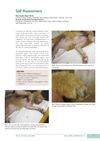 April 2008 in “Companion Animal”
 The cat's skin condition was linked to cancer and did not improve with treatment, leading to a poor outcome.
Surgical repigmentation can permanently restore color to white hair in vitiligo patients.
 September 1998 in “JEADV. Journal of the European Academy of Dermatology and Venereology/Journal of the European Academy of Dermatology and Venereology”
 The document concludes that individualized treatments for hair issues are effective, certain hair changes can indicate neurocutaneous diseases, specific lotions improve skin health, laser hair removal works but needs more study on long-term effects, men's cosmetics are diverse, peeling is effective but can have side effects, and facial pigmentation is often due to overactive skin cells.
 May 1991 in “Current problems in dermatology”
 Skin issues can indicate immune system problems.

Ovol2 is crucial for hair growth and skin healing by controlling cell movement and growth.
 March 2018 in “John Wiley & Sons, Ltd eBooks”
 Surgical therapies for vitiligo vary in effectiveness, with combination therapy and medical tattooing recommended for better results.
 205 citations
,
April 2005 in “Journal of Investigative Dermatology”
205 citations
,
April 2005 in “Journal of Investigative Dermatology” Scientists have found a way to create hair follicles from skin cells of newborn mice, which can grow and cycle naturally when injected into adult mouse skin.
 184 citations
,
September 2006 in “PLoS Genetics”
184 citations
,
September 2006 in “PLoS Genetics” The Apc gene is crucial for normal skin and thymus development.
111 citations
,
August 1998 in “Journal of Investigative Dermatology” μ-opiate receptors in skin cells may affect skin health and healing.
98 citations
,
December 2015 in “The Journal of Cell Biology” Keratin is crucial for skin barrier formation and affects mitochondrial function.
77 citations
,
April 2005 in “Journal of Investigative Dermatology” Repetin is a protein involved in skin and hair development, binding calcium and compensating for other proteins when needed.
65 citations
,
December 2000 in “PubMed” The biology of skin and hair is complex and not fully understood.
 41 citations
,
December 2018 in “Experimental Dermatology”
41 citations
,
December 2018 in “Experimental Dermatology” Understanding how melanocyte stem cells work could lead to new treatments for hair graying and skin pigmentation disorders.
 36 citations
,
July 2014 in “Experimental Dermatology”
36 citations
,
July 2014 in “Experimental Dermatology” Skin and hair can regenerate after injury due to changes in gene activity, with potential links to how cancer spreads. Future research should focus on how new hair follicles form and the processes that trigger their creation.
 36 citations
,
September 2013 in “PLoS ONE”
36 citations
,
September 2013 in “PLoS ONE” Sweat gland stem cells help maintain glands, aid wound healing, and can regenerate skin structures.
 35 citations
,
April 2008 in “Human Molecular Genetics”
35 citations
,
April 2008 in “Human Molecular Genetics” Skin and hair can help us understand organ regeneration, especially how certain stem cells might be used to form new organs.
 29 citations
,
March 2012 in “Stem Cell Research & Therapy”
29 citations
,
March 2012 in “Stem Cell Research & Therapy” Some stem cells in the body rarely divide, which could help create better treatments for diseases and aging.
 25 citations
,
January 2011 in “Annals of Dermatology”
25 citations
,
January 2011 in “Annals of Dermatology” Erlotinib can cause hair loss as a side effect.
21 citations
,
November 2023 in “International Journal of Molecular Sciences” Melatonin helps reduce aging signs in human eyelid skin.