 April 2023 in “Journal of Investigative Dermatology”
 The specific skin disease variant p.(Arg2000Trp) in plectin can cause a wide range of symptoms, which should be considered when diagnosing patients.
 January 2020 in “Medical journal of clinical trials & case studies”
 A 37-year-old male with severe skin and internal issues has a rare inherited skin condition called dystrophic epidermolysis bullosa.
 June 2019 in “Pediatric Dermatology”
 Alopecia in patients with epidermolysis bullosa varies in severity and is often caused by skin blistering or trauma.
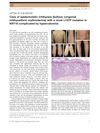 October 2011 in “Journal of dermatology”
 A man with a rare skin condition and a new gene mutation developed high calcium levels due to his treatment.
December 2022 in “Stem Cells and Development” Exosomes from stem cells help improve nerve repair in rats.
44 citations
,
January 2017 in “Journal of Investigative Dermatology” Mutations in the KLHL24 gene cause skin blistering in epidermolysis bullosa simplex.
33 citations
,
October 2014 in “Veterinary Dermatology” Epidermolysis bullosa is a genetic disease causing fragile skin and blisters in both animals and humans.
26 citations
,
June 2004 in “Clinical Genetics” The keratin 5 mutation in a family with epidermolysis bullosa simplex was due to mosaicism, not a new mutation.
 21 citations
,
November 2009 in “Dermatologic Clinics”
21 citations
,
November 2009 in “Dermatologic Clinics” The document suggests that certain protein deficiencies and scalp blistering in Epidermolysis Bullosa may cause hair loss.
18 citations
,
January 2018 in “BMC dermatology” A new mutation in the PLEC gene causes a rare condition with skin blistering, muscle weakness, and hair loss.
15 citations
,
November 2009 in “Journal of Comparative Pathology” Epidermolysis bullosa in calves was not caused by mutations in the keratin genes bKRT5 and bKRT14.
12 citations
,
May 2016 in “British Journal of Dermatology” A 6-year-old boy's skin condition improved after stopping a specific treatment and starting new medications.
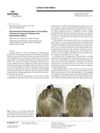 5 citations
,
January 2015 in “Skin appendage disorders”
5 citations
,
January 2015 in “Skin appendage disorders” Colored hair-thickening fibers can help hide hair loss in some people with Epidermolysis Bullosa but may cause scalp irritation.
3 citations
,
March 2019 in “European Journal of Dermatology” A specific gene mutation (Y449H in K10) was found in a patient with severe skin disorder.
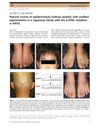 3 citations
,
January 2019 in “Journal of Dermatology”
3 citations
,
January 2019 in “Journal of Dermatology” The p.P25L mutation in the KRT5 gene causes a rare skin condition that worsens over time and may lead to hair loss starting in young adulthood.
1 citations
,
April 2024 in “The Journal of Dermatology” Untreated epidermolysis bullosa acquisita can cause total hair and nail loss.
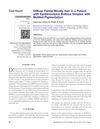 1 citations
,
January 2014 in “International Journal of Trichology”
1 citations
,
January 2014 in “International Journal of Trichology” A patient with a rare hair condition and skin disorder showed hair improvement after treatment.
March 2025 in “Journal of Investigative Dermatology” Cannabinoids may help manage epidermolysis bullosa symptoms, but more research is needed.
July 2023 in “Media Dermato Venereologica Indonesiana” Accurate diagnosis of RDEB-mitis in older adults is crucial for proper management without immunosuppressants.
 November 2022 in “Journal of Investigative Dermatology”
 Most Recessive Dystrophic Epidermolysis Bullosa patients with a specific mutation likely have Sephardic ancestry from about 500 years ago.
 July 2022 in “Dermatology practical & conceptual”
 Henna ointment may help reduce itching and improve wound healing in patients with epidermolysis bullosa.
 July 2022 in “The journal of investigative dermatology/Journal of investigative dermatology”
 A patient with a PLEC mutation has epidermolysis bullosa, muscular dystrophy, and myasthenia gravis, which improved with steroid treatment.
December 2019 in “Saintika Medika” A woman with lupus also developed a severe skin condition linked to a genetic factor.
 September 2019 in “Journal of Investigative Dermatology”
 Scientists used stem cells to create a model of the skin disease Epidermolysis Bullosa simplex, which helped them understand its molecular mechanisms and could aid in finding treatments.
January 2007 in “Bristol Research (University of Bristol)” Epidermolysis bullosa in UK calves is not caused by mutations in keratin genes.
297 citations
,
January 2002 in “Development” Overexpression of ΔNLef1 in mouse skin leads to hair loss, cysts, and skin tumors.
177 citations
,
November 2002 in “British journal of dermatology/British journal of dermatology, Supplement” Transplantation is effective for stable leucoderma but not for progressive, widespread vitiligo vulgaris.
138 citations
,
December 1976 in “Journal of Biological Chemistry” The enzyme from human skin can cross-link proteins and needs calcium to work.
114 citations
,
October 1996 in “Dermatologic clinics” Hair loss is mainly caused by hormones, autoimmune issues, and chemotherapy, and needs more research for treatments.
 105 citations
,
February 2017 in “British Journal of Dermatology”
105 citations
,
February 2017 in “British Journal of Dermatology” Survivors of Stevens-Johnson syndrome/toxic epidermal necrolysis need ongoing care for various long-term health problems.