96 citations
,
February 2002 in “Journal of the American Academy of Dermatology” Pseudofolliculitis barbae is a chronic skin condition affecting mainly African American and Hispanic individuals, caused by shaving tightly curled hair, and managed by prevention and treatment but not curable.
8 citations
,
July 2014 in “American Journal of Dermatopathology” Cutaneous keratocyst and steatocystoma should be called "sebaceous duct cyst" due to their similarities.
26 citations
,
January 2022 The skin is essential for protection, temperature control, and immune defense.
Pseudofolliculitis causes painful bumps and dark spots from shaving, especially in people with curly hair, and can be treated by changing shaving habits and using specific topical treatments.
6 citations
,
January 2001 in “Cambridge University Press eBooks” PCOS can cause excess hair growth, oily skin, hair loss, acne, and dark skin patches.
21 citations
,
December 2007 in “Journal of Investigative Dermatology” Hair follicles evolved from oil glands, with hair aiding secretion transport.
Preserving intact follicular units improves hair transplant success.
3 citations
,
April 2011 in “Journal of the American Academy of Dermatology” A 19-year-old man had a rare skin condition on one side of his face that looked like another skin disease.
 April 2017 in “Journal of Investigative Dermatology”
 Sweat glands and hair follicles are determined by opposing signals, with BMPs promoting sweat glands and blocking BMPs leading to hair follicles.
January 2002 in “Linchuang pifuke zazhi” A young woman had a rare scalp tumor usually found in older women.
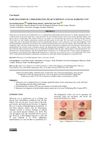 March 2022 in “Folia Medica Indonesiana”
 The lump on a woman's scalp was a rare, potentially cancerous tumor from the hair follicle, not a common cyst.
38 citations
,
November 2005 in “The journal of investigative dermatology. Symposium proceedings/The Journal of investigative dermatology symposium proceedings” Understanding normal hair follicle development helps analyze abnormalities in mutant mice.
9 citations
,
September 2013 in “Journal of histochemistry and cytochemistry/The journal of histochemistry and cytochemistry” Matriptase is highly active in hair follicles and sebaceous glands, especially during hair growth phases.
 February 2026 in “HCA Healthcare Journal of Medicine”
 Recognizing keratosis pilaris in all skin tones helps diagnose related skin issues and reduce distress.
18 citations
,
November 2007 in “Acta Veterinaria Hungarica” The ovine interdigital sinus has a complex structure with three layers and various skin-like features.
 1 citations
,
July 2023 in “Cureus”
1 citations
,
July 2023 in “Cureus” A rare hair disorder with multiple hairs from one follicle was found on a patient's abdomen.
18 citations
,
December 1992 in “Journal of Cutaneous Pathology” Skin tumors and normal skin structures have different lectin-binding patterns.
 6 citations
,
January 2009 in “Elsevier eBooks”
6 citations
,
January 2009 in “Elsevier eBooks” The skin has multiple layers and cells, serves as a protective barrier, helps regulate temperature, enables sensation, affects appearance, and is involved in vitamin D synthesis.
April 2017 in “Journal of dermatological science” Removing PLCg1 from skin cells caused thicker oil glands and less hair in mice.
 12 citations
,
June 2006 in “Anais Brasileiros de Dermatologia”
12 citations
,
June 2006 in “Anais Brasileiros de Dermatologia” The study found average numbers for different types of hair follicles in the scalp and observed differences between men and women, suggesting reasons for more common hair shedding in women.
8 citations
,
May 2005 in “The American journal of dermatopathology/American journal of dermatopathology” The hair defect is due to abnormal inner root sheath keratinization.
 40 citations
,
June 2013 in “Biomaterials”
40 citations
,
June 2013 in “Biomaterials” Scientists created 3D hair-like structures that could help study hair growth and test treatments.
14 citations
,
May 2022 in “Stem cell reports” The study created hair-bearing skin models that lack a key protein for skin layer attachment, limiting their use for certain skin disease research.
 13 citations
,
March 2012 in “The Journal of Dermatology”
13 citations
,
March 2012 in “The Journal of Dermatology” Hair transplant surgery can rebuild muscle and nerve connections, allowing transplanted hairs to stand up like normal hairs.
August 1993 in “Journal of Dermatological Science” 17 citations
,
July 1977 in “International Journal of Dermatology” Proper shaving techniques and specific topical treatments can help manage pseudofolliculitis barbae.
25 citations
,
November 2015 in “Journal of Dermatological Science” Sebum helps protect human skin from microbes.
December 2004 in “Differentiation” 49 citations
,
April 2007 in “Pediatric Dermatology” Biotin improved hair appearance in uncombable hair syndrome but didn't change hair structure.
 March 2023 in “International journal of integrated medical research”
 Keratosis pilaris is a common skin condition where hair follicles get clogged with keratin, mostly on the arms and thighs.