17 citations
,
January 2013 in “Journal of Cutaneous Pathology” The onychodermis helps anchor the nail bed and may aid in nail formation.
23 citations
,
January 1964 in “Archives of Dermatology” Treatment with vitamin A did not improve the child's skin condition.
 5 citations
,
October 2022 in “Phenomics”
5 citations
,
October 2022 in “Phenomics” Your skin is like an ecosystem, with its own community of microbes and substances that interact and affect its health.
 July 2018 in “Nasza Dermatologia Online”
 Frontal fibrosing alopecia and ulerythema ophryogenes may be related and can evolve from one to the other.
August 2024 in “Postgraduate Medical Journal” A rare skin reaction from cancer treatment was successfully managed with topical treatments and antihistamines.
 January 2025 in “Journal of Fungi”
 Advanced dermoscopy techniques improve diagnosis and treatment monitoring for Kerion celsi but don't guarantee full hair regrowth.
March 2021 in “Der Hautarzt” Neuroendocrine paraneoplastic syndromes often show skin changes, helping early diagnosis and requiring a team approach for best care.
81 citations
,
August 1979 in “Archives of Dermatology” Trichofolliculomas can sometimes be more aggressive than thought.
23 citations
,
December 1977 in “Virchows Archiv B Cell Pathology” 21 citations
,
June 2004 in “Experimental Dermatology” Ber‐EP4 marks cells related to the secondary hair germ in hair follicles.
 January 2025 in “Dermatology Review”
 Trichilemmal carcinoma is rare, usually benign after removal, but needs close follow-up due to recurrence risks.
 January 2024 in “Archives of pharmacy practice”
 The skin is vital for protection, temperature control, fluid balance, immunity, and sensing, with damage affecting daily life and mental health.
 December 2016 in “John Wiley & Sons, Ltd eBooks”
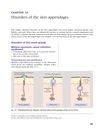
 The document concludes that proper recognition and treatment of skin appendage disorders are important for management.
68 citations
,
May 2009 in “Medicine” Understanding skin structure and function is crucial due to its role in health and prevalence of many skin diseases.
October 2010 in “EUR Research Repository (Erasmus University Rotterdam)” A fungal skin infection was successfully treated with medication and compression therapy.
3 citations
,
May 2007 in “Pediatrics in review” Ringworm of the body and scalp is treated with antifungal creams and oral medication, and children with scalp ringworm don't need to miss school.
27 citations
,
July 1993 in “The journal of investigative dermatology/Journal of investigative dermatology” Onychomatricoma is a unique nail tumor, not related to other hair-related tumors.
15 citations
,
July 2024 in “Current Issues in Molecular Biology” Understanding molecular processes in skin development is key to creating targeted treatments for skin disorders.
January 2002 in “Linchuang pifuke zazhi” A young woman had a rare scalp tumor usually found in older women.
October 2021 in “European Journal of Dermatology” CAL-PDT is safer and more effective for treating actinic keratosis on the scalp.
 September 2022 in “JAAD case reports”
 The man has a genetic skin condition called pachyonychia congenita.
3 citations
,
January 1989 in “The Nishinihon Journal of Dermatology” A hair cyst can become cancerous, showing specific keratins from the hair sheath.
Keratinocytes grew and migrated into hair follicle areas but disappeared after 15-20 days.
 April 2017 in “Journal of Investigative Dermatology”
 Sweat glands and hair follicles are determined by opposing signals, with BMPs promoting sweat glands and blocking BMPs leading to hair follicles.
November 2023 in “Journal of Investigative Dermatology” Inhibiting EGFR weakens skin's defense against bacteria.
1 citations
,
January 2019 in “Advances in stem cells and their niches” Epidermal stem cells are crucial for skin health and problems with them can cause issues like poor wound healing, cancer, and aging.
January 2006 in “Dianzi xianwei xuebao” Netherton syndrome causes specific skin and hair changes that help in early diagnosis.
January 2005 in “Journal of Cutaneous Pathology” A new benign nail tumor called onychoblastoma was identified.
13 citations
,
April 1982 in “The Journal of Dermatology” Poly(ADP-ribose) synthesis is linked to skin cell differentiation.