 January 2025 in “International Journal of Veterinary Science”
 Hibiscus leaf ointment helps hair growth and reduces UV skin damage in rats.

New methods efficiently isolate dermal papilla cells from hair follicles, preserving their characteristics better than traditional methods.
ARHGEF3 is essential for proper hair follicle development.
 August 2024 in “Biomolecules & Therapeutics”
 A new compound, HTPI, promotes hair growth by protecting cells from damage and regulating energy use.
 June 2024 in “Research Square (Research Square)”
 Jagged-1 in skin Tregs is crucial for timely wound healing by recruiting specific immune cells.
 February 2024 in “Biomedical materials”
 Scientists created a lab-grown hair follicle model that behaves like real hair and could improve hair loss treatment research.
Deleting Smad4 and PTEN genes in mice causes rapid, invasive forestomach cancer.
Deleting Smad4 and PTEN genes in mice causes rapid, invasive stomach cancer.
 January 2023 in “Theranostics”
 Mechanical force is important for the first contact between skin cells and hair growth in mini-organs.
 June 2022 in “Research Square (Research Square)”
 Hair follicle stem cells can help heal intestinal injuries in rats.
 March 2022 in “Indian Journal of Animal Research”
 Dog hair follicle stem cells can turn into fat cells.
Extracellular vesicles could help treat hair loss by influencing hair growth cycles.

The document concludes that the development of certain tumors is influenced by genetic background and that a specific gene modification can lead to tumor regression and reduced growth.
 September 2019 in “Journal of Investigative Dermatology”
 Dermal Papilla Cells grown in 3D and with stem cells better mimic natural hair growth conditions than cells grown in 2D.
 August 2019 in “Journal of Investigative Dermatology”
 Skin may help in getting rid of excess iron through the process of skin cell renewal.
 August 2019 in “Journal of Investigative Dermatology”
 The study found that tight junctions reach the top layer of the skin's stratum granulosum, not just the second top layer as previously thought.
 May 2018 in “White Rose eTheses Online (University of Leeds, The University of Sheffield, University of York)”
 Alopecia areata may be treated by using EGCG to balance immune cells and reduce inflammation.
 April 2018 in “The journal of investigative dermatology/Journal of investigative dermatology”
 Electrical epilation damages hair follicles and surrounding skin, likely preventing hair regrowth.
 April 2018 in “Journal of Investigative Dermatology”
 Macrophages are more involved in Lichen planopilaris than in Frontal fibrosing alopecia.
 April 2018 in “Journal of Investigative Dermatology”
 Different types of stem cells in the skin contribute to the variety of melanoma forms.
September 2017 in “Journal of Investigative Dermatology” Ovol2 is essential for normal skin and hair regeneration.
 September 2017 in “Journal of Investigative Dermatology”
 Researchers created human cells that can turn into sebocytes, which may help study and treat skin conditions like acne.
Human hair follicle cells can be turned into stem cells that may help clone hair for treating hair loss or burns.
 November 2015 in “European Journal of Inflammation”
 Cicatricial alopecia, a permanent hair loss condition, is mainly caused by damage to specific hair follicle stem cells and abnormal immune responses, with gene regulator PPAR-y and lipid metabolism disorders playing significant roles.
 November 2014 in “Journal of Cell Biology”
 Valentina Greco's research shows that the environment around hair follicle stem cells is more crucial for regeneration than the stem cells themselves.
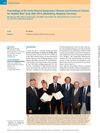 September 2014 in “Aktuelle Dermatologie”
 The symposium concluded that environmental factors significantly contribute to skin aging.
 December 2010 in “Jurnal Natural (Faculty of Mathematics and Natural Science, Syiah Kuala University)”
 Age, race, family history, and certain genetic factors increase prostate cancer risk.
 January 2006 in “Advances in developmental biology”
 The Hairless gene is crucial for healthy skin and hair growth.
 April 2017 in “Journal of Investigative Dermatology”
 Stem cells can create hair follicles, potentially treating permanent hair loss, and healthy skin and hair depend on mitochondrial function and special fats.
 February 2015 in “Journal of Biomedical Materials Research Part B: Applied Biomaterials”
 4-META resin heals skin wounds faster and better than cyanoacrylate.