10 citations
,
January 2001 in “PubMed” Laminin, type IV collagen, and fibronectin help develop skin and hair structures in embryos.
 August 2019 in “Journal of Investigative Dermatology”
 The study found that tight junctions reach the top layer of the skin's stratum granulosum, not just the second top layer as previously thought.
11 citations
,
January 2010 in “Dermatology Research and Practice” Desmosomes are crucial for human skin development, increasing in density as the skin matures.
482 citations
,
June 1979 in “Proceedings of the National Academy of Sciences” Keratins provide structural strength in epithelial cells and help identify cell origins.
 1 citations
,
January 2019 in “Elsevier eBooks”
1 citations
,
January 2019 in “Elsevier eBooks” New scaffold materials help heal severe skin wounds and improve skin regeneration.
April 2021 in “Journal of Investigative Dermatology” Early-stage skin substitutes improve wound healing and skin structure.
 November 2022 in “Journal of Investigative Dermatology”
 Human-induced stem cell-created skin models can help understand skin diseases by studying the skin's layers.
24 citations
,
October 2010 in “Tissue Engineering Part A” Tissue-engineered skin can support hair growth after grafting, especially with mouse-derived dermis.
14 citations
,
May 2022 in “Stem cell reports” The study created hair-bearing skin models that lack a key protein for skin layer attachment, limiting their use for certain skin disease research.
143 citations
,
January 2012 in “Cell and Tissue Research” 479 citations
,
June 2014 in “Science” Epithelial stem cells can adapt and help in tissue repair and regeneration.
 118 citations
,
January 2016 in “Current Topics in Developmental Biology”
118 citations
,
January 2016 in “Current Topics in Developmental Biology” The document concludes that while significant progress has been made in understanding skin biology and stem cells, more research is needed to fully understand their interactions with their environment.
1 citations
,
January 2016 in “Methods in molecular biology” The method helps estimate and track skin cell growth and movement during healing.
1 citations
,
February 2025 in “International Journal of Molecular Sciences” Enzymatic digestion is an efficient method for isolating cells from hair follicles for tissue-engineered skin.
 January 2023 in “Theranostics”
 Mechanical force is important for the first contact between skin cells and hair growth in mini-organs.
11 citations
,
January 2025 in “Regenerative Therapy” Tissue-engineered scaffolds help heal difficult wounds by supporting cell growth and repair.
7 citations
,
February 1982 in “Australian Journal of Biological Sciences” Epithelial cells from young rat hair follicles grow and form aggregates in culture, but don't produce hair keratin proteins.
 January 2007 in “The Year book of surgery”
 Mast cells and VEGF contribute to post-surgery adhesions, and blocking VEGF can reduce these adhesions; also, certain factors affect wound healing and fetal skin heals differently with age.
June 2014 in “Experimental dermatology” The epidermis is crucial for hair growth.
August 1993 in “Journal of Dermatological Science” January 2006 in “Elsevier eBooks” Most vertebrates can regenerate skin, nails, and corneas, but only some can regenerate teeth and lenses.
June 2025 in “Advances in Clinical and Experimental Medicine” Keratin biomaterials could help heal wounds and regenerate tissue, but more testing is needed.
 28 citations
,
February 2014 in “PLoS ONE”
28 citations
,
February 2014 in “PLoS ONE” Epidermal stem cells on a special membrane helped mice regrow full skin with hair and functions.
 1398 citations
,
May 2008 in “Histochemistry and Cell Biology”
1398 citations
,
May 2008 in “Histochemistry and Cell Biology” Keratins are crucial for cell stability, wound healing, and cancer diagnosis.
 610 citations
,
April 2014 in “Nature Reviews Immunology”
610 citations
,
April 2014 in “Nature Reviews Immunology” The document concludes that understanding how the skin's immune system and inflammation work is complex and requires more research to improve treatments for skin diseases.
 471 citations
,
October 2012 in “Cellular and Molecular Life Sciences”
471 citations
,
October 2012 in “Cellular and Molecular Life Sciences” Understanding developmental pathways can improve wound healing treatments.
 425 citations
,
January 2021 in “SN Applied Sciences”
425 citations
,
January 2021 in “SN Applied Sciences” Alginate is great for tissue engineering because it's safe, easy to use, and helps heal tissues.
 418 citations
,
September 2012 in “Nature”
418 citations
,
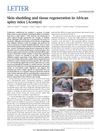
September 2012 in “Nature” African spiny mice can regenerate skin, hair, and cartilage, but not muscle, and their unique abilities could be useful for regenerative medicine.
 403 citations
,
December 2018 in “Cell stem cell”
403 citations
,
December 2018 in “Cell stem cell” Understanding phenotypic plasticity is crucial for developing effective cancer therapies.
 359 citations
,
January 2015 in “Cold Spring Harbor Perspectives in Medicine”
359 citations
,
January 2015 in “Cold Spring Harbor Perspectives in Medicine” Hair growth phase and certain genes can speed up wound healing, while an inflammatory mediator can slow down new hair growth after a wound. Understanding these factors can improve tissue regeneration during wound healing.