April 2018 in “Journal of Investigative Dermatology” Melanogenesis-related proteins may trigger immune responses in alopecia areata patients.
2 citations
,
December 2017 in “The journal of investigative dermatology. Symposium proceedings/The Journal of investigative dermatology symposium proceedings” The conclusion is that a new method could improve the identification of autoimmune targets in alopecia areata, despite some limitations.
 1 citations
,
April 2019 in “The journal of investigative dermatology/Journal of investigative dermatology”
1 citations
,
April 2019 in “The journal of investigative dermatology/Journal of investigative dermatology” Melanocyte-associated antigens may play a key role in alopecia areata and could be targets for new treatments.
 1 citations
,
December 2025 in “Scientific Reports”
1 citations
,
December 2025 in “Scientific Reports” A machine learning model can predict alopecia areata early using specific gene markers.
 2 citations
,
December 2016 in “Experimental cell research”
2 citations
,
December 2016 in “Experimental cell research” The research found a way to identify and study skin cells with stem cell traits, revealing they behave differently in culture and questioning current stemness assessment methods.
31 citations
,
October 1992 in “PubMed” A mycobacterial protein shares a similar region with a human skin protein, possibly affecting skin diseases.
22 citations
,
April 2020 in “Frontiers in Cellular and Infection Microbiology” Alopecia areata may be linked to scalp microbiome differences, suggesting potential treatments with prebiotics, probiotics, and postbiotics.

Alopecia areata is an autoimmune disease affecting hair follicles and may harm heart health.
 March 2024 in “BMC cancer”
 High levels of ST14 and TMEFF1 proteins in ovarian cancer are linked to worse patient outcomes and may be a new treatment target.
 January 2024 in “Wiadomości Lekarskie”
 Enhancing immune response can improve cancer treatment effectiveness.
 January 2024 in “Wiadomości Lekarskie”
 Virtual surgical planning improves efficiency, coordination, and precision in complex surgeries.
 38 citations
,
September 2021 in “Signal Transduction and Targeted Therapy”
38 citations
,
September 2021 in “Signal Transduction and Targeted Therapy” Genetic differences affect COVID-19 severity and treatment development.
 196 citations
,
March 2016 in “Nature Communications”
196 citations
,
March 2016 in “Nature Communications” Genetic factors influence hair traits like shape, color, and greying in Latin Americans.
 2 citations
,
July 2014 in “Irish Journal of Medical Science”
2 citations
,
July 2014 in “Irish Journal of Medical Science” The meeting discussed medical findings, including benefits of certain treatments for cancer and heart conditions, and highlighted issues like poor adherence to preventive measures and skill gaps among interns.
 January 2024 in “Wiadomości Lekarskie”
 AI improves vascular surgery by enhancing diagnostics, planning, and monitoring.
 January 2024 in “Wiadomości Lekarskie”
 AI in heart scans improves diagnosis and treatment but has risks like misdiagnosis and high costs.
 January 2024 in “Wiadomości Lekarskie”
 AI is transforming healthcare by improving diagnostics and therapy, despite challenges with data and trust.

Lower LDL-c levels predict higher COVID-19 mortality.
 27 citations
,
April 2018 in “Scientific Reports”
27 citations
,
April 2018 in “Scientific Reports” Psoriasis patients' immune response to a hair protein depends on their specific gene type.
 2 citations
,
January 2004 in “Elsevier eBooks”
2 citations
,
January 2004 in “Elsevier eBooks” Lupus affects the skin in various ways, and proper skin examination is crucial for diagnosis and treatment.
 January 2017 in “Clinical & medical biochemistry”
 Certain gene variations in AKT2 are more common in women with PCOS and are linked to higher levels of specific hormones and symptoms.
 28 citations
,
January 2017 in “Critical Reviews in Therapeutic Drug Carrier Systems”
28 citations
,
January 2017 in “Critical Reviews in Therapeutic Drug Carrier Systems” Nanomaterials in biomedicine can improve treatments but may have risks like toxicity, needing more safety research.
4 citations
,
October 2025 in “Science Advances” VCAM1 appears early in kidney injury and signals future nephron loss.
17 citations
,
July 2024 in “Frontiers in Oncology” New therapies and trials are needed for Merkel cell carcinoma, a tough skin cancer.
5 citations
,
December 2022 in “Genes” Genetic differences affect how people respond to COVID-19.
 3 citations
,
August 2024 in “Frontiers in Oncology”
3 citations
,
August 2024 in “Frontiers in Oncology” Targeted radionuclide therapy shows promise for improving head and neck cancer treatment but needs more research.
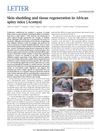 418 citations
,
September 2012 in “Nature”
418 citations
,
September 2012 in “Nature” African spiny mice can regenerate skin, hair, and cartilage, but not muscle, and their unique abilities could be useful for regenerative medicine.
 10 citations
,
October 2016 in “Monoclonal antibodies in immunodiagnosis and immunotherapy”
10 citations
,
October 2016 in “Monoclonal antibodies in immunodiagnosis and immunotherapy” Researchers created specific antibodies that detect a protein important in development and various conditions, and can be used for research and diagnosis.
 22 citations
,
December 2016 in “PloS one”
22 citations
,
December 2016 in “PloS one” A specific protein in chicken embryos links early skin layers to feather development.
 58 citations
,
December 2020 in “Mayo Clinic Proceedings”
58 citations
,
December 2020 in “Mayo Clinic Proceedings” The conclusion is that individual differences in COVID-19 severity are influenced by factors like age, sex, race, and genetics, which are important for personalized medicine.