6 citations
,
April 2005 in “Journal of dermatological science” The study found nine new hair protein genes in human hair follicles.
 22 citations
,
December 2013 in “Molecular biology of the cell”
22 citations
,
December 2013 in “Molecular biology of the cell” ILK is essential for proper hair follicle development and structure.
 7 citations
,
March 2020 in “PloS one”
7 citations
,
March 2020 in “PloS one” α-parvin is necessary for skin and hair growth and for the correct orientation of skin cells.
 April 2016 in “Journal of Investigative Dermatology”
 The Engrailed-1 gene plays a key role in the development of sweat glands in mice.
12 citations
,
December 2022 in “Frontiers in Bioscience-Landmark” The role of certain genes in skin cell development may be linked to psoriasis, but the connection is unclear.
 2 citations
,
January 2020 in “BioMed Research International”
2 citations
,
January 2020 in “BioMed Research International” Phaeodactylum tricornutum extract helps hair follicle cells grow by activating the ERK1/2 pathway.
2 citations
,
July 2004 in “Cell Biology International” uPA helps hair follicle cells grow.
8 citations
,
August 1987 in “The Journal of Dermatology” BKN-1 antibody targets specific keratin in basal cell epithelioma and normal skin basal cells.
15 citations
,
August 1991 in “Histochemistry and Cell Biology” Enhancing Factor is found in growing tissues like young mouse intestines and skin but not in adults.
22 citations
,
September 2003 in “Journal of Investigative Dermatology” New mutations in the EBP gene cause CDPX2, affecting bones, skin, eyes, and hair, with females generally less affected than males.
39 citations
,
December 1998 in “Journal of Cell Science” The LEF-1 binding site enhances gene expression in hair follicles, with other proteins aiding specific regulation.
34 citations
,
May 2001 in “Endocrinology” Mrp3 helps in wound healing and hair growth.
1 citations
,
February 2013 in “InTech eBooks” LEKTI is crucial for skin barrier and immune function, affecting conditions like Netherton syndrome and atopic dermatitis.
July 2026 in “Journal of Investigative Dermatology” January 2011 in “Anhui nongye kexue” The vector successfully directed specific gene expression in hair follicles.
January 2026 in “Aging and Disease” DKK proteins could help diagnose and treat various non-cancerous diseases.
60 citations
,
March 2006 in “Journal of Medical Genetics” A mutation in the KRTHB5 gene causes hair and nail issues.
March 1998 in “Journal of Dermatological Science” Keratin-associated proteins may have roles in various mouse tissues, not just hair.
34 citations
,
January 2004 in “Genomics” A cluster of 21 keratin-associated protein genes important for hair growth was found on human chromosome 21.
December 2015 in “OPAL (Open@LaTrobe) (La Trobe University)” QLT0267 stops hair follicle cell growth and movement.
3 citations
,
March 2019 in “European Journal of Dermatology” A specific gene mutation (Y449H in K10) was found in a patient with severe skin disorder.
19 citations
,
September 1971 in “Journal of Investigative Dermatology”  September 2016 in “Journal of Dermatological Science”
 A specific mutation known for causing cancer is also found to cause a skin condition in a young girl.
46 citations
,
May 1995 in “Proceedings of the National Academy of Sciences” A specific gene region can control targeted and responsive gene expression in mice, useful for skin disorder treatments.
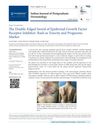 June 2026 in “Indian Journal of Postgraduate Dermatology”
 Rash from EGFRI treatment can indicate both side effects and treatment effectiveness.
 January 2025 in “PLoS ONE”
 Elf5 controls skin cell growth and development, making it a potential target for skin treatments.
8 citations
,
January 2022 in “Current topics in developmental biology/Current Topics in Developmental Biology” 6 citations
,
January 2004 in “DNA Research” A mutation in the Sgkl gene causes defective hair growth in mice.
48 citations
,
November 2002 in “Journal of biological chemistry/The Journal of biological chemistry” Genetic variations in hair keratin proteins exist but don't significantly affect hair structure.
1 citations
,
May 2004 in “Biochemical and Biophysical Research Communications” Two new gene clusters important for hair formation were found on human chromosome 11.